How do you make a motion comic with AI?
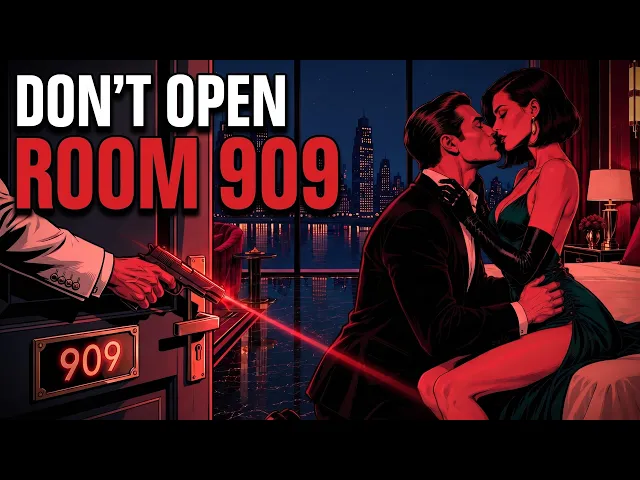
Write a script with dialogue and narration, paste it into Atlabs, choose Storyboard as the output and pick a comic style. Atlabs designs the characters once, illustrates a panel for every beat, gives each character a voice, and adds narration and music. Crimson Silk Vengeance is an 83 second, 32 panel noir thriller made this way in a 1930s art deco graphic novel style. Every panel is a still image, and any of them can be animated later.
Crimson Silk Vengeance, made start to finish in Atlabs.
On a Friday night at the Velvet Hour jazz club, a woman in emerald silk catches the eye of the richest man in the room. He thinks he is the one doing the chasing. By the time he finds out why she really came, the night is over.
Crimson Silk Vengeance at a glance
Runtime: 1:23
Panels: 32 still images, one per beat
Output: Storyboard, illustrated comic panels rather than animated clips
Genre: Noir crime thriller with a femme fatale and a revenge twist
Characters: 3 (Vera Vale, Adrian Black, the Trumpeter)
Locations: 3 (a jazz club, a private corridor, a hotel suite)
Voices: A smoky female narrator plus separate voices for Vera and Adrian
Music: A track from the Atlabs music library
Style: 1930s art deco graphic novel in crimson, champagne gold, emerald and midnight black
Format: 16:9, English, fast scene pace
What is a motion comic, and why make one with AI?
A motion comic is a story told with illustrated comic panels, brought to life with voices, music and simple camera moves instead of full animation. It sits between a printed comic and an animated film, and it is one of the fastest ways to turn a script into something people can watch.
In Atlabs, you make one by choosing Storyboard as the output. Instead of animating every shot, Atlabs illustrates a finished panel for each beat of your script, voices every line, adds music, and cuts it all together on a timeline.
Why it is worth doing:
It is a finished piece on its own. A voiced, scored motion comic works as a short for YouTube or social media, a webcomic trailer, or a pitch.
It costs far fewer credits. Still panels are much cheaper than animated video, so you can make a full story, or several versions of it, for a fraction of the cost.
It is the perfect previz. Lock the story, the shots and the timing first, then animate only what you are keeping.
Dialogue carries it. Short lines, one per panel, with a different voice for each character, give a motion comic its rhythm. Crimson Silk Vengeance has 32 panels in 83 seconds.
How to make a motion comic with AI, step by step
Write your script with dialogue. Scene headings, action, character lines and narration all work. Crimson Silk Vengeance started as a three act noir screenplay with a narrator and two speaking characters.
Describe the look in the script. A short visual style note goes a long way. Ours asked for 1930s art deco: crimson, champagne gold, emerald and midnight black, sharp geometry, dramatic shadows and halftone texture.
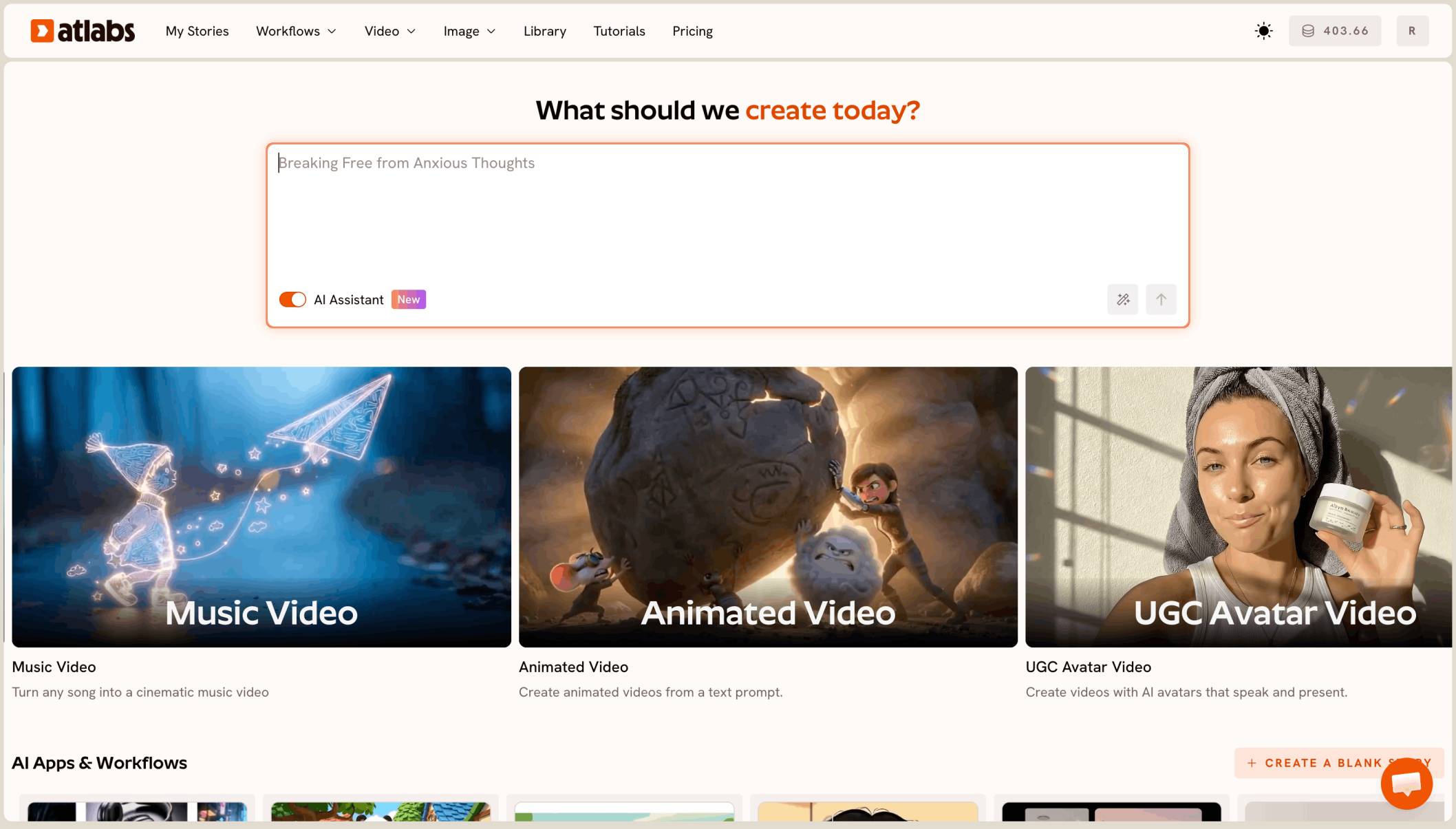
Start a new animated video. Open the Atlabs animated video maker, paste the script, and choose the language, a 16:9 frame and a fast scene pace.
Choose Storyboard as the output. This tells Atlabs to make illustrated still panels instead of animated clips, which is what a motion comic is.
Pick a style. Choose a comic or graphic novel look. There are 50+ styles in Atlabs.
Let Atlabs build the comic. It designs the characters, locations and props, splits the script into panels, illustrates each one, gives every character their own voice, and adds the narrator and music.
Polish it with the AI editor. Ask the Atlabs AI editor to redraw a panel, re-record a line, add captions or text animations, or retime any beat.
Animate it later, if you want to. When the story is locked, turn any panel, or all of them, into animation with the same characters, voices and music.
The inputs behind this film
Here is everything we gave Atlabs to make Crimson Silk Vengeance. Atlabs did the rest: characters, locations, props, every scene, voices and music.
Project settings
Script: A full screenplay, shown in full below
Language: English
Aspect ratio: 16:9, landscape, for YouTube
Scene pace: Fast
Output: Storyboard, still panels rather than animation
Style: 1930s Art Deco Graphic Novel
Watch this atlabs video
The input script
This is the script exactly as it was pasted into Atlabs. It is written in plain English: who the characters are, what happens in each scene, and what the narrator says.
The style: 1930s art deco graphic novel
Crimson Silk Vengeance is drawn as a 1930s art deco graphic novel: jazz age glamour seen through a crime story. The script described the look in a few lines, and Atlabs carried it through every panel.
A jewel toned palette. Deep crimson, champagne gold, emerald green and midnight black. Emerald belongs to Vera, gold to the world of money she is moving through, and crimson to danger.
Art deco geometry. Sharp architectural lines, gilded mirrors, chandeliers and marble give every location the feel of a 1930s poster.
Graphic novel framing. Dramatic shadows, halftone texture, tight close-ups on lips, eyes and hands, and bold cutaways when the story turns.
Suggestive, not explicit. The romance is told through silhouettes and close-up details, and the gunshot through a shattering glass, the way classic noir comics handle it.
The same story could be told in any of the 50+ styles in Atlabs. Others that suit motion comics and noir:
Noir Comic: crime and mystery in high contrast comic panels
Inked Graphic Novel: moody, ink heavy dramatic stories
Duotone Noir Illustration: two colour noir with one bold accent
American Comics: action and superhero comics
Neon Duotone Manga: stylish, neon lit thrillers
Wong Kar Wai: romantic, colour soaked city nights
Meet the cast: characters, locations and props that stay the same in every panel
A comic falls apart if the hero looks different on every page. Atlabs designed each character, location and prop once, from the script, then reused them in all 32 panels. Vera’s black bob and emerald gown, Adrian’s tuxedo and the Trumpeter’s ivory jacket stay the same from the first panel to the last.
Vera Vale

The femme fatale: a sleek black bob, smoky eyes, crimson lips and an emerald satin evening gown with long black gloves.
Adrian Black

A wealthy, overconfident businessman with slicked back hair, a black tuxedo, a silk tie and gold serpent cufflinks.
The Trumpeter

A quiet jazz musician in an ivory dinner jacket, always half in shadow. He never speaks.
The black pistol

The prop that carries the twist of the final act. It appears in the doorway in Act 3.
The Velvet Hour Jazz Club

A 1930s jazz club with golden chandeliers, a black marble bar, burgundy velvet booths and amber spotlights through cigarette smoke.
Private Club Corridor

A narrow hallway lit by a single crimson art deco wall lamp, with a huge gilded mirror.
Grand Monarch Hotel, Room 909

A ninth floor suite with black marble floors, gold furnishings, a tall art deco mirror and a midnight skyline.
Crimson Silk Vengeance, panel by panel
Thirty two panels across three acts. Here is each one, with what it shows and the line it carries.
Act 1: The seduction
Panel 1: Temptation in emerald silk (8.3s)
Narrator: “They say temptation wears many faces. But on a Friday night at the Velvet Hour… temptation wore emerald silk and red lipstick.”
The opening panel sets the whole look: golden chandeliers, black marble, cigarette smoke, and Vera at the bar in emerald silk. The narrator’s smoky voice tells us exactly who to watch.
Panel 2: The man who couldn’t look away (2.0s)

No dialogue
A wordless beat across the club. Adrian Black, in his tuxedo, loses track of his own conversation the moment he sees her.
Panel 3: Everything a man could buy (6.7s)

Narrator: “Adrian Black had everything a man could buy. Everything, that is… except the woman who’d just caught his eye.”
The narrator sizes Adrian up in one line: rich, used to getting what he wants, and already caught.
Panel 4: Drinking alone? (1.1s)

Adrian: “Drinking alone?”
Adrian crosses the room and leans on the bar beside her. The dialogue begins, and each line gets its own panel.
Panel 5: Not anymore (1.7s)

Vera: “Not anymore, apparently.”
Vera turns, unhurried. The panel holds on her expression, which says she has been expecting him.
Panel 6: Something stronger (2.0s)

Adrian: “Can I buy you something stronger?”
Adrian plays his opening move. Short lines and quick cuts keep the scene moving at the fast pace we chose.
Panel 7: Always this predictable? (1.7s)

Vera: “Are you always this predictable?”
Vera leans in close and whispers. The camera pushes tight, the classic graphic novel close-up.
Panel 8: Falling into trouble (3.9s)

Narrator: “Some men fall in love. Adrian preferred to fall into trouble.”
Vera straightens his tie and lets her fingers linger. The narrator delivers the warning Adrian never hears.
Panel 9: Awfully confident (1.5s)

Vera: “You’re awfully confident.”
The pair dance under a golden spotlight. She turns her head at the last second and whispers instead of kissing him.
Panel 10: Shouldn’t I be? (1.1s)

Adrian: “Shouldn’t I be?”
Adrian answers with a grin, completely sure of himself.
Panel 11: How the night ends (1.9s)

Vera: “That depends on how the night ends.”
Vera’s reply is a promise and a threat at the same time, and only the audience can tell.
Panel 12: The hunter becomes the hunted (2.8s)

Narrator: “And just like that, the hunter became the hunted.”
She steps away and offers her hand; he follows. The narrator spells out the twist that the rest of the story will pay off.
Panel 13: What’s your name? (1.3s)
Adrian: “What’s your name?”
A new location: an empty corridor lit by one crimson wall lamp and a huge gilded mirror. Adrian asks the one question that matters.
Panel 14: Does it matter? (1.0s)

Vera: “Does it matter?”
Vera dodges it with a smile, then kisses him. The panel stays elegant and suggestive, never explicit.
Panel 15: Somewhere private (1.3s)

Vera: “Let’s go somewhere private.”
She wipes her lipstick from his lip and suggests they leave. The story cuts to the hotel.
Act 2: Room 909
Panel 16: Room 909 (1.5s)

Adrian: “You are quite something.”
Act 2 opens in the Grand Monarch Hotel: black marble, gold furnishings and a glittering skyline through floor to ceiling windows.
Panel 17: You haven’t seen anything yet (1.9s)

Vera: “You haven’t seen anything yet.”
Vera turns with a playful smile. On a second watch, this line means something very different.
Panel 18: Two different plans (8.5s)
Narrator: “Room 909. A beautiful view. A very expensive bed. And two people with entirely different plans.”
The narrator names the room and drops the biggest hint yet: they want different things from this night.
Panel 19: A delicious little weakness (6.4s)

Narrator: “Ah, desire. That delicious little weakness that makes even the cleverest man forget to ask questions.”
A romantic beat in silhouette, lit by warm bedside lamps. The narrator stays wry, reminding us that desire makes clever men careless.
Panel 20: Emerald silk (2.0s)

No dialogue
A silent panel built from close-up details, the way graphic novels cut away from intimate moments. It keeps the tension high and the story tasteful.
Panel 21: Tell me something true (1.9s)

Adrian: “Tell me something true about yourself.”
Adrian, jacket gone and collar open, asks her for one honest thing.
Panel 22: For years (2.1s)

Vera: “I’ve wanted this moment for years.”
Vera’s answer is the truest line in the film, and Adrian hears it completely wrong.
Panel 23: Years? (1.2s)

Adrian: “Years?”
One word, one flattered smile. He thinks it is about him.
Panel 24: Mmm-hmm (1.0s)

Vera: “Mmm-hmm.”
The last warm moment. Her smile is still there, but her eyes have already gone cold.
Panel 25: The truth outside the door (6.4s)

Narrator: “And that was the trouble with beautiful lies. Sometimes the truth was standing just outside the door.”
Vera looks toward the door. The narrator signals that the lie is about to end.
Act 3: The kiss of death
Panel 26: What the hell is this? (1.4s)

Adrian: “What the hell is this?”
Act 3. The door opens and the trumpeter from the jazz club steps in. He does not say a word; the image does the work.
Panel 27: Business, darling (1.8s)

Vera: “Business, darling.”
Vera reaches for her shawl as if nothing has happened. Two words reveal the whole plan.
Panel 28: Vera, what have you… (1.3s)

Adrian: “Vera, what have you…”
Adrian panics. He knows her name now, and it is far too late.
Panel 29: One shot (2.0s)

No dialogue
The gunshot happens off the page. The panel turns crimson and black, and a falling crystal glass shatters on the marble instead. Violence is implied, not shown.
Panel 30: That’s for my brother (1.1s)

Vera: “That’s for my brother.”
The reveal: an old photograph of Vera with her brother. This was never seduction. It was revenge.
Panel 31: Worth dying for (2.3s)

Narrator: “He thought he’d found a woman worth dying for.”
Vera exhales a ribbon of smoke against the skyline while the narrator sets up the final line.
Panel 32: He was right (2.2s)

Narrator: “Turns out… he was right.”
The last panel: crimson lips, a slow smile, eyes straight to camera. The narrator lands the punchline and the screen cuts to black.
Watch the full tutorial
From motion comic to animated film
Every panel in this project is a still image, on purpose. A motion comic is the cheapest way to find out whether a story works. Once it does, you can animate any panel, or the whole thing, in the same project.
Make the motion comic first in still panels, which use far fewer credits.
Fix the story while it is cheap: redraw a panel, rewrite a line or retime a beat with the Atlabs AI editor.
Animate only what is final, with the same characters, locations, voices and music carried straight over.
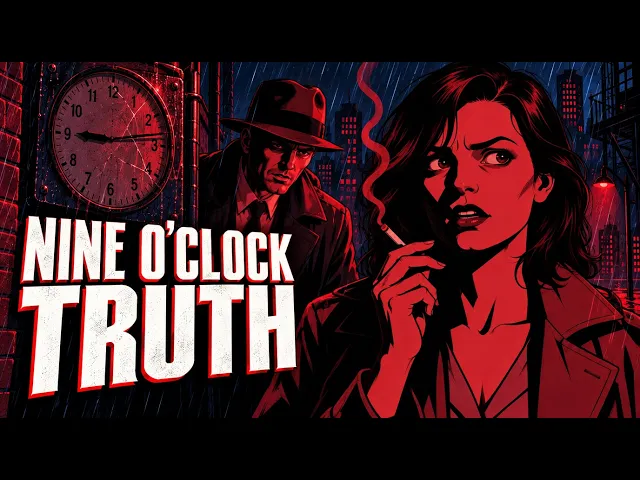
If you like this format, see how we made Nine O’Clock Truth, a 16 panel art deco noir storyboard, the same way.
Frequently asked questions
How do I make a motion comic with AI?
Write a script with scenes, dialogue and narration, paste it into Atlabs, choose Storyboard as the output and pick a comic or graphic novel style. Atlabs designs the characters and locations, illustrates a panel for every beat, voices each character, and adds narration and music. Crimson Silk Vengeance is a 32 panel motion comic made this way from one script.
What is the difference between a motion comic and an animated film?
A motion comic tells the story with illustrated still panels, voices, music and simple camera moves, while an animated film moves the characters themselves. Motion comics are faster and much cheaper to make, so they are a good way to tell a story or test it before you animate.
Can AI give each character in my comic a different voice?
Yes. Atlabs gives every speaking character their own voice and a separate narrator voice. In Crimson Silk Vengeance, Vera, Adrian and the narrator each sound different, so the dialogue is easy to follow even with quick cuts.
How do I keep characters consistent across comic panels?
Use a tool that designs each character once and reuses that design in every panel. Atlabs makes a character sheet for Vera, Adrian and the Trumpeter before drawing anything, so their faces, hair and outfits match in all 32 panels.
Can I animate my AI motion comic later?
Yes. In Atlabs, the storyboard and the animated film are the same project. You can animate one panel or all of them with the same characters, locations, voices and music, and you only spend video credits on scenes you are keeping.
What styles work for a noir or graphic novel comic?
Comic styles with strong shadows and bold colour work best. Atlabs has more than 50 styles, including Noir Comic, Inked Graphic Novel, Duotone Noir Illustration, American Comics and Neon Duotone Manga.
Do I need to be able to draw to make a comic with AI?
No. You write the story and describe the look you want. Atlabs draws every panel, keeps the characters consistent, and handles the voices, music and editing.
How much does it cost to try?
Pricing starts free, with paid plans from $19 per month, Trustpilot rating 4.5/5.
Make your own motion comic with AI
Crimson Silk Vengeance started as a three act noir script. Atlabs turned it into a 32 panel art deco motion comic with consistent characters, three voices and music, all in one place, ready to animate whenever we choose. Your next story can start the same way.