How do I make a space and planets video for kids?
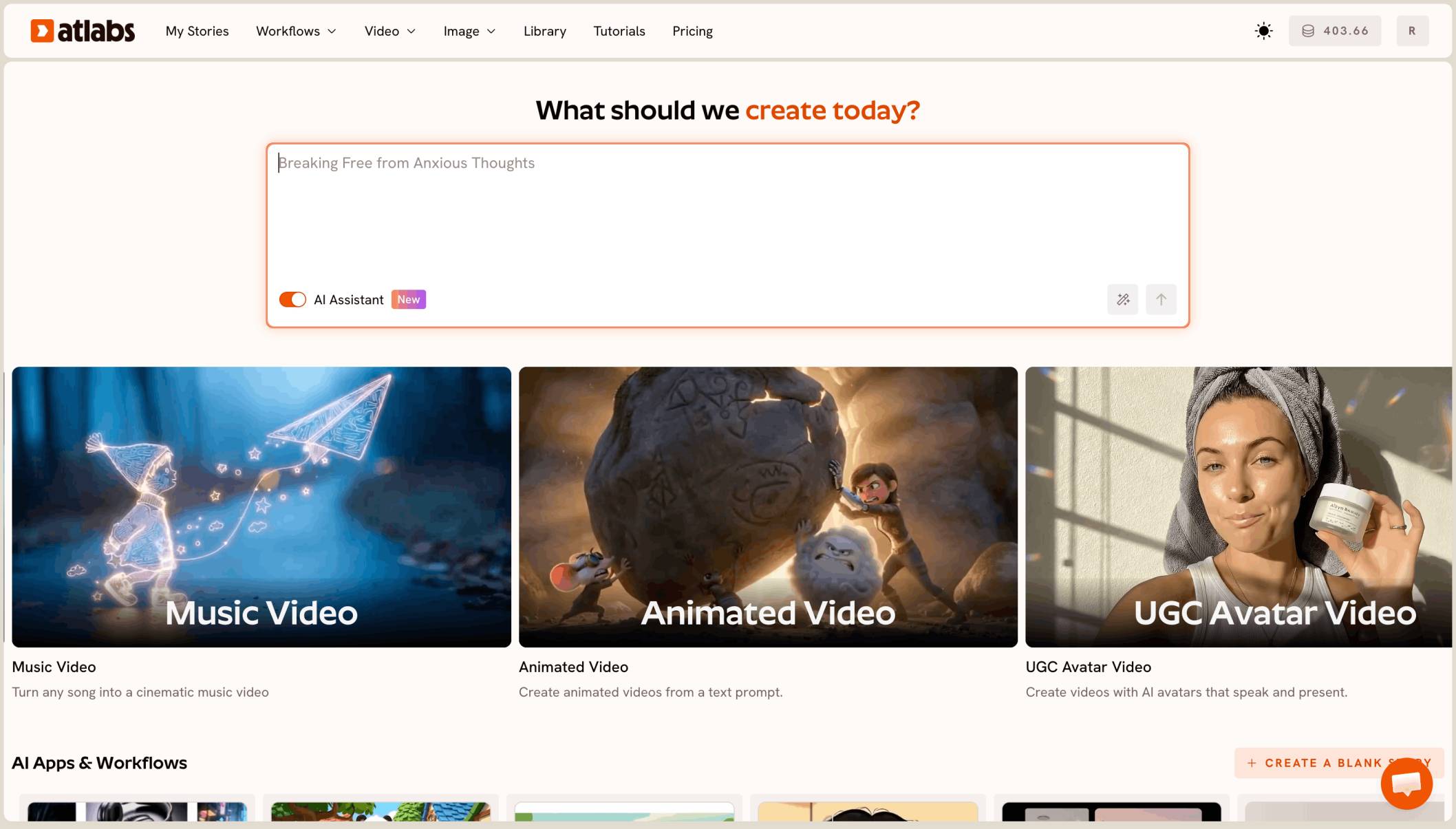
Start with a story, not a fact sheet. A video that just lists the eight planets in order rarely holds a young viewer's attention past the third one, but a character actually traveling from planet to planet, noticing what makes each one strange, does. The Kids Animation Video workflow on Atlabs is built around exactly that: a script, a consistent cast, and a paced screenplay, in three steps.
What You'll Need
Before opening the workflow, decide which planets the episode actually covers. A full solar system tour in one video usually means every planet gets ten seconds and none of them stick; three or four planets with one memorable detail each work far better for a young audience. Have a simple guide character in mind too, a curious kid, a small robot, an animal astronaut, since that character is what turns a fact list into a story kids follow.
Full Step-by-Step Walkthrough
Step 1: Write the Script Around a Journey, Not a List
Open the Kids Animation Video workflow and start with Script. Write the episode as a journey: the guide character leaves Earth, visits each planet in turn, and notices one specific, memorable thing about it, Jupiter's giant storm, Saturn's rings, Mars being red. Ending each planet visit on a small reaction from the character, surprise, excitement, a little fear at Jupiter's size, is what makes the facts land rather than just play.
Step 2: Lock the Cast

Cast is where the guide character gets locked in for good. If this is the first episode of a series, whatever character design gets chosen here is what a returning viewer will recognize in every future space episode, so it's worth treating this as a series decision, not a one off choice.
Step 3: Build the Screenplay

Screenplay breaks the journey into scenes, one per planet, so each stop gets its own clear moment instead of blending into the next. This is also where pacing for a young audience matters most: giving Saturn's rings their own beat, rather than mentioning them in passing during a wider shot, is the difference between a fact a kid remembers and one that goes by unnoticed.
Watch the full walkthrough here: Kids Animation Video workflow tutorial, and see a finished episode built the same way in this real example.
Tips for Better Results
Keep the episode to three or four planets rather than all eight, since depth beats coverage for a young audience. Give the guide character one clear emotion per planet, so each stop has a reaction to remember alongside the fact. Reuse the same guide character and visual style across future space episodes rather than resetting them each time, since a returning character is what turns one video into a series a child asks for by name. End on a small cliffhanger or question, what's past Neptune, to make the next episode feel like it's already been promised.
Example Outputs and Prompts
Prompt 1: Inner Planets Episode
Try this in the Kids Animation Video workflow →
Prompt 2: Giant Planets Episode
Try this in the same Kids Animation Video workflow, reusing the Cast from Prompt 1 →
FAQ
How many planets should one video cover?
Three or four is usually the sweet spot for a young audience. Covering all eight in one video tends to reduce each planet to a passing mention, while fewer planets with a clear, memorable detail each are what a child actually retains.
Do I need a narrator or can a character carry the whole video?
A character works better than a flat narrator for this age group, since a guide character reacting to each planet gives kids someone to follow along with. Cast in the Kids Animation Video workflow is built around exactly that kind of consistent, reusable character.
How do I turn one space video into a series?
Keep the same guide character and visual style locked in Cast, and split the solar system across multiple episodes, inner planets in one, outer planets in another, rather than trying to fit everything into a single video.
What makes a space fact actually stick for a young viewer?
Pairing it with a reaction. A planet fact followed by the character's surprise, excitement, or curiosity is what a child remembers, which is exactly what giving each planet its own scene in the Screenplay step is designed to support.
A good space video for kids isn't measured by how many planets it covers, it's measured by which ones a child still remembers a week later: start your space episode on Atlabs.
Final Verdict
A space and planets video for kids works when it's a story with facts inside it, not facts with a character standing next to them. Covering fewer planets with one memorable detail and a real reaction each time beats a full tour that rushes past everything. That's also why building it as a series pays off: locking the guide character once in Cast and reusing it across episodes is what turns a single space video into a channel kids come back to, and it's the reason the Kids Animation Video workflow is the right tool for this rather than a one off template.