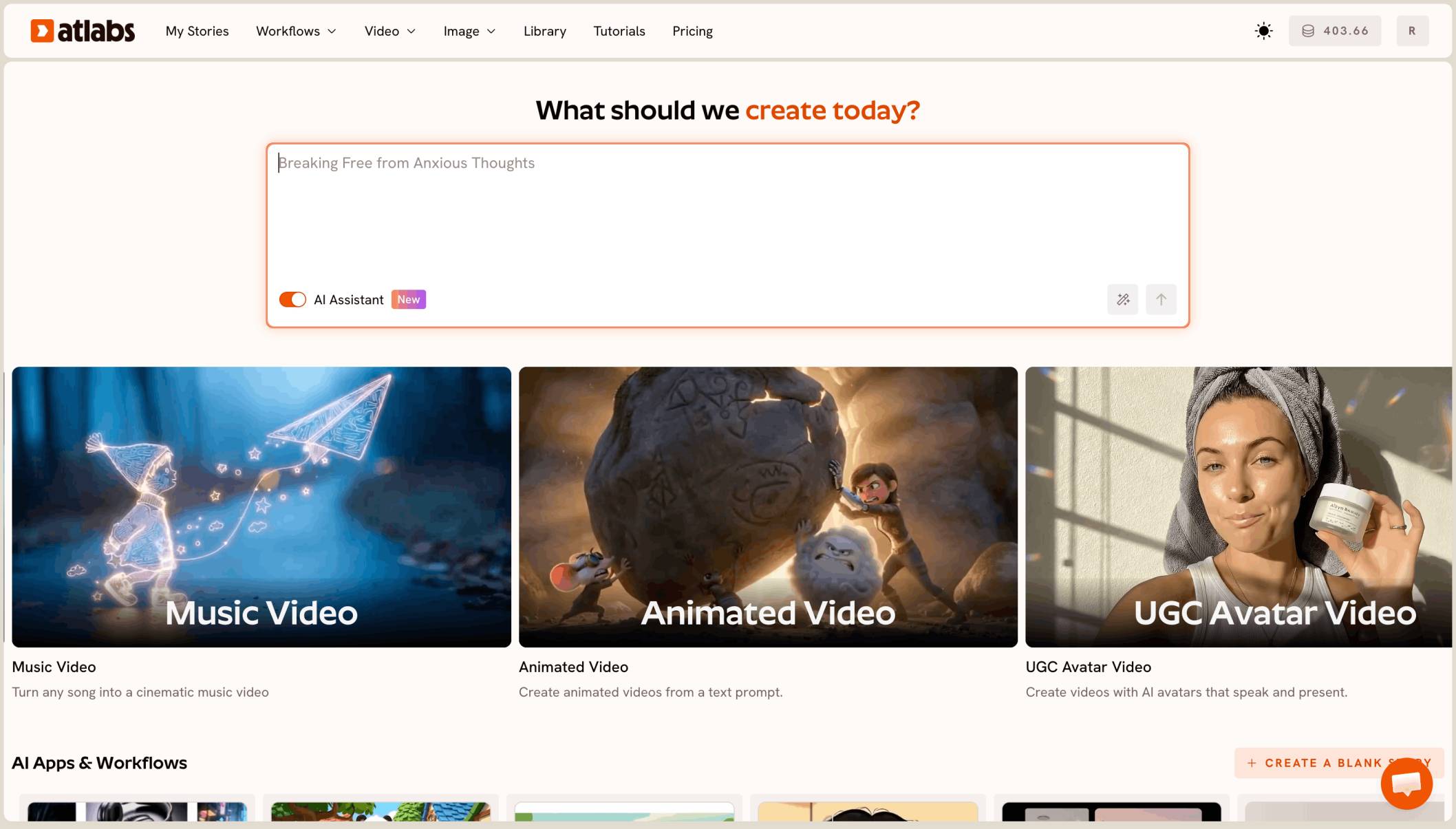
Telling a five year old to share the crayons rarely works twice. Showing a five year old a character who did not share, watched a friend walk away sad, and then fixed it, tends to stick. That is the entire case for teaching manners and social skills through a short animated story instead of a spoken rule, and it used to be the hard part, since a thirty second animated clip meant hiring an illustrator or spending a weekend in editing software. With the Atlabs Animated Video workflow, that same clip comes together in one sitting, without touching a timeline or a rigging tool.
Manners videos work on kids for the same reason picture books do: children learn social behavior by watching it happen to a character they like, not by hearing it explained. A short story where a character forgets to say thank you, notices the reaction it gets, and tries again the next day, teaches the lesson through consequence rather than instruction. That structure, a small mistake followed by a visible fix, is what makes the lesson land, and it is also what the Animated Video workflow is built for, since it is designed around a script, a consistent cast, and a scene by scene screenplay rather than a single static explainer.
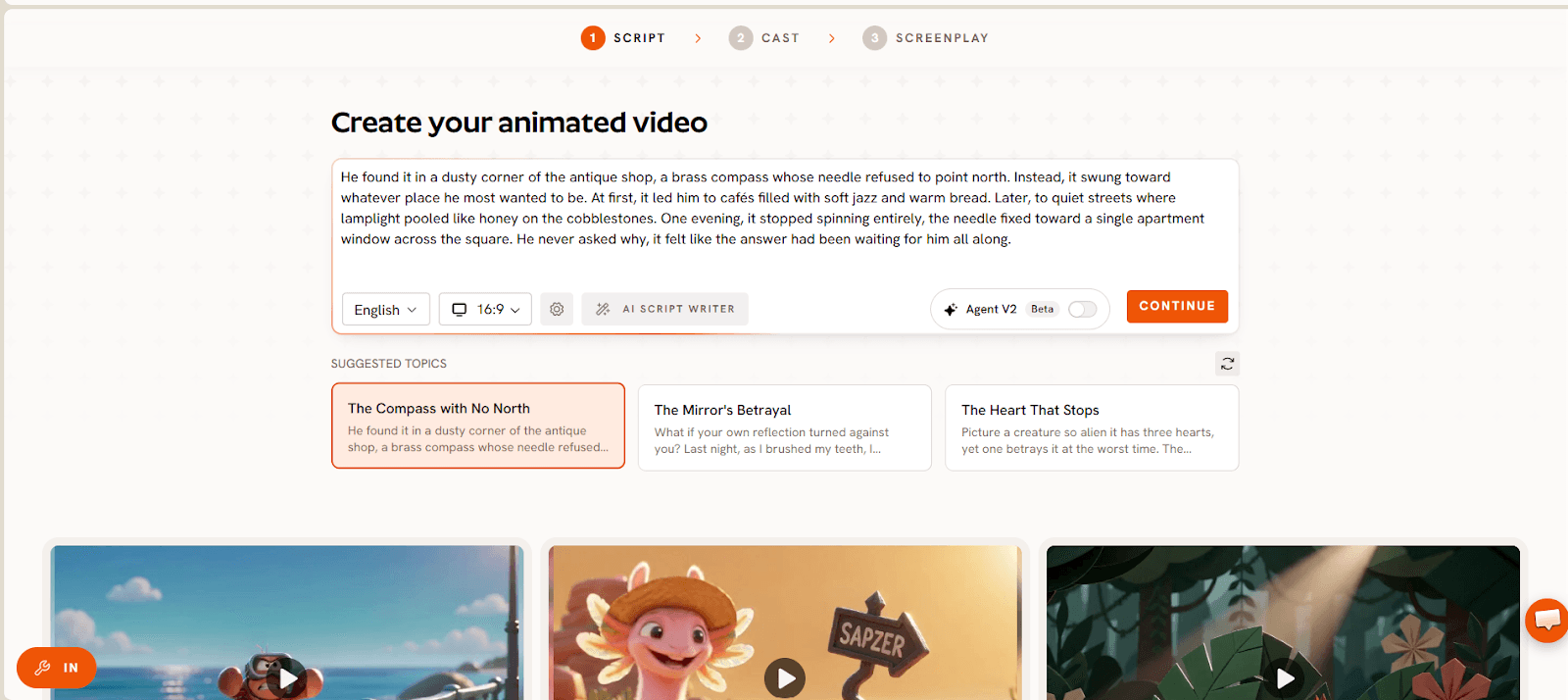
Before opening the workflow, it helps to settle on one lesson per video rather than several. Sharing a toy, saying sorry after bumping into a friend, waiting for a turn, listening when someone else is talking, using kind words when frustrated, or cleaning up after playtime all make a complete thirty to sixty second story on their own, and trying to teach two lessons in one clip usually means neither one is remembered. Once the lesson is picked, the Animated Video workflow turns it into a video across three steps.
The first step is Script, where the lesson gets written as a short story rather than a list of rules. A script that opens with the character making the mistake, shows another character's honest reaction to it, and ends with the character trying again and getting it right, gives the video its entire teaching structure before a single scene is generated. This is also where the tone gets set, since a manners video aimed at a five year old reads very differently from one aimed at a nine year old, and the workflow carries whatever voice is written into the script straight through to the finished video.
Step two is Cast, where the characters who will carry that lesson get locked in.
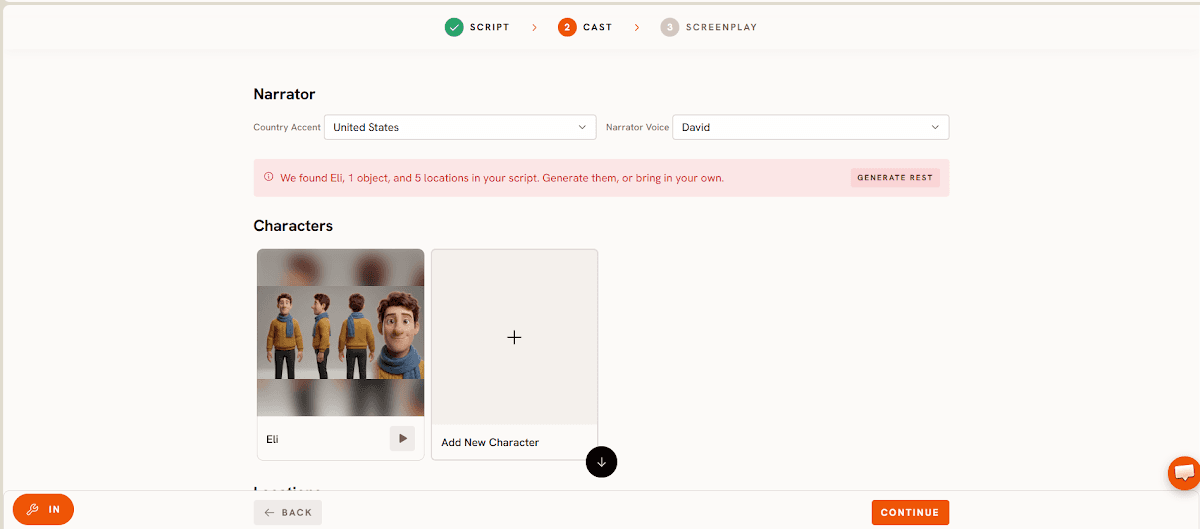
This step matters more for manners content than it looks, because the same character needs to show up making the mistake in one episode and modeling the fix in the next one if a channel is building a series around social skills rather than a single clip. Locking the cast here keeps the character's face and design consistent, so a child watching episode five still recognizes the same friend who learned to share back in episode one. Anyone building out a full library of these lessons should start the cast here, then reuse it through the same workflow for every new topic.
The last step is Screenplay, where the story gets broken into scenes.

This is where the pacing of the lesson actually gets decided, since the moment the character notices their mistake needs its own beat, separate from the moment they fix it, or the video rushes past the part kids are supposed to remember. Giving the turning point of the story its own scene, rather than folding it into a busy wide shot, is the single biggest difference between a manners video that gets rewatched and one that gets skipped.
Watch the workflow in action
The full walkthrough of the Script, Cast, and Screenplay steps is in this tutorial:
A few things make these videos stick after the screen goes dark. Keeping each episode under ninety seconds respects how long a young child's attention actually holds, and ending on the character succeeding, rather than just stating the moral out loud, gives kids something to imitate instead of something to be told. Reusing the same cast across a run of lessons, sharing, patience, kindness, listening, turns a single video into a series a child recognizes and wants to keep watching, which is exactly what the Cast step above is designed to support.
Manners and social skills are learned in small, repeated doses, not one long lecture, and a short animated story is one of the fastest ways to deliver that dose in a form a child actually wants to watch again. The whole process, from writing the script to locking the cast to pacing the screenplay, takes place inside one workflow.