From Prompt to Picture: How to Add Emotional Depth to AI Filmmaking with Visual Motifs
Everyone can now produce beautiful images thanks to the development of generative AI. We are experts at using the "prompt." We are capable of describing both a cinematic portrait and a cyberpunk city. However, despite AI's technological advancements, the AI film community faces a serious issue.
The "Soulless" Showreel is the issue.
Nowadays, most AI "films" are montages rather than actual movies. They are collections of stunning, cohesive, high-resolution moving pictures. We spend weeks figuring out how to upscale to 4K or make a character blink realistically, but we frequently spend no time figuring out why the character is blinking or what the story is really about.
The story suffers when the technology takes center stage. Videos that appear pricey but feel hollow are the end result.
The Solution: Returning to Filmmaking Fundamentals with Atlabs
You need to change your focus from generation to intention if you want to go from being a casual AI generator to a true AI filmmaker. The technology is prepared; all it needs is your narrative.
At this point, Atlabs becomes your greatest asset. The chaos of handling hundreds of dispersed photos and fragmented video clips is frequently the largest obstacle in AI filmmaking. By combining everything into a single, seamless workflow, Atlabs removes this friction and assists you in creating your AI film. It enables you to completely concentrate on the story and cease worrying about file management.
You provide the narrative, and Atlabs assists you in creating the greatest AI movie you can.
Now that the technical assembly is taken care of, you can focus on making artistic decisions that truly evoke strong feelings. Here's how to use Plot, Intent, and Visual Motifs to give your next Atlabs project significant depth, based on a recent analysis of a sci-fi melodrama short film.
1. Keep the Plot Simple (The One-Minute Rule)
Many AI creators try to build massive worlds before they can tell a simple story. The most effective way to add depth is to constrain yourself.
In the example film, the plot is incredibly basic: A father leaves his family for work in space. His daughter grows up without him. He misses her.
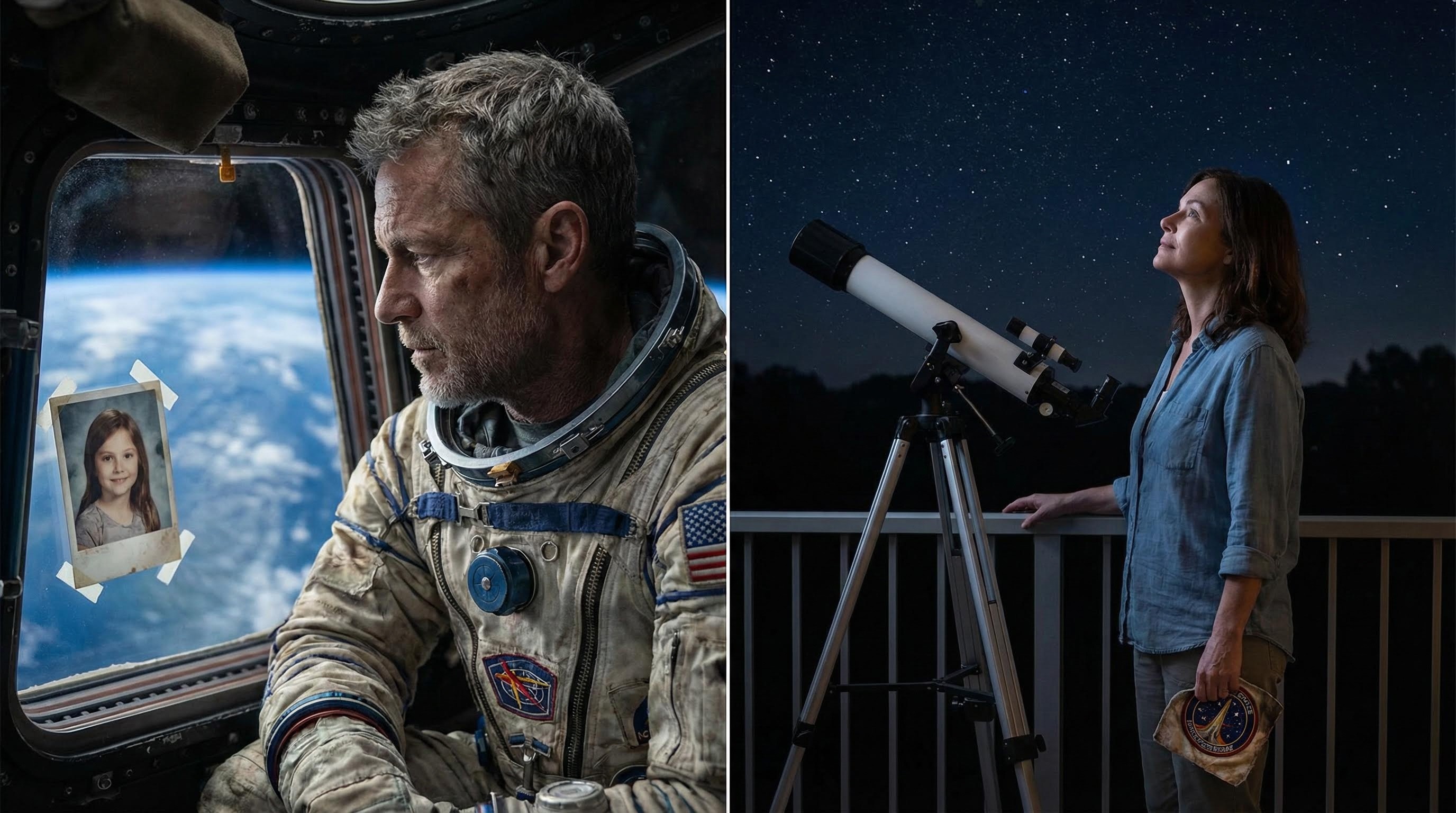
That’s it. There are no complex sci-fi politics or space battles. By keeping the plot simple, you allow the audience to focus on the emotion. As the transcript suggests, "It is hard to get a minute right." If you can’t make an audience feel something in 60 seconds with a simple plot, a 10-minute epic will only dilute the message further.
Takeaway: Start with a micro-drama. Focus on a single life-changing decision or a single moment of realization.
2. Define Your Intent Before You Prompt
Before you open Atlabs ask yourself: What do I want the viewer to feel?
The filmmaker's intent should be specific:
Shock the viewer with how fast the child grows up.
Create empathy for the father’s sacrifice.
Remind the viewer to appreciate their family while they are young.
If you don't have an intent, your AI generations will lack consistency. You will pick the "coolest" looking shot rather than the shot that serves the story. When you have a clear intent, every image you generate acts as a sentence in a paragraph, rather than a random shout in a crowd.
3. The Power of Visual Motifs
A motif is a recurring element in a story that has symbolic significance. This is the secret weapon for AI filmmakers. Because AI video can struggle with character consistency, motifs help glue disparate shots together and tell the audience, "Yes, this is the same story."
Here are two ways to use motifs to add depth:
The Recurring Object
Consider a green stuffed frog is used to anchor the timeline.

Beginning: We see the frog in the family photo and the child playing with it (Innocence).
Middle: We see the grown daughter wearing a golden frog necklace (Memory/Identity).
End: We see the tattered, dirty frog in the cockpit with the father (Loss/Connection).
By prompting for this specific object across different scenes, you create a visual thread. The audience instantly understands the emotional connection between the father in space and the daughter on Earth without a single line of dialogue.
Lighting as a Language
You can use color temperature to manipulate the viewer's emotions without them realizing it. You don't need a lighting crew; you just need to prompt correctly.
Warm Motifs (Oranges/Yellows): Use this for the past, the home, and family. It signals safety and happiness.
Cool Motifs (Blues/Cyans): Use this for the present, the isolation of space, or the sadness of separation.
In the film, the home scenes are bathed in warm, practical light. The space scenes are harsh, cold, and blue. However, the filmmaker adds depth by mixing them: inside the cold spaceship, the dashboard glows with a warm light where the father holds the frog. This visual contrast tells the story: He is in a cold place, holding onto a warm memory.
4. Technical Consistency serves the Story
Finally, once the story is set, use your tools to serve that vision.
Composition: Use Generative AI to compose shots that mirror each other (e.g., the child looking up vs. the father looking down).
Movement: Use AI video tools to generate movement that matches the mood. A crying mother needs subtle, slow motion. A space battle needs chaotic motion.
Editing: Don't just drag and drop. Cut on the beat of the emotion, not just the beat of the music.
Conclusion
We are at a new point in time where a solo creator can rival the visual fidelity of a studio. But fidelity is not enough. To make better AI films, you must embrace the responsibility of the storyteller.
Don't just prompt for "cinematic lighting" or "hyper-realistic detail." Prompt for objects that mean something. Prompt for lighting that tells a truth. Prompt for a story that matters.
Q&A: Quick Tips for AI Filmmakers
What is a visual motif?
A visual motif is a recurring image, object, or color scheme that appears throughout a film to reinforce themes or emotions (e.g., the stuffed frog representing the daughter).How do I fix inconsistent characters in AI video?
While character consistency tools (like LoRA or CREF) are improving, using a strong visual motif (like a specific necklace, a toy, or a distinct color palette) helps the audience identify the character even if the face morphs slightly.What is the best way to start an AI film?
Write the script or the beat sheet first. Do not generate images until you know the emotional arc of the story.