TL;DR
Camera movement separates amateur AI videos from professional content. Learn 10 Hollywood-level camera movements with copy-paste prompts that work in Atlabs AI. Copy these 10 camera movements for cinematic AI videos that will make your videos look like a pro.
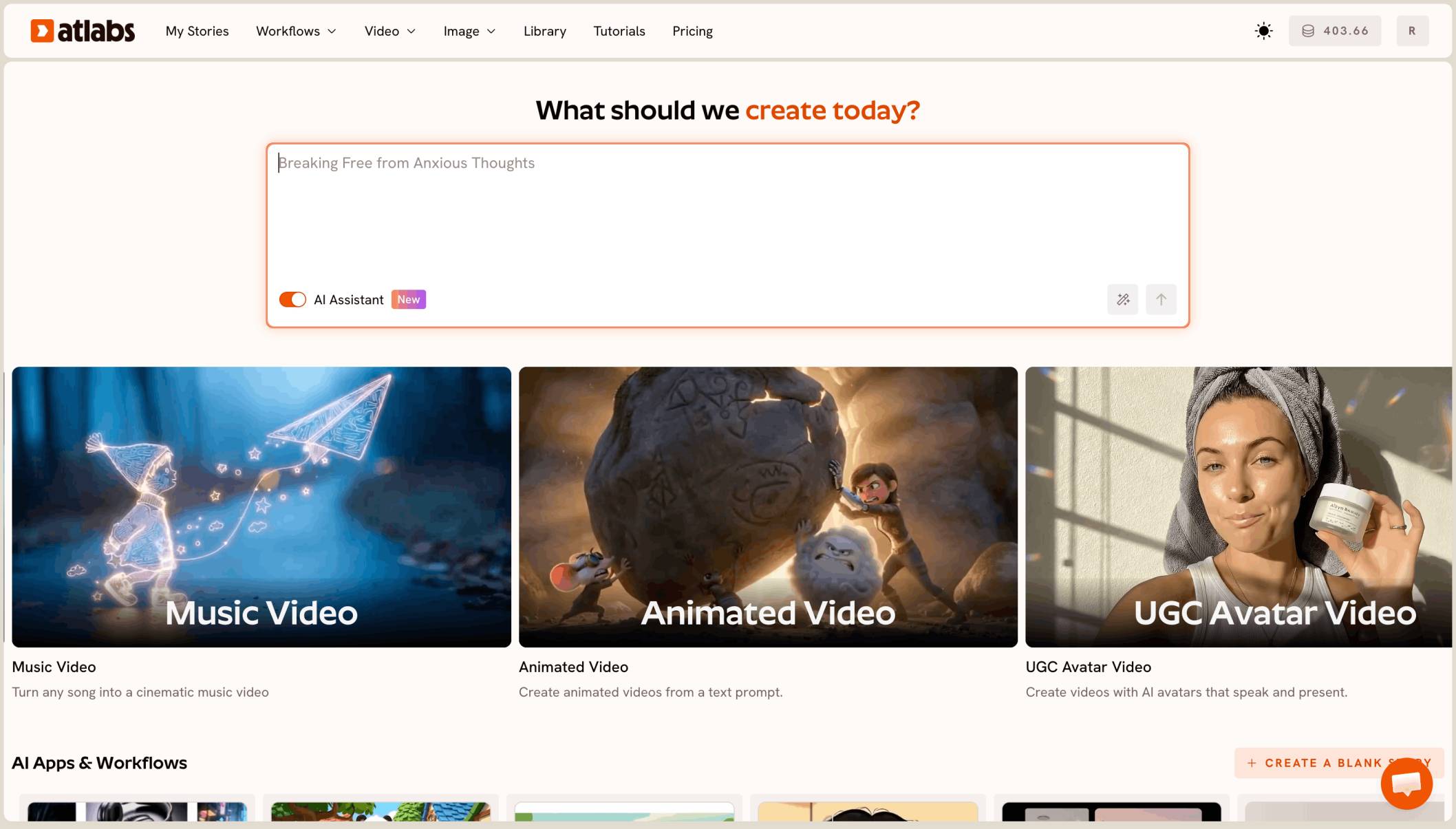
Start Creating Cinematic Videos on Atlabs AI
Why Camera Movement Matters
You can write an incredible script, but without proper camera work, that potential is wasted.
Camera movement:
Controls emotion (slow dolly = intimacy, handheld = anxiety)
Reveals strategically (tilt up for reactions, crane up for scale)
Maintains interest (movement keeps eyes engaged)
Signals quality (proper camera work = professional production)
The Atlabs Prompting Approach
Atlabs understands precise camera language. Be specific about:
✓ Movement type (dolly, pan, tilt, crane, orbit, zoom)
✓ Speed and style (smooth, fast, erratic, stabilized)
✓ What NOT to do ("no zoom", "no pan", "no shake")
✓ Subject behavior (what character does during movement)
Basic: "Camera moves closer"
Cinematic: "Camera dollies forward in straight line at steady pace. Smooth stabilized motion, no zoom. Woman wraps blanket around herself."
10 Essential Camera Movements
1. Dolly In/Out – Emotional Intimacy
Impact: Dolly in = intimacy, intensity. Dolly out = isolation, revealing context.
Copy-Paste Prompt:
Camera dollies forward in a straight line towards the woman. Smooth stabilized motion, no zoom. Woman sips coffee and wraps herself in blanket, looking contemplative.
2. Tilt – Perfect for Reveals
Impact: Tilt up = discovery, power. Tilt down = vulnerability, detail focus.
Copy-Paste Prompt:
Smooth vertical tilt upward at constant speed. Tripod-like stability, no pan, no roll, no dolly. Camera starts on ancient rune, tilts up to reveal woman's concerned face.
3. Tracking Shot – Immersive Movement
Impact: Viewers move WITH character. Smooth, cinematic, controlled feeling.
Copy-Paste Prompt:
Camera translates forward at steady running pace, matching subject's speed. Stabilized tracking, no zoom. Woman runs through snowy terrain with determination.
4. Handheld – Raw Documentary Feel
Impact: Gritty realism, anxiety, chaos, urgency. Viewers feel the chaos.
Copy-Paste Prompt:
Frantic handheld camera movement with natural shake and imperfect stabilization. Responsive, slightly uneven translation, no intentional zoom. Woman sprints forward dramatically, breathing hard.
5. Crane/Jib Up – Revealing Scale
Impact: Character becomes small against vast environment. Epic, overwhelming.
Copy-Paste Prompt:
Camera rises vertically upwards smoothly to reveal vast, snowy, mountainous landscape, making woman appear small. No pan, no tilt, no zoom. Steady vertical ascent.
6. Crash Zoom – Dramatic Intensity
Impact: Sudden shock, dramatic emphasis, visceral emotional punch.
Copy-Paste Prompt:
Very fast optical zoom in with abrupt stop framing woman's face. Camera position fixed, no dolly. Rapid 3-second zoom to tight facial close-up emphasizing shocked expression.
7. Whip Pan – Dynamic Transitions
Impact: Energetic, stylized, sudden focus shift. Great for transitions.
Copy-Paste Prompt:
Extremely fast horizontal whip pan with heavy motion blur, then sharp settle into stable frame. No translation, no zoom. Camera whips from wolf to woman preparing for battle.
8. Orbit/360° – Epic and Romantic
Impact: Epic, heroic, or romantic/poetic depending on framing.
Copy-Paste Prompt:
Full 360° stabilized orbit around woman at constant radius and speed, maintaining consistent framing. No zoom. Woman stands on snowy peak holding sword.
9. Robotic Arm – Superhuman Movement
Impact: Impossibly fast, aggressive, advertising aesthetic. Stands out.
Copy-Paste Prompt (use ChatGPT to generate):
Robotic arm motion control style with fast lateral passes and snappy accelerations, no shake. Instant micro snap left, then right, quick lateral jolts keeping face centered. Crash to extreme close-up.
10. POV/Locked Rig – First Person
Impact: First-person immersion, high-speed intensity, unique perspective.
Copy-Paste Prompt:
Ultra-realistic high-speed shot with camera physically gripping woman's head, maintaining locked perspective. Woman stays centered while landscape rushes past with heavy parallax. Woman performs aerial turns.
Generate These Movements on Atlabs AI
Quick Reference: Movement by Emotion
Emotion | Camera Movements |
|---|---|
Intimacy | Dolly in, Tracking shot, Orbit (close) |
Epic | Crane up, Orbit (wide), Dolly out |
Tension | Handheld, Crash zoom, Robotic arm |
Reveals | Tilt, Crane up, Dolly out |
Action | Whip pan, POV rig, Tracking shot |
Atlabs Workflow for Best Results
Step 1: Create starting frame image (character, location, style locked)
Step 2: Choose camera movement from guide above
Step 3: Customize prompt for your scene
Step 4: Optional: Create end frame for precise transitions
Step 5: Generate in Atlabs (3-5 seconds for most movements)
Pro Tip: Image-to-video workflow gives maximum control over character consistency before adding movement.
Common Mistakes
❌ Vague: "Camera moves closer"
✅ Right: "Camera dollies forward in straight line. Smooth motion, no zoom."
❌ No restrictions: "Camera tilts up"
✅ Right: "Smooth vertical tilt up. No pan, no roll, no dolly."
❌ No character action: "Camera dollies in"
✅ Right: "Camera dollies in while woman wraps blanket, looking contemplative"
❌ Wrong duration: 15-second crash zoom
✅ Right: 3-second crash zoom (maintains impact)
Pro Tips
Match movement to emotion – Romantic? Orbit or dolly. Action? Handheld or tracking.
Start and end frames = control – Create both frames for precise transitions
Think like a director – Choose movements that create the feeling you want
Vary your movements – Mix techniques to maintain visual interest
Conclusion
Master these 10 camera movements to transform AI videos from static clips to professional storytelling. Every movement creates a specific emotion, choose the one that amplifies your scene.
Remember: Camera movement isn't about technique. It's about making viewers feel something.
Stop prompting for camera moves. Start directing them.