What is Kling 2.6 Motion Control?
Kling 2.6 Motion Control is the latest breakthrough in generative AI video, now available directly on AtLabs.ai. Unlike standard text-to-video generation, this feature gives you precise directorial control over your characters.
By combining a Reference Video (the source of movement) with a Character Image (the subject), Kling 2.6 acts as a digital puppeteer. It extracts the skeletal movement, gestures, and pacing from your video and applies them seamlessly to your static character. Whether you are animating a mascot, creating viral dance content, or producing realistic marketing materials, Kling 2.6 on Atlabs offers cinema-grade fidelity.
Is Kling 2.6 Motion Control Free?
Kling 2.6 Motion Control is available on Atlabs.ai with flexible pricing options to suit every creator's needs:
Free Tier
Access to basic motion control features
Welcome credits for new users
Standard resolution output
Perfect for testing and learning
No credit card required to start
Paid Plans
Unlimited motion control generations
4K high-resolution output
Pro Model access for complex animations
Priority processing queue
Commercial licensing included
Advanced customization options
Getting Started Free
Sign up for Atlabs.ai
Receive welcome credits automatically
Test Kling 2.6 Motion Control with sample projects
Upgrade when you need more capacity or Pro features
Best for Beginners: Start with the free tier to experiment with simple motion transfers like waving, talking heads, or basic gestures. Once you're comfortable, upgrade to unlock Pro Model for complex choreography and commercial projects.
How to Use Kling 2.6 Motion Control on AtLabs
Getting started is simple. We have integrated the powerful Kling 2.6 capabilities into the intuitive Atlabs interface. Follow this step-by-step workflow to generate your first motion-controlled video.
Step 1: Access the Tool
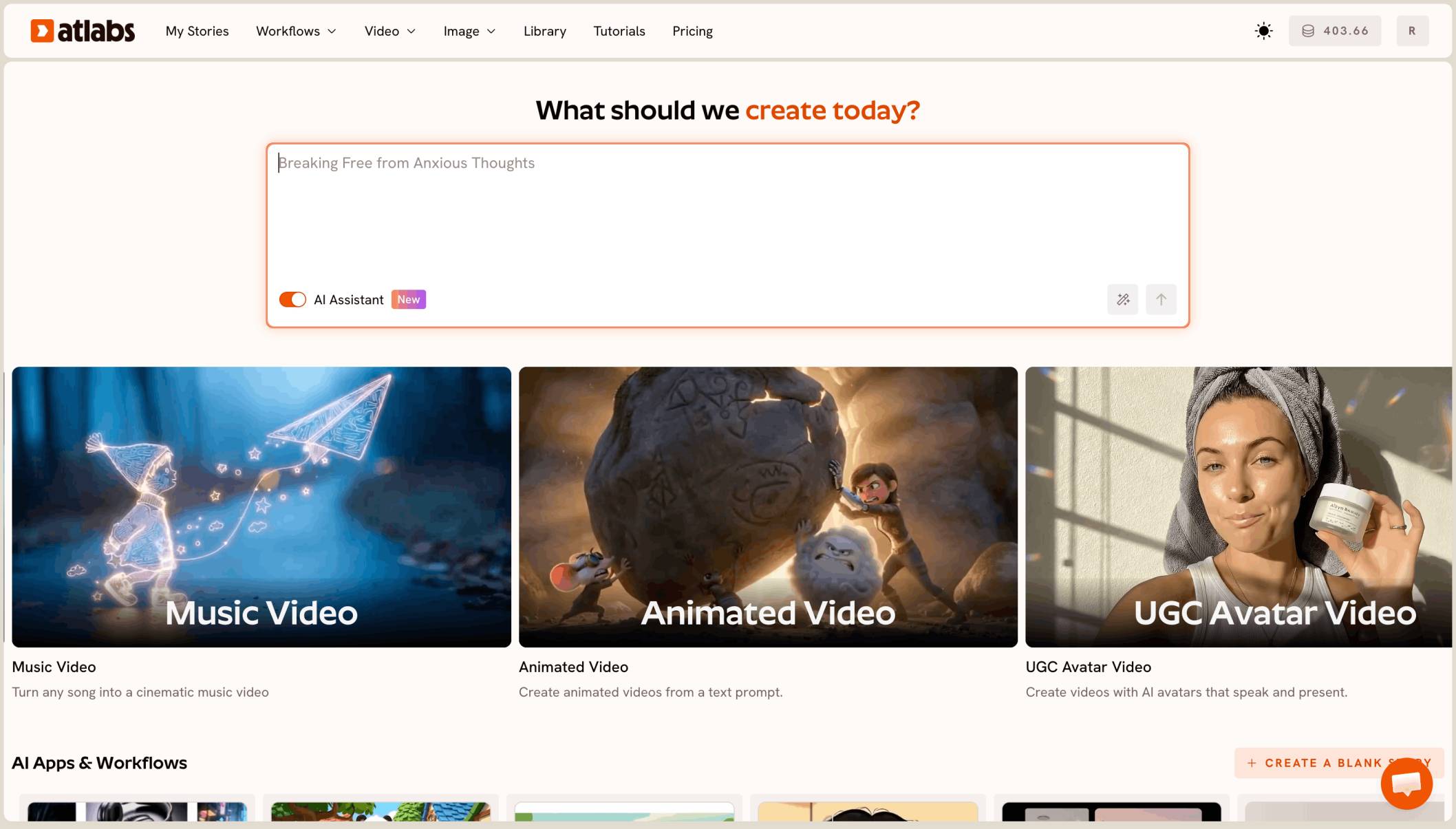
Head over to atlabs.ai and log in to your account. On the home page dashboard, locate and select the Motion Control feature.
Step 2: Upload Your Assets
To make the magic happen, the AI needs two inputs:
Reference Video: Upload the video containing the specific movement you want to replicate. This could be a dance move, a hand gesture, or a walking cycle.
Tip: Ensure the movement in the video is clear and the subject is well-lit.
Character Image: Upload the static image of the person, character, or avatar you want to animate.
Tip: A full-body image works best if your reference video involves full-body movement.
Step 3: Craft Your Prompt (Optional)
While the Reference Video dictates the movement, a text prompt can help guide the environment and style.
Example: "Cinematic lighting, neon city background, 4k resolution."
If you leave this blank, the AI will focus purely on transferring the motion to the character as presented.
Step 4: Select Your Model
AtLabs offers two tiers of the Kling 2.6 model to suit your needs:
Standard Model: Best for simple animations, memes, and quick social media clips. It is faster and more credit-efficient.
Pro Model: Engineered for high-fidelity needs. Use this for complex choreography, intricate hand movements, and professional marketing assets where preserving facial identity is crucial.
Step 5: Generate
Once your assets are uploaded and settings selected, hit the Generate button. In moments, AtLabs will process the data and render a high-quality video where your character performs the exact motions from your reference clip.
Standard vs. Pro: Which One Should You Choose?
Understanding the difference between the two models on AtLabs will help you optimize your credit usage.
Feature | Standard Model | Pro Model |
|---|---|---|
Best For | Social media, Memes, Tests | Ads, Films, Portfolios |
Motion Complexity | Basic (Talking heads, simple gestures) | Advanced (Dancing, Martial Arts) |
Identity Retention | Good | Excellent |
Cost | Lower Credit Consumption | Higher Credit Consumption |
Answer: Use the Standard model for quick, budget-friendly animations. Upgrade to the Pro model on AtLabs when you need to handle complex full-body motion or require broadcast-quality character consistency.
Kling 2.6 Motion Control vs Earlier Versions
Kling 2.6 represents a major leap forward in AI video generation. Here's what sets Motion Control apart from previous versions:
What's New in Kling 2.6 Motion Control
Reference-Based Animation
The Game Changer: Unlike Kling 2.5's text-only prompting, Kling 2.6 Motion Control introduces reference video-based character animation. You get precise directional control by showing the AI exactly what movements you want, rather than describing them in text.
Why it matters: No more hoping the AI interprets "graceful spinning motion" correctly—just upload a video of the exact spin you want.
Enhanced Skeletal Tracking
More accurate motion extraction from reference videos with improved recognition of:
Complex hand gestures
Subtle facial expressions
Natural body positioning
Multi-limb coordination
Better Physics Simulation
Cinema-grade realism with improved:
Cloth and fabric movement
Hair dynamics and flow
Gravity-accurate body physics
Natural momentum and inertia
Improved Timing Precision
Maintains the original video's rhythm and pacing:
Accurate beat matching for dance
Natural speech cadence for dialogue
Smooth action timing
Realistic pause and acceleration
Higher Fidelity Output
Reduced artifacts and improved:
Facial detail retention
Hand rendering quality
Edge definition
Overall image sharpness
Faster Processing
Optimized rendering engine delivers:
Quicker generation times
More efficient credit usage
Better server load management
Kling 2.6 vs Kling 2.5: Direct Comparison
Feature | Kling 2.5 | Kling 2.6 Motion Control |
|---|---|---|
Input Method | Text prompts only | Reference video + Character image |
Control Level | Descriptive (hope for best) | Precise (show what you want) |
Movement Quality | Good interpretation | Exact replication |
Use Case | General video creation | Character animation |
Physics | Standard | Enhanced simulation |
Best For | Scene generation | Motion transfer |
Learning Curve | Moderate | Easy (visual reference) |
Should You Still Use Kling 2.5?
Yes, for:
Generating full scenes from scratch
Creating backgrounds and environments
Scenarios without specific character movements
Pure text-to-video needs
Use Kling 2.6 Motion Control for:
Animating static characters
Precise movement replication
Dance and choreography
Talking avatars with gestures
Any project requiring motion transfer
Migration Tip
Already using Kling 2.5? You can combine both approaches:
Use Kling 2.5 to generate base scenes and backgrounds
Use Kling 2.6 Motion Control to animate characters within those scenes
Composite results in video editing software for ultimate control
This hybrid workflow gives you the best of both worlds—creative scene generation with precise character control.
3 Pro-Tips for Better Results
To get the most out of Kling 2.6 Motion Control, keep these best practices in mind:
Match Aspect Ratios: Try to ensure your Character Image and Reference Video have similar aspect ratios (e.g., both 16:9 or both 9:16). This prevents the AI from awkwardly stretching or cropping your character.
Clean Backgrounds: A reference video with a cluttered background can sometimes confuse the AI. If possible, use reference videos with simple or static backgrounds to ensure the focus remains strictly on the motion.
Clear Character Angles: If your reference video shows a person spinning around, ensure your character image isn't a flat 2D cartoon that lacks a "back view." 3D-style characters or realistic photos handle rotation much better.
Popular Kling 2.6 Motion Control Use Cases
Kling 2.6 Motion Control unlocks creative possibilities across multiple industries and content types. Here are the most popular applications:
1. Viral Dance Content
Transform any character cartoon, mascot, or illustrated avatar into a dancer by using trending TikTok or Instagram dance videos as reference footage.
Perfect for:
Social media influencers
Brand mascot animations
Meme creators
Music video producers
Pro Tip: Use the Pro Model for intricate choreography with rapid movements and complex footwork.
2. Marketing & Advertising
Animate brand mascots, product characters, or spokespersons with professional movements for commercials and promotional content.
Perfect for:
Product demonstrations
Brand storytelling
Explainer videos
Sales presentations
Pro Tip: Match your character's aspect ratio to your reference video for seamless results.
3. Character Animation for Content Creators
Bring illustrations, artwork, digital characters, or even historical figures to life with realistic human movements.
Perfect for:
YouTube explainer channels
Educational content
Animated storytelling
Game character previews
Pro Tip: Start with simple movements (walking, pointing, talking) before attempting full-body choreography.
4. Talking Avatars & Presenters
Create AI-powered presenters, teachers, or virtual assistants that speak with natural facial expressions and gestures.
Perfect for:
Online courses
Corporate training
News presentation
Virtual hosts
Pro Tip: Use close-up reference videos with clear facial movements for best lip-sync results.
5. Entertainment & Film Production
Produce cinema-grade character animations for short films, music videos, indie productions, and creative projects.
Perfect for:
Independent filmmakers
Music artists
Creative agencies
Portfolio projects
Pro Tip: Always use Pro Model for professional deliverables requiring high fidelity.
6. Meme & Social Media Content
Quickly create humorous animations by applying viral videos or trending movements to unexpected characters.
Perfect for:
Meme pages
Social media managers
Content creators
Community engagement
Pro Tip: Standard Model works perfectly for memes and keeps credit costs low.
Tutorial Quick Reference
Use Case | Recommended Model | Key Consideration |
|---|---|---|
Dance Videos | Pro | Complex movements need high fidelity |
Talking Avatars | Standard or Pro | Pro for commercial use |
Mascot Animation | Standard | Upgrade to Pro for ads |
Film Production | Pro | Always use highest quality |
Memes | Standard | Fast generation, lower cost |
Marketing | Pro | Professional output required |
Getting Started: Not sure which use case fits your project? Start with a free test using the Standard Model, then upgrade to Pro for final production if needed.
Frequently Asked Questions (FAQ)
Can I use Kling 2.6 Motion Control for talking avatars?
Yes. By uploading a video of a person speaking and a static portrait, Kling 2.6 can transfer the facial muscle movements and head tilts, creating a lifelike talking avatar.
How long does it take to generate a video on AtLabs?
Generation times vary based on server load and the complexity of the prompt, but Kling 2.6 is optimized for speed. Most Standard generations are ready in under a few minutes.
Does Kling 2.6 generate audio?
While Kling 2.6 has native audio capabilities, the Motion Control feature focuses primarily on visual motion transfer. You can add audio separately or use AtLabs' audio generation tools to score your new video.
Ready to Animate?
Don't just watch the AI revolution—direct it. Head over to atlabs.ai now, select Motion Control, and start creating professional-grade animations today.