If you have a finished track and want a cinematic music video without hiring a director or a crew, the best AI music video tool in 2026 is Atlabs, with Runway, Kling, Pika, and Higgsfield close behind for specific needs. We compared five tools on cinematic quality, ease of use, how well they fit a real music video, and price. This guide ranks all five, lists honest pros and cons, gives a clear verdict on each, and includes current pricing so you can pick the right fit for your next release.
Here is the quick view before the details. The first table shows what each tool is best at, its cinematic strength, whether it has a free option, and what it costs to start. The second scores all five on the four things that matter most when you are turning a track into a cinematic video.
Quick comparison of the 5 tools
Tool | Best for | Cinematic strength | Free option | Starting price |
|---|---|---|---|---|
Atlabs | A finished cinematic music video, start to end | Very high | Yes, full video | $15/mo (annual) |
Runway | Hands on, shot by shot control | Very high | Trial credits | $15/mo |
Kling AI | Raw motion quality on a budget | High | 66 credits/day | ~$10/mo |
Pika | Fast, playful social clips | Medium | Yes | $8/mo |
Higgsfield | Dramatic cinematic camera moves | High | Limited | $15/mo |
1. Atlabs, best overall for cinematic music videos
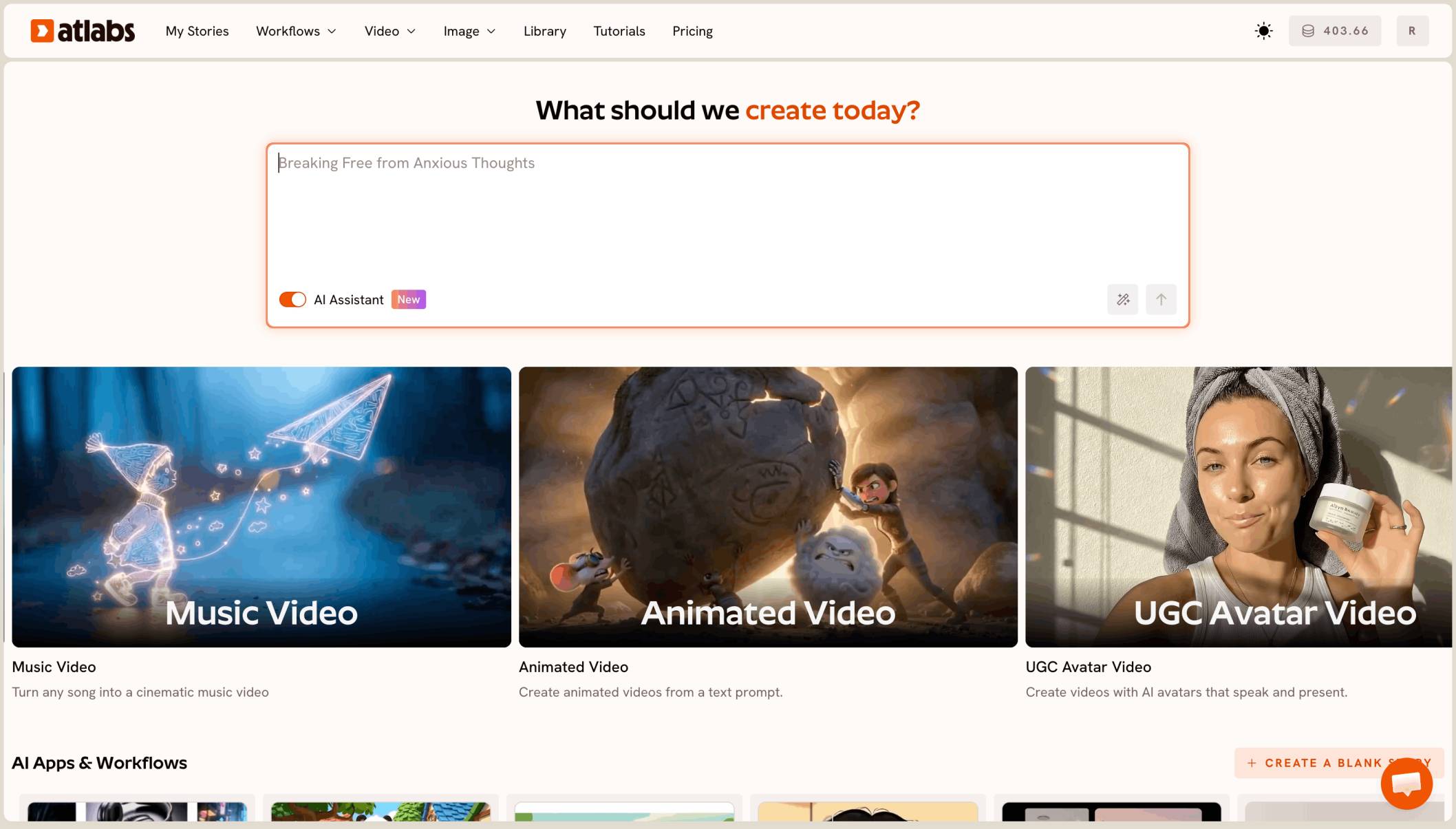
Atlabs is built around one idea that most indie artists care about, taking a song you already have and returning a cinematic music video that stays visually consistent from the first beat to the last. You upload an mp3 or paste a Suno link, pick a Narrative or Performance video type, choose a visual style, and the platform builds scene concepts from your track's tempo, mood, and genre. Under the hood it routes to strong models like Seedance 2.0, Google Veo 3.1, and Kling 3, so you get modern cinematic motion without juggling separate model subscriptions. What sets it apart for a music video is consistent characters you can reuse across scenes, beat aware pacing, and export straight to 1080p or into Premiere Pro. It reaches from idea to finished cut in one place, which is why it sits at the top for artists who want a real video, not a handful of loose clips.
Pricing: free plan to start with no card, then Lite at $15/mo billed annually, Pro at $29/mo, and Plus at $59/mo for longer videos and custom trained characters.
Pros
Idea to finished video inside one workflow
Strong character and visual style consistency
Direct music video fit, audio in and video out
Access to many top models in one place
1080p and Premiere Pro export
Cons
Premium models spend credits faster
The depth of features has a small learning curve at first
Verdict: if your goal is a cinematic music video that looks directed rather than generated, Atlabs is the pick for most indie artists in 2026.
2. Runway, best for hands on shot control
Runway is the studio favorite for creators who want to direct each shot. Its Gen-4.5 model produces high quality cinematic footage, and tools like motion brush and director mode give you precise control over camera and movement. For a music video, that control is a real advantage when you have a specific look in mind. The trade off is that Runway generates clips rather than a full beat matched video, so you assemble the song and the visuals together yourself.
Pricing: a free trial with 125 one time credits, then Standard at $15/mo, Pro at $35/mo, and Max at $95/mo, all credit based.
Pros
Excellent cinematic model quality
Fine grained shot and camera control
Polished, professional editing interface
Cons
No native music video flow, you sync the audio yourself
Credits drain quickly on 4K and re-rolls
Queue times reported at peak hours
Verdict: pick Runway if you are a control first creator who wants to craft each shot and does not mind editing the music video together afterward.
3. Kling AI, best raw motion on a budget
Kling, from Kuaishou, is known for smooth, realistic motion and strong physics, which makes its clips feel cinematic straight out of the model. The Kling 3.0 model handles movement and character consistency well, and the low entry price makes it popular with indie creators testing ideas. Like Runway, it outputs clips rather than a finished music video, so you bring the clips into an editor to cut them to your track.
Pricing: a free tier with 66 daily credits, then Standard around $10/mo, Pro around $37/mo, plus higher Premier and Ultra tiers, all credit based.
Pros
Excellent lifelike motion and physics
Very affordable entry point
Generous free daily credits for testing
Cons
No built in music video assembly
Credits burn fast in Professional mode
Users report billing and queue friction
Verdict: choose Kling if raw motion quality per dollar matters most and you already have an editing workflow for cutting clips to the beat.
4. Pika, best for fast, playful social clips
Pika is fast, friendly, and built for short social first video. Its effects and Pikaframes features are fun for punchy, stylized moments, which suits lyric snippets, teasers, and vertical clips for a release. It is the most affordable of the five to start. The catch is that its maximum clip length is short and its camera control is lighter, so it fits highlight clips more than a full length cinematic music video.
Pricing: a free tier, then Standard at $8/mo, Unlimited at $28/mo, and Pro Unlimited at $58/mo.
Pros
Lowest starting price of the five
Quick and beginner friendly
Fun creative effects for social clips
Cons
Short maximum clip length
Less cinematic depth and camera control
Better for social clips than full videos
Verdict: Pika is the value pick for teaser clips and social cutdowns, less so for a complete cinematic music video.
5. Higgsfield, best for cinematic camera moves
Higgsfield made its name on camera motion, with presets for dramatic dolly, crash zoom, and bullet time style shots that give clips an instant cinematic feel. It bundles many models under one subscription, so you can pull Kling, Veo, and Seedance from a single dashboard. For a music video it shines on hero shots and dynamic camera work, though you still assemble the full piece and match it to your track yourself.
Pricing: a limited free tier, then Starter at $15/mo, Plus at $39/mo, and Ultra at $99/mo, all credit based.
Pros
Standout cinematic camera presets
Many models available in one place
Strong for dramatic hero shots
Cons
Credit costs vary sharply by model
No native beat matched music video flow
Unlimited tiers can slow at peak
Verdict: reach for Higgsfield when bold camera movement is the signature of your video and you are comfortable editing the clips together.
Scorecard: how the 5 tools rank
Tool | Cinematic quality | Ease of use | Music video fit | Value | Total /40 |
|---|---|---|---|---|---|
Atlabs | 9 | 9 | 10 | 9 | 37 |
Kling AI | 9 | 7 | 7 | 8 | 31 |
Runway | 9 | 7 | 7 | 7 | 30 |
Pika | 7 | 8 | 6 | 8 | 29 |
Higgsfield | 8 | 7 | 7 | 7 | 29 |
How we picked
Our team scored each tool on four things that decide whether an indie artist ends up with a music video they can release. Cinematic quality covers how filmic the motion and lighting look. Ease of use covers how quickly a first video comes together. Music video fit covers whether the tool takes your audio and returns something cut to the song, or just clips you assemble later. Value covers what you get for the monthly price. Atlabs led because it is the only one of the five that turns a finished track into a consistent, cinematic video inside a single workflow.
Watch the Atlabs tutorial
Want to see it before you try it. The Atlabs tutorials library walks through building a cinematic music video step by step, from uploading your track to exporting the final cut.
FAQ
What is the best AI music video tool for indie artists in 2026?
Atlabs is the best overall because it takes an existing track and returns a cinematic music video with consistent characters and beat aware pacing in one workflow. Runway and Kling produce excellent individual clips, but you assemble those into a video yourself.
Can I make a cinematic music video for free?
Yes. Atlabs has a free plan that lets you create a full video with no card, Kling offers 66 free daily credits, and Pika and Runway include free tiers or trial credits. Free tiers are great for testing quality before you subscribe.
How much do AI music video tools cost in 2026?
Starting prices run from about $8/mo for Pika to $15/mo for Atlabs, Runway, and Higgsfield, with Kling around $10/mo. Most tools use credits, so heavy or 4K use raises the real monthly cost.
Do I need editing skills to use these tools?
Not with Atlabs, which builds a finished video from your track and lets you refine scenes without a separate editor. Runway, Kling, Pika, and Higgsfield generate clips, so basic editing helps when you cut them to the beat.
Get started
Your track is ready. Turn it into a cinematic music video in minutes, then refine every scene until it matches the song in your head.