Looking for a LongStories alternative for long-form kids animated stories?
The best alternative to LongStories for kids animated stories is Atlabs, plus three other tools worth knowing: OpenArt, Animaker, and Runway. Atlabs is built around a script and a locked cast. Its Kids Animation Video workflow takes you through three steps, Script, Cast, and Screenplay, so the same characters carry through a whole narrated story instead of being rebuilt scene by scene. LongStories is a capable tool for long animated stories, and the sections below explain where creators run into its limits and what to do about it.
Build Your Kids Story in the Kids Animation Video Workflow →
LongStories Alternatives at a Glance
Atlabs | LongStories | OpenArt | Animaker | Runway | |
|---|---|---|---|---|---|
Best for | A scripted, narrated kids story with one cast | Reusable story worlds (Universes) | Building a character library | Hand-built 2D scenes | Cinematic single clips |
Starting point | A script or idea, then Script, Cast, Screenplay | Scripts, ideas, or a saved Universe | Character Builder and Director storyboard | Character builder, templates, text to animation | Prompts and references in a general creative suite |
Character reuse | Cast step locks the characters for the whole story | Characters and Universes reused across videos | Characters saved to a library and tagged for reuse | Custom characters from the builder | Characters product listed on its developer platform |
Scene review before building | Yes, in the Screenplay step | Scene editing on paid plans | Storyboard shaped shot by shot in Director | Scenes built and timed by hand | Not described for story workflows |
Length noted by the tool | Not stated here, confirm in the workflow before planning a series | Up to 10 minutes on entry plans, up to 15 on higher plans | Standard clips up to 15 seconds; Director length not stated | Not stated on its homepage | Not stated on its homepage |
Watch for | Centers script and cast, not a shared world | Upfront Universe setup and plan length caps | Confirm story length before planning an episode | No kids script-to-episode flow described | No multi-scene story workflow described |
Why People Switch from LongStories
LongStories is organized around "Universes," reusable templates that hold characters, visual style, voice, and world. It supports videos up to 15 minutes and offers several kids and bedtime story generators. Three limits come up for creators who publish on a schedule.
First, the setup takes upfront time. A published review of the tool puts Universe setup at 10 to 15 minutes before the first story, and notes that vague prompts produce generic characters. Second, length depends on the plan. According to LongStories' pricing page, the entry plans cap a video at 10 minutes, and only higher tiers raise that to 15. Third, video creation sits behind paid monthly plans, and the same review warns that premium animation credits add up quickly at a regular publishing cadence. For a kids channel posting every week, those three points decide whether the tool fits.
1. Atlabs: Best LongStories Alternative for Kids Animated Stories

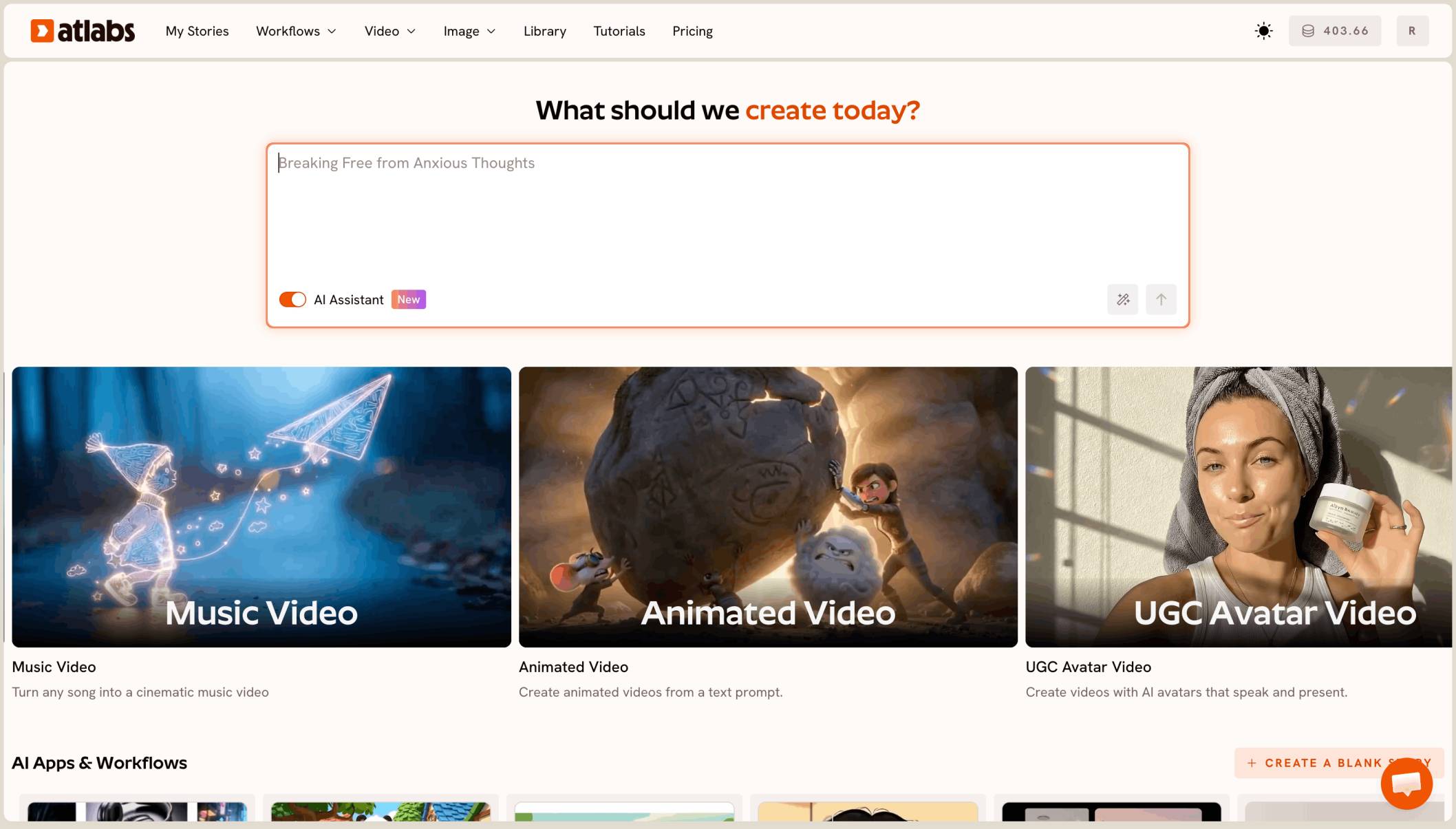
The Kids Animation Video workflow, where a story script becomes an animated episode.
Atlabs approaches a kids story the way a kids story is actually written: script first, characters second, scenes third. Atlabs is also covered in a Pinion Newswire press release roundup of AI cartoon video generators, syndicated on StreetInsider.
Step 1: Script

Start in the Kids Animation Video workflow with the story itself. Bring a finished script or an idea, whichever you have. A script with clear scene breaks gives the later steps more to work with.
Step 2: Cast

Set up the characters once. This is the step that matters most for a series, because the cast you lock here is the cast that appears in every scene of the story, which is the problem Universes are designed to solve in LongStories.
Step 3: Screenplay

Review the story scene by scene before you commit. Screenplay is where the script becomes a sequence of scenes you can check, so a wrong beat gets fixed here and not after the full video is built.
Watch the full walkthrough here: Kids Animation Video workflow tutorial.
One honest tradeoff: LongStories is organized around reusable worlds with locations and cast, while Atlabs centers the cast and the script. If your series depends on a large, shared world you build once and reuse for months, compare that setup carefully with the three steps above.
Start Your Story with Script, Cast, and Screenplay →
2. OpenArt: Best for Building a Character Library
OpenArt offers a Character Builder that saves a character to a library so it can be tagged and reused, and a Director tool for laying out a storyboard shot by shot by chatting. Its standard video generator makes clips up to 15 seconds, and the homepage does not state a length for Director videos, so confirm that before planning an episode. Use it for character design and short scenes.
3. Animaker: Best for Hand-Built 2D Scenes
Animaker pairs a character builder with a large template library and text to animation, and exports from SD up to 4K. It suits creators who like assembling scenes themselves. Its homepage does not describe features built for kids content or a script-to-episode flow, so a long story means building and timing the scenes by hand.
4. Runway: Best for Cinematic Single Clips
Runway is a general creative platform for generating and editing video, images, and audio, with a Characters product listed on its developer platform. Its homepage does not describe a multi-scene story workflow, which makes it a better fit for striking individual shots than for a narrated episode with a recurring cast.
How to Migrate from LongStories to Atlabs
There is no import from one tool to the other, so move over what you own: your scripts and your character descriptions. Rebuild each recurring character once in the Cast step, using the same descriptions you wrote for your LongStories Universe. Run one episode through Script, Cast, and Screenplay as a pilot, compare it with your current output, and only then move the rest of the series. Keep your existing episodes as they are, since nothing needs to be redone.
Rebuild Your Cast in the Kids Animation Video Workflow →
FAQ
What is the best LongStories alternative for kids animated stories?
Atlabs, if you write your stories as scripts. The Kids Animation Video workflow moves from Script to Cast to Screenplay, keeping one cast through the story.
Is Atlabs better than LongStories for long kids stories?
It depends on how you work. LongStories offers Universes and videos up to 15 minutes on higher plans. Atlabs fits creators who want to start from a script, lock the cast once, and review every scene in Screenplay before the video is built.
Can I keep the same characters across episodes?
Yes, that is what the Cast step is for. Set the characters up once and carry the same cast into each new story, rather than describing them again every time.
Do I need animation skills to make a kids story with Atlabs?
No. You write or bring the script, set the cast, and review the screenplay. There is no timeline to build, unlike hand-assembled tools such as Animaker.
Turn Your Next Kids Script into an Animated Story →
Final Verdict
LongStories remains a strong choice if you want reusable story worlds and the longest single videos its higher plans allow. For a kids channel that publishes regularly, though, setup time, plan caps, and credit costs matter as much as maximum length. Atlabs gives you a shorter path: write the script, lock the cast once, and check every scene in Screenplay before the episode is built. OpenArt, Animaker, and Runway each do part of the job, character libraries, hand-built 2D scenes, and cinematic clips, but none of them walks a script through to a narrated episode the way the Kids Animation Video workflow does. If your goal is a weekly kids story with the same characters every time, start with Atlabs.
Create Your First Kids Animated Story on Atlabs →