How do you script a 2-minute kids story that a toddler will actually watch?
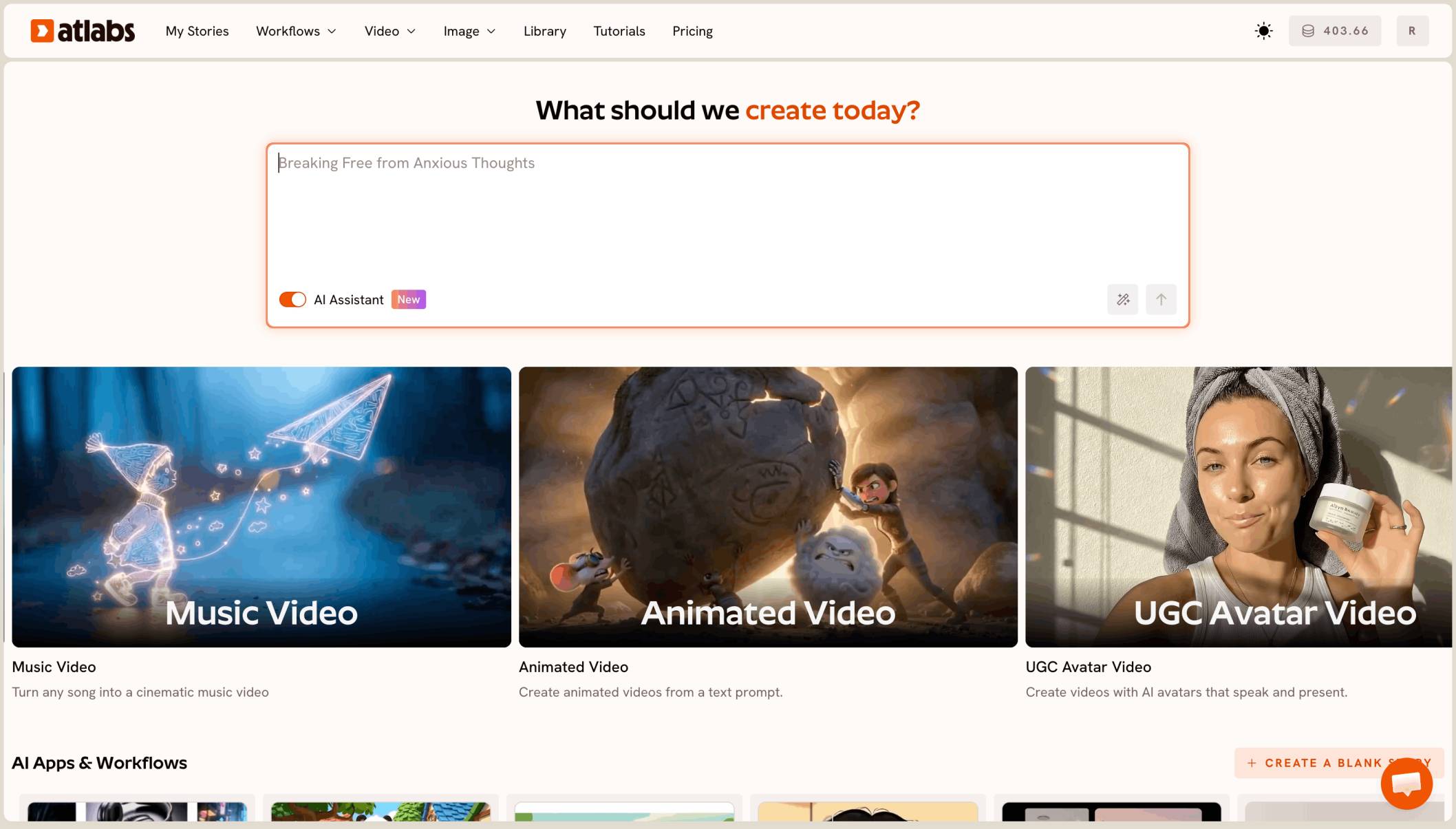
Keep it to one hero, one tiny problem, six short scenes of about 20 seconds each, and one line that repeats in every scene. Let a narrator carry the story so the characters are not fighting to speak. Then build it in the Atlabs Animated Video workflow, which takes you through three steps: Script, Cast and Screenplay.
Toddlers do not drop off a story because it is short. They drop off because it asks them to follow too many things at once. A two-minute runtime is a good fit for that age, but only if the script is built for small viewers: a clear face, a clear problem, a pattern they can predict, and a sound they can say back to you. If you make kids content for a YouTube channel, a classroom or your own living room, this guide gives you the script structure first and the build steps second. Atlabs is also covered in a Pinion Newswire roundup of AI cartoon video generators, a syndicated press release about the kids animation category.
Start your toddler story in the Animated Video workflow →
Why repetition beats variety for toddlers
The strongest evidence for how to write for this age is about repetition. In a study of sixteen three-year-olds published in Frontiers in Psychology, children who heard the same stories repeatedly did about 150% better on word retention than children who heard different stories containing the same words. For a scriptwriter, that is permission to repeat yourself: the same refrain, the same setting, the same helper character, again and again.
Screen time context matters too. Guidance from the American Academy of Pediatrics, as summarized by Children's Hospital Los Angeles, recommends no screen time for children 18 months and younger, and up to one hour a day of high-quality programming for ages 2 to 5, ideally watched with a parent who talks about what is on screen. That guidance dates from 2016, so check the latest advice for your child. It also tells a creator what to write: a short story with moments an adult can pause on and ask, "What will Pip do now?"
What you'll need
Before you open the workflow, have four things ready: a one-sentence story idea with a single gentle lesson (sharing, waiting, trying again), a name and a simple look for your hero, a repeating line of five words or fewer, and about 200 to 250 words of narration. The word count is a drafting rule of thumb rather than a platform limit. Slow read-aloud pacing needs pauses for visuals, so a 2-minute story needs fewer words than you expect.
Open Animated Video and get your Script step ready →
Full step-by-step walkthrough
Step 1: Pick one hero and one tiny problem
Choose a single main character and a problem small enough to fit on a sticky note. A squirrel named Pip finds one big acorn and has to decide whether to share it. That is the whole story. Side characters are welcome, but each one should do one job, such as asking, helping or laughing.
Step 2: Split the two minutes into six scenes
Divide 120 seconds into six scenes of roughly 20 seconds each. Give each scene one action: meet the hero, show the problem, try and fail, ask for help, solve it together, and a calm ending. One action per scene keeps the picture simple, which is what a toddler can follow.
Step 3: Write a refrain and repeat it in every scene
Write one short line, such as "Share, share, one for you," and place it at the end of every scene. Repetition is the pattern toddlers lock onto, and the study above gives you a reason to trust it. Change only what the hero does around the line, never the line itself.
Step 4: Let a narrator do most of the talking
Write the story as narration with only short spoken lines from characters. A narrator keeps the script easy to follow and keeps dialogue minimal. Atlabs also lets you lip sync only the lead or teaching character while other characters in frame stay quiet, which suits this style.
Step 5: Open the Animated Video workflow and add your script
Go to the Animated Video workflow and start with the Script step. Enter your finished six-scene script, with the narration and the refrain in place. If a scene runs long, trim the words rather than rushing the delivery.

Step 6: Choose your characters in the Cast step
In the Cast step, set up your hero and helpers. You can upload your own cast, and the same faces carry across scenes, which matters because a toddler recognizes a character by its face and colors before anything else. Keep the cast to three characters or fewer for a two-minute story.

The Cast step is where your hero and helper characters are set up before the episode is built.
Step 7: Review each scene in the Screenplay step
The Screenplay step shows your story scene by scene. Read it against your six beats: does each scene carry one action and end on the refrain? Edit any scene that drifts from the script before you finalize. A short pass here is cheaper than rewriting later.

The Screenplay step lets you check the story scene by scene before the final video.
Build your Script, Cast and Screenplay in Atlabs →
Watch the full walkthrough of the Animated Video workflow →
Tips for better toddler stories
Keep the same hero across episodes. A toddler who loves Pip on Monday wants Pip on Tuesday, and a stable cast also means repeat viewing works in your favor. Keep one idea per episode, and make a second story rather than adding a second lesson to the first.
Slow the ending down. The last scene should be calm: a smile, a hug, the refrain one final time. Toddlers copy the energy they finish on.
Write for a viewer who is not alone. If an adult is watching with the child, the ideal story leaves a beat of silence after a question so the grown-up can ask it out loud. That echoes the co-viewing advice behind the screen time guidance above.
Test the script by reading it aloud before you build. If you stumble over a sentence, a narrator will too, and a toddler will lose the thread.
Turn your script into an animated story with Atlabs →
FAQ
How long should a toddler story video be?
Two minutes is a workable length for a toddler story if the script has six simple scenes and a repeating line. Shorter is fine for younger toddlers. Always follow your pediatrician's screen time advice for your child.
How many words should a 2-minute kids story script have?
Aim for roughly 200 to 250 words of narration as a starting point. This is a drafting rule of thumb, because slow pacing and pauses for visuals take up time. Read the script aloud with a timer and adjust.
Can I use my own characters in the Animated Video workflow?
Yes. The Cast step lets you upload your own cast, and the same characters carry through the episode, so a recurring hero looks consistent from scene to scene.
Which Atlabs workflow should I use for a kids story?
Use the Animated Video workflow, which runs through three steps: Script, Cast and Screenplay.
Final verdict
A toddler story works when it is small: one hero, one problem, six scenes, one refrain and a narrator who does the heavy lifting. The script is the hard part, and it is also the part you control. Once the structure is right, the Animated Video workflow in Atlabs turns it into a finished animated story through Script, Cast and Screenplay, without a drawing tool or an animator. If you are starting from zero, write the six-scene script first, then build it and watch how it holds a small viewer's attention.