A Step-by-Step System for Consistent, High-Volume AI Ad Creative Testing
Most brands running paid ads hit the same wall. Creative fatigue sets in after a week. The ad that was converting at a great ROAS is now bleeding CPMs. Going back to commission a new UGC takes weeks and costs hundreds of dollars per video. So the brand limps forward on stale creative while competitors keep testing.
There is a faster way. This guide shows you exactly how to produce 50 AI UGC video ads using Claude for creative strategy and scripting, and Atlabs for end-to-end video production. The result is a creative library large enough to run real scale tests, identify winning hooks, and refresh burned ads the same day they start to fatigue.
The core USP of this system is three things working together: consistency in brand and presenter identity across every ad, creative freedom to test angles you would never commission at traditional UGC prices, and scale that matches how the paid social algorithm actually works in 2026.
What Are AI UGC Video Ads and Why Are They Converting in 2026
AI UGC (user-generated content) ads are video ads that replicate the look, feel, and delivery style of creator-made content, but are produced entirely with AI tools rather than human creators. They use AI avatars, AI voice synthesis, AI scripting, and AI production workflows to create videos that feel native to TikTok, Instagram Reels, and Meta feed placements.
The reason AI UGC ads are converting at comparable rates to human creator UGC in 2026 comes down to three factors. First, the quality of AI avatar generation and lip-sync has crossed a threshold where the uncanny valley problem is largely resolved for short-form content. Second, the scroll-stopping power of UGC ads comes primarily from the script and the hook, not from the authenticity of the creator, and AI scripting tools have become sophisticated enough to write hooks that genuinely interrupt a scroll. Third, the testing volume that AI production enables means brands running AI UGC can iterate to winning creative faster than brands waiting on creator delivery timelines.
What AI UGC is not suited for: long-form content over two minutes, physical unboxing or demonstration that requires real hands, and trust-critical categories where regulatory compliance demands real testimonials. For everything else in short-form paid social, AI UGC is now a production-viable option.
The Claude + Atlabs Pipeline: How the Two Tools Work Together
The pipeline divides into two phases with a clean handoff between them. Claude handles everything that requires creative strategy, customer understanding, and language. Atlabs handles everything that requires production, visual consistency, and delivery format.
Phase 1 → Claude: Creative strategy, angle mapping, script generation, hook variations, Atlabs brief Phase 2 → Atlabs: AI avatar, voice, product integration, music, editing, multi-format export |
This division is intentional. Claude does not need to understand video production to write a great hook. Atlabs does not need to understand customer psychology to produce a consistent, well-edited video at scale. Each tool does the job it is designed to do, and the quality of the final ad reflects both.
The handoff between the two phases is a structured brief. Claude generates a brief for each of the 50 ads that specifies the script, the presenter energy in three words, the primary emotion the ad should produce, the visual moment that needs to land, and the product shot requirements. That brief goes into Atlabs and the production phase begins.
Phase 1: Building Your Creative Engine in Claude (Steps 1 to 4)
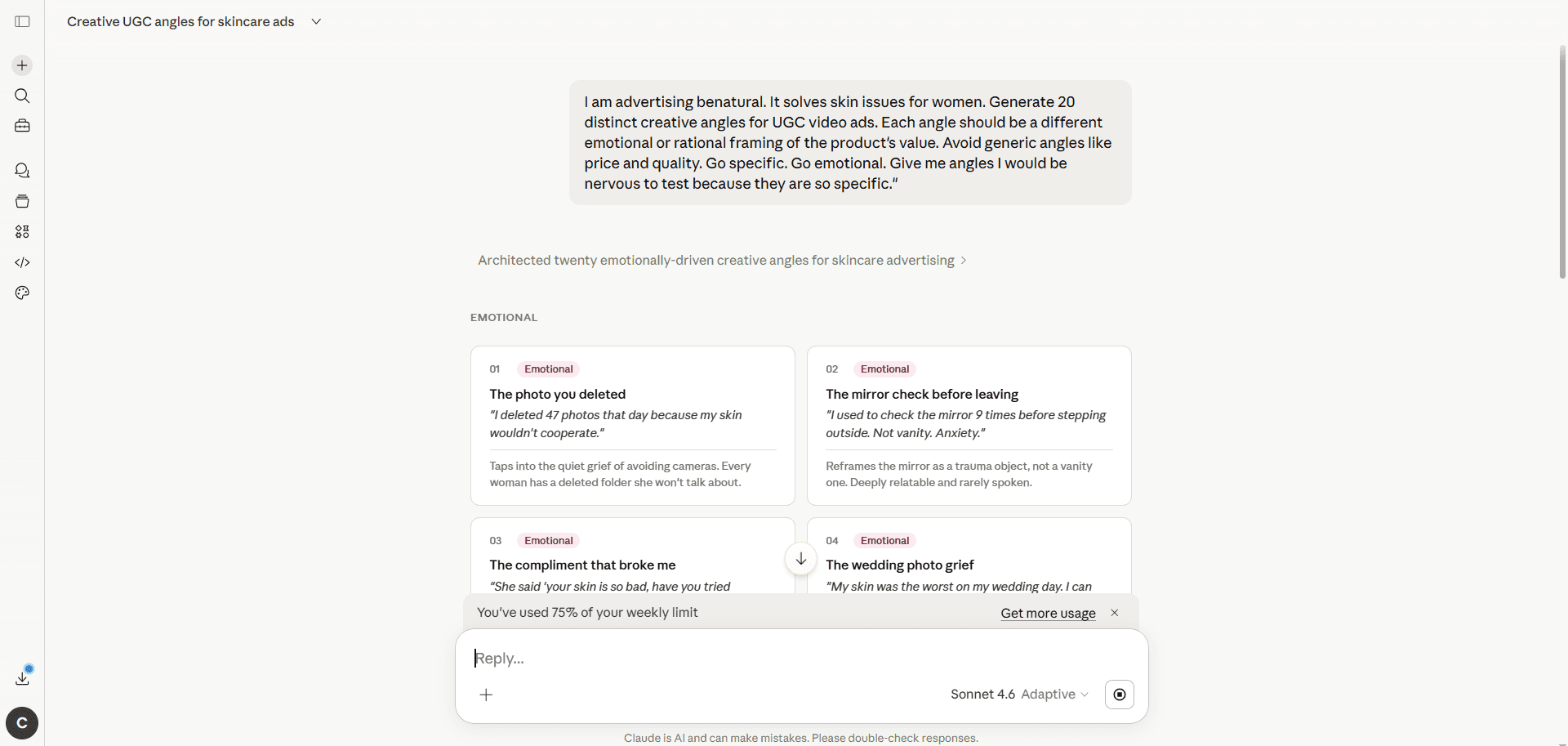
1 | Map Your Creative Angles (Target: 20 Angles) The angle is the specific framing of your product's value. Not the script, not the hook. The underlying strategic reason why a viewer should care. A product can have dozens of legitimate angles. Most brands test two or three. The 50-ad system starts by finding all of them. Claude Prompt (copy and use):
Review the 20 angles. Each one is the seed for two to three scripts. Each script will get three to five hook variations. That is how 20 angles become 50+ ads. |
2 | Classify Your Angles Across Four Dimensions Before scripting, classify every angle across these four dimensions. The classification determines how the 50 ads get deployed in the test structure.
A balanced 50-ad library has a mix of safe angles and creative bets, cold and warm funnel ads, and emotional and rational framings. If the classification reveals all 20 angles target the same persona and funnel stage, you need more diverse angles before scripting. |
3 | Write the Scripts Using the HMPC Structure Every UGC ad script follows one non-negotiable structure. This is not a creative preference, it is a conversion architecture. Deviating from it produces ads that perform below the structure average.
Ask Claude to write two scripts per angle using this structure. Total script length: 70 words maximum. Short scripts produce short audio tracks, which reduce character drift in the video generation and force message clarity. |
4 | Generate Hook Variations to Multiply Creative Volume The hook is the most commercially important part of a UGC ad. It determines whether the viewer keeps watching. A single script with five different hooks is effectively five different ads because the opening frame changes how the entire rest of the video is processed. For your top 10 scripts, ask Claude to generate 3 to 5 hook variations per script using these formats:
10 scripts x 4 hooks each = 40 distinct ad openings. Add the remaining 10 single-hook scripts and you are at 50 ads. |
Phase 2: Production at Scale in Atlabs (Steps 5 to 9)
Phase two is where creative strategy becomes a deliverable. Atlabs handles the complete production pipeline so that you go from a Claude brief to a finished, platform-ready video without any external tools, talent booking, or manual editing. Each of the 50 briefs from phase one runs through this production workflow.
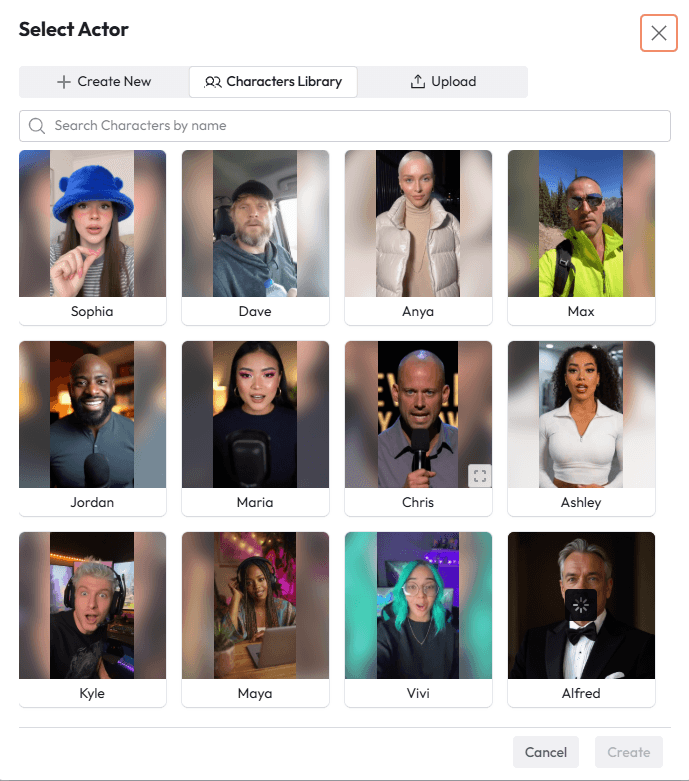
5 | Build Your AI Presenter in Atlabs The AI presenter is the face and voice of your ads. In Atlabs you build a presenter once and deploy it across all 50 ads without booking talent, arranging a shoot, or paying per video. The presenter creates brand recognition across your creative library as viewers encounter the same face across multiple touchpoints. Build 2 to 3 presenter variants if your angle map includes angles targeted at meaningfully different personas. A skincare product targeting Gen Z and targeting women over 40 needs different presenter energy even if the product is the same. Presenter selection criteria: choose someone who looks like the aspirational version of your primary persona, not the brand's version of itself. The viewer needs to see a person they trust in this category, not a spokesperson. |
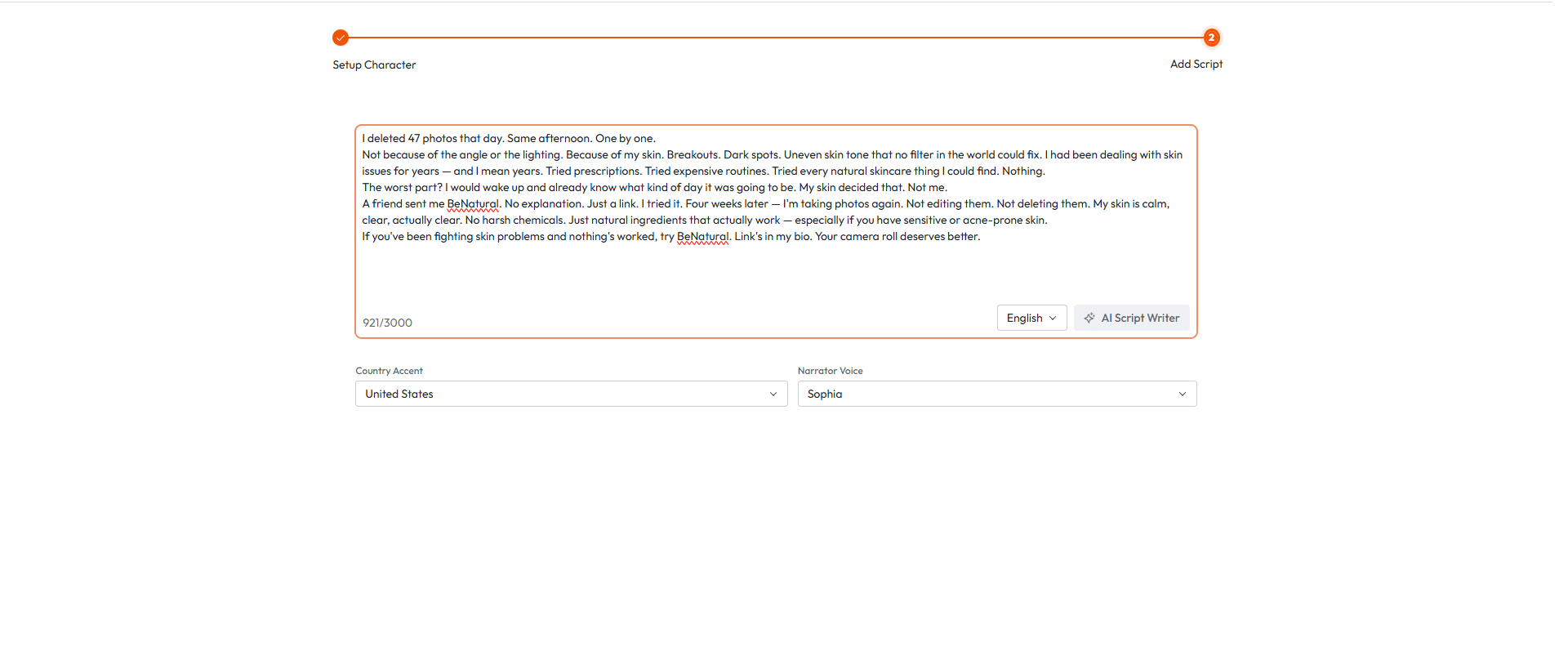
6 | Enter Scripts and Generate Voice Paste each of the 50 scripts into Atlabs. The platform syncs the script with your avatar and generates voice delivery automatically. Select the voice profile that matches the brief for each angle, a curiosity hook needs different energy than a problem hook. Quality check at this stage: does the voice delivery give the hook enough weight before moving on? The first three seconds are everything. If the delivery rushes past the hook, adjust the pacing before proceeding. |
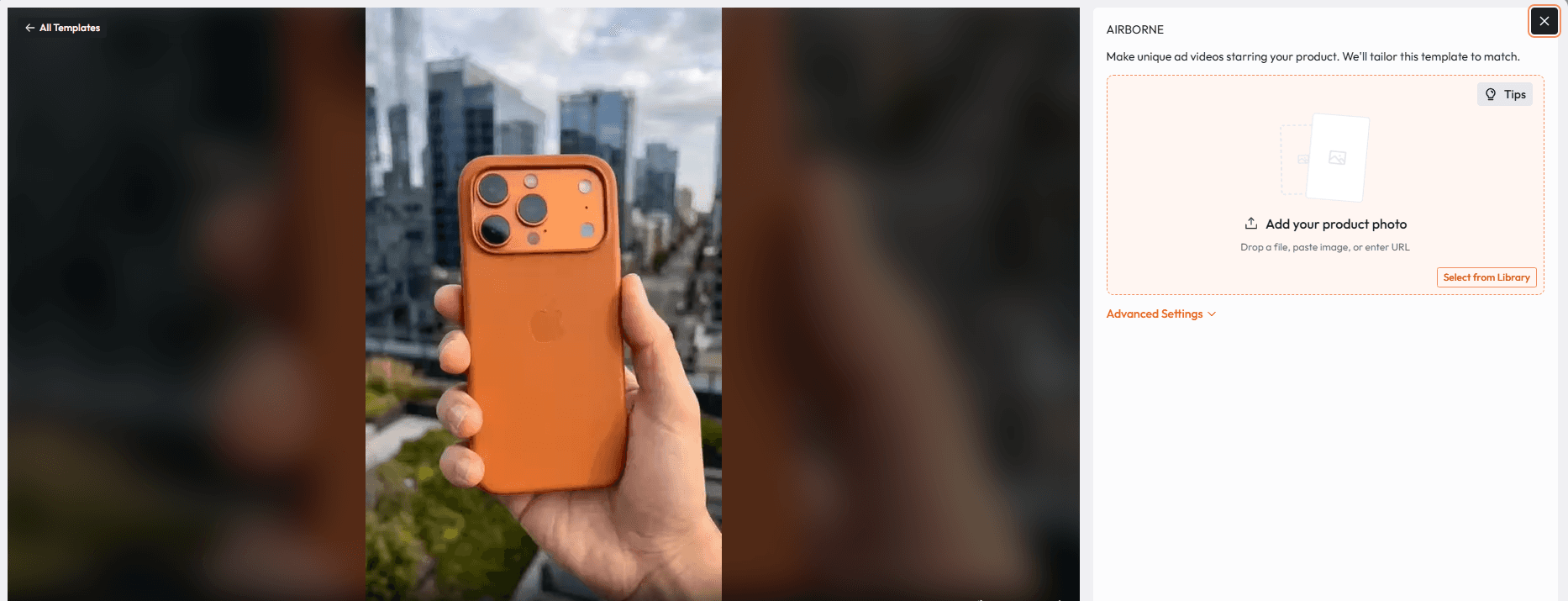
7 | Add Product Visuals at the Proof Moment Every ad needs at least one moment where the product is visible and associated with the outcome described in the script. Upload product images or footage into Atlabs and place them at the proof section of each ad. Match the product visual to the specific outcome being described. If the script claims a time saving, show the product in a context that reinforces that. Generic product shots at the wrong moment reduce conversion by disconnecting the visual from the claim it is supposed to support. |
8 | Apply Music: Match Energy to Angle Music is a pacing signal, not a decoration. The tempo should match the emotional energy of the angle. Awareness and brand-building angles need slower, more atmospheric tracks. Conversion and urgency angles need tighter, forward-momentum tracks. Atlabs provides a music library organised by energy level. Use it. Do not use the same track across all 50 ads. The music differentiation across the library is part of what signals to the algorithm that these are distinct creatives rather than slight variations of the same ad. |
9 | Export in Platform-Specific Formats Atlabs exports in the aspect ratios and specs required for each platform. Before exporting the full library, define which platforms each ad is destined for.
Final quality check before export: does the first 3 seconds earn the next 42? If the hook does not land in review, fix it before exporting at scale. |
The Batching Strategy: How to Produce 50 Ads Without Overwhelm
The most common production mistake is treating each ad as an individual project from brief to export. This context-switching overhead makes 50 ads feel like 50 separate tasks. Batching collapses that overhead by completing one stage for all 50 ads before moving to the next.
7-Stage Batch Production Sequence: Stage 1 → All 20 creative angles (one Claude session) Stage 2 → All 40 script drafts (one Claude session) Stage 3 → All hook variations (one Claude session) Stage 4 → All 50 Atlabs briefs (convert scripts to production briefs) Stage 5 → All presenter + voice generation (one Atlabs session) Stage 6 → All product visuals + music (one Atlabs session) Stage 7 → QC review pass + platform export |
Realistically, stages 1 through 4 take one focused day. Stages 5 through 7 take another day in Atlabs. A 50-ad creative library in two days is the baseline expectation for a brand that has its product brief ready. Some brands complete it in a single long day. That production speed is categorically different from the 2 to 6 week timeline for traditional UGC at the same volume.
How to Test 50 UGC Ads: A 3-Tier Creative Testing Framework
Producing 50 ads is the start, not the end. The testing strategy determines how much learning you extract from the library and how quickly you identify the creative that actually scales.
Tier 1: Angle Testing (Days 1 to 14)
Launch one representative ad per angle with a small equal daily budget. The goal is to identify which creative angles produce the best cost per click or cost per view against your target audience. At this stage you are not optimising for conversion. You are finding out which framing earns attention.
After 14 days, rank your angles by CPM, CTR, and hook hold rate (the percentage of viewers who watch past the 3-second mark). The top 5 to 8 angles move to tier 2.
Tier 2: Hook Testing (Days 15 to 28)
For the top 5 to 8 angles from tier 1, launch all hook variations with equal budget. The goal is to identify which specific opening framing produces the lowest cost per click. This is where the outlier hooks are found, the hooks that perform 3x to 5x above the angle average.
After 14 days, you have a clear ranking of hook and angle combinations. These winning combinations are now the primary assets in your active creative library.
Tier 3: Scaling and Refresh Cadence
Scale budget behind the winning combinations. Monitor CPM rise on a weekly basis as a leading indicator of creative fatigue. When a winning ad's CPM has risen more than 30% above its launch baseline, it is beginning to burn. Do not wait until ROAS collapses.
Replace burned creative immediately from the remaining library. This is the commercial reason having 50 ads matters more than having 5. The replacement is a one-day operation rather than a multi-week production cycle.
Maintaining Brand Consistency Across 50 AI UGC Ads
Scale without consistency is just noise. The 50-ad library only builds brand equity if viewers who encounter multiple ads in the library experience a coherent brand. Three disciplines maintain that consistency.
1. A Locked Creative Brief Document
Write a single-page non-negotiable brief before phase 1 begins. This covers brand tone of voice in three words, approved and prohibited claims, product visuals that must appear in every ad, and approved CTA language. Claude references this brief in every scripting prompt. Atlabs production follows it for every export. No ad should ship that violates any item on this brief.
2. Consistent Presenter Identity in Atlabs
The AI presenter is not just a production convenience, it is a brand character. Viewers who encounter the same presenter face across multiple ads begin to associate that identity with the brand. This is the equivalent of a brand spokesperson and it builds recognition at a fraction of the cost. Keep the presenter consistent across the full library unless the angle structurally requires a different presenter type.
3. A 5-Point Quality Checklist Before Every Export
Before any ad leaves Atlabs, review it against five criteria. This review takes under two minutes per ad.
Does the hook identify a specific viewer situation in the first 3 seconds?
Does the mechanism explain HOW the product works, not just WHAT it does?
Is the product visible and visually associated with the claimed outcome?
Is there one clear CTA, not multiple options?
Is the brand name or product name stated at least once?
Any ad that fails an item goes back for revision. This discipline maintains quality at scale without requiring a separate creative director review for each video.
Why Atlabs Is Built for This Kind of Scale
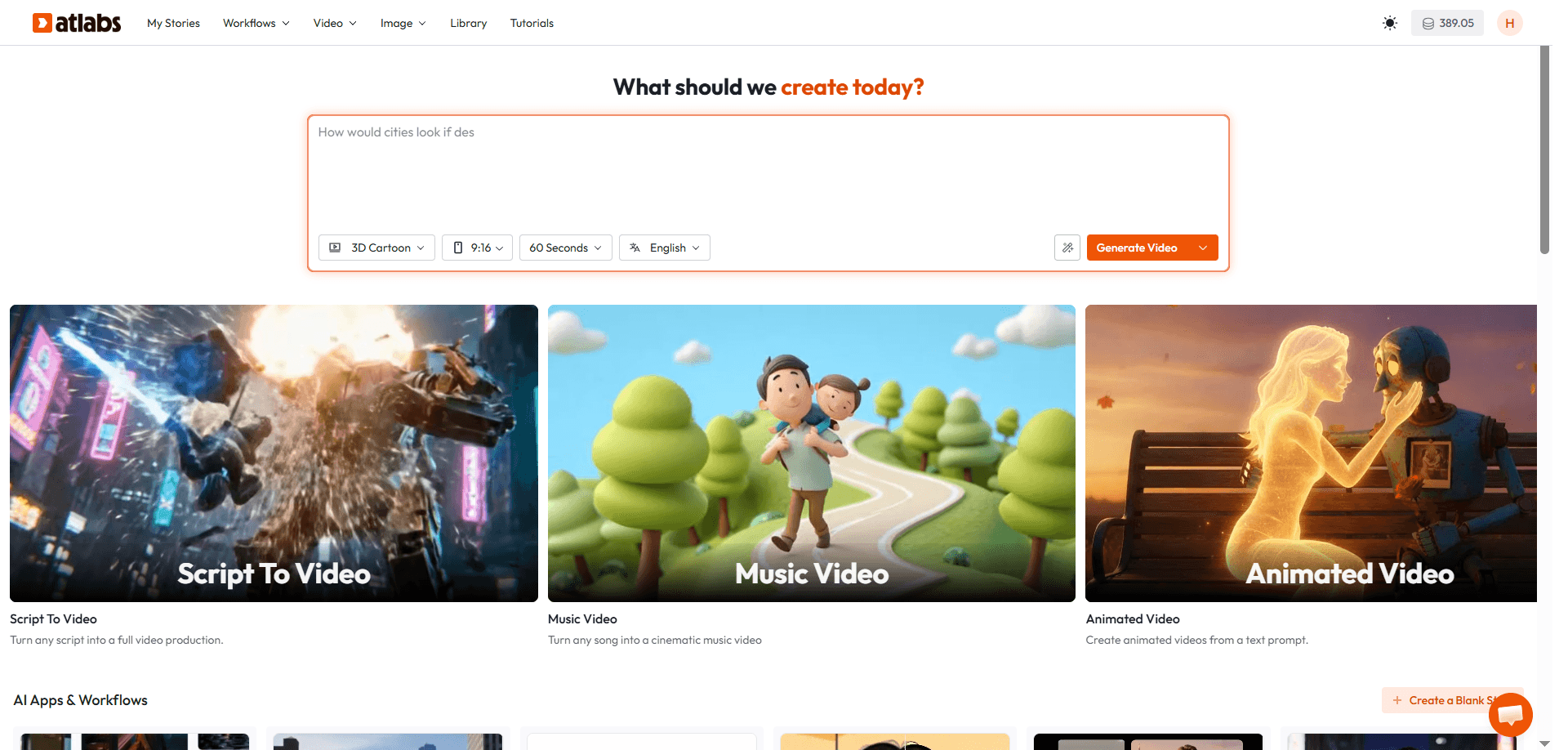
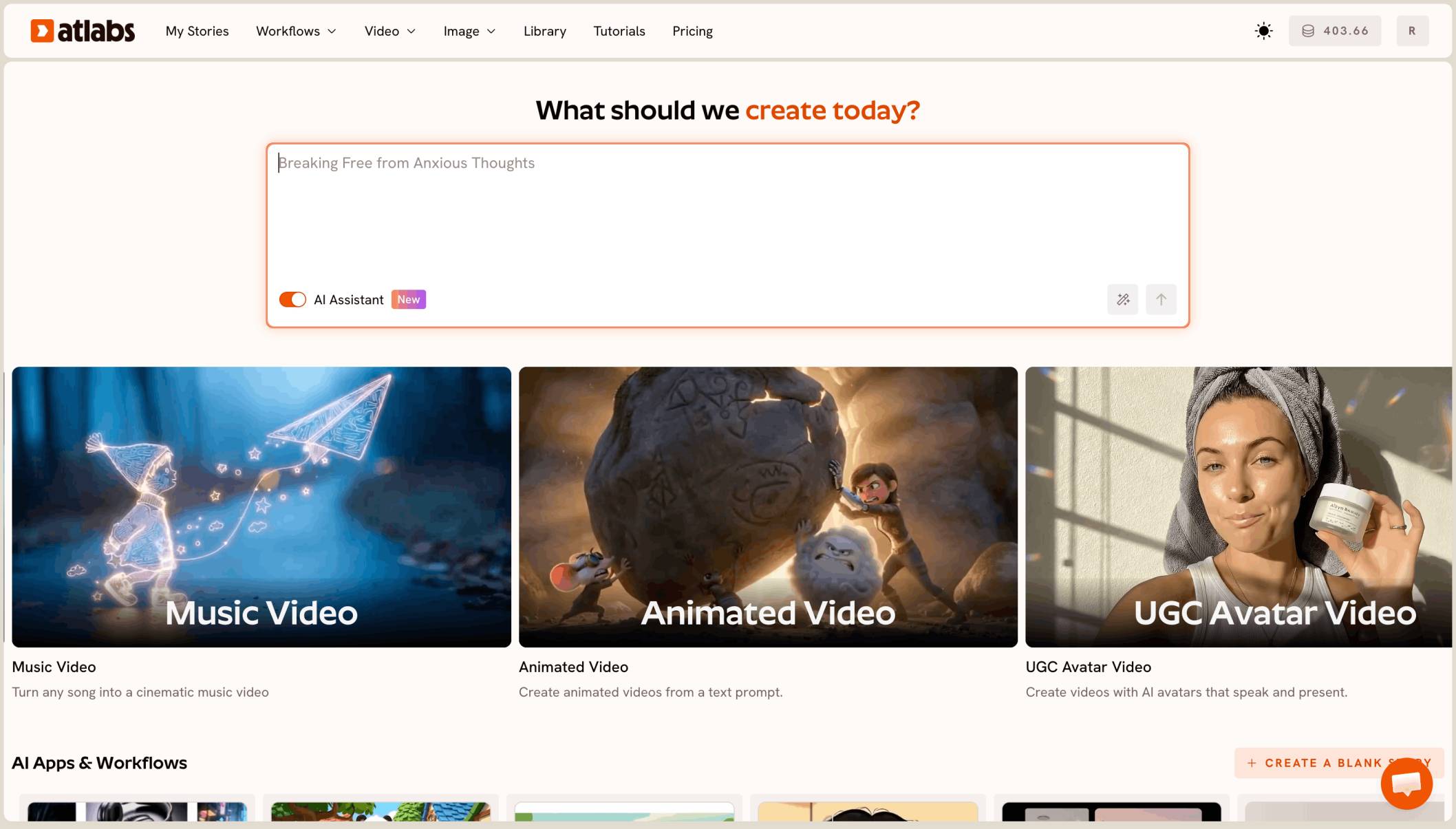
The production layer of the 50-ad system requires a tool that handles the full pipeline from script to export without requiring separate applications for generation, editing, captioning, voice, music, and delivery formatting. Atlabs is built as an end-to-end AI video creation workspace specifically to eliminate that fragmentation.
What this means in practice: you do not lose 20 minutes per video to export-import cycles between five different tools. You do not maintain five different subscriptions and five different learning curves. The creative decisions happen in one environment and the output goes straight to platform-ready export.
For a brand producing 50 ads, that consolidation saves the equivalent of several full production days compared to a fragmented multi-tool workflow. At 15 ads per week for ongoing creative refresh, the compounding time saving becomes a genuine operational advantage over brands still using disconnected tool stacks.
Atlabs for UGC ads: AI avatar generation, voice synthesis, script-to-video production, music library, multi-format export for TikTok, Meta, Reels and YouTube Shorts, all in one workspace. No stitching tools together. No export loops. One platform, one bill, one learning curve. |
The Creative Freedom Advantage: Why Scale Unlocks Better Ideas
There is a counterintuitive dynamic that only becomes visible once a brand has a large enough creative library to experience it. When you have five ads in the market, every creative decision feels high-stakes. Testing an unconventional angle feels like a gamble on a limited budget. Conservative angles get prioritised because the downside of a failure is too large relative to the available creative budget.
When you have 50 ads, the calculus inverts. You can afford to test the provocative angle because 49 other ads are providing baseline performance. The large library creates the safety net that makes genuine creative experimentation rational rather than reckless.
This is how the brands running AI UGC at scale consistently find their outlier ads. An outlier ad is one that performs 3x to 5x above the average for the campaign. It almost never comes from the safe expected angle. It almost always comes from the creative bet that a small-library brand would never run because the risk was too high. The 50-ad system makes running those bets rational.
10-Step Launch Checklist: From Zero to 50 UGC Ads Live
Use this checklist as the production reference for your first run. Each item is sequenced to match the batch production workflow.
Write a one-page product brief: what it does, who it is for, the problem it solves, what you want viewers to feel
Write two customer persona profiles: their daily frustration, their language, what they have tried before
Open Claude and run the angle mapping prompt from Step 1 of this guide
Classify all 20 angles and identify the top 10 for the first batch
Script two HMPC-structured ads per angle using Claude (20 scripts total)
Generate 3 to 5 hook variations for each of the 10 strongest scripts
Build Atlabs production briefs for all 50 ads from the scripts and hook variations
Enter all 50 briefs into Atlabs, generate presenter and voice for each
Add product visuals at the proof moment, apply music matched to each angle's energy
Run the 5-point quality checklist, export in platform-specific formats, launch Tier 1 angle test
Expected timeline: Stages 1 through 7 (Claude work) in one focused day. Stages 8 through 10 (Atlabs production and launch) in a second day. A 50-ad creative library live in 48 hours from a standing start. |
Frequently Asked Questions
How many UGC ads do I actually need to see results?
For a new campaign with no existing creative data, a minimum of 20 ads gives you enough variation to identify angle signal. 50 ads is the volume at which hook-level testing becomes statistically meaningful. Brands running ongoing paid social campaigns should aim to refresh at least 10 to 15 new creatives per month to stay ahead of fatigue.
Are AI UGC ads as effective as real creator UGC?
For short-form paid social content under 60 seconds, AI UGC ads now perform comparably to human creator UGC in A/B tests across most product categories. The primary exception is categories where the creator's personal credibility is the trust signal, such as health and wellness influencers with established audiences. For product demonstration, testimonial-style, and problem-solution formats, AI UGC performs at parity or better because the scripting quality is controllable and the hook can be optimised faster.
What does it cost to produce 50 AI UGC ads using Atlabs?
The cost varies by Atlabs plan but the per-video cost at scale is a fraction of traditional UGC production. Compare this to $150 to $2,000 per video with human creators and the economics are decisive. The total cost of a 50-ad library using this system is typically less than the cost of commissioning 3 to 5 human creator videos.
Can I use this system for Facebook Ads and TikTok Ads?
Yes. Atlabs exports in all the platform-specific formats required for TikTok, Meta (Facebook and Instagram), YouTube Shorts, and Reels. The creative strategy in Phase 1 works for all paid social platforms. The only adjustment needed is the aspect ratio and maximum duration at the export stage.
How do I know which UGC ad angle is winning?
In Tier 1 angle testing, rank angles by cost per click, hook hold rate (viewers past 3 seconds), and video completion rate. These three metrics together indicate whether the angle is earning attention (hook hold), sustaining interest (completion rate), and driving intent (CPC). An angle that wins on all three is a confirmed creative direction worth producing more variations around.
Do I need any video production skills to use Atlabs?
No. Atlabs is designed for non-producers. You provide the script, choose a presenter, select a voice profile, upload your product image, choose a music track, and export. The production decisions are guided by the platform and the brief you wrote in Phase 1. Brands with zero prior video production experience produce client-deliverable output from their first Atlabs session.
Conclusion: The New Standard for Growth Creative
The constraint on creative testing has never been imagination. Brands have always had more ideas than they could afford to test. The constraint has been production time and production cost. A five-week turnaround and a $500 minimum per video meant that most brands ran a fraction of the creative they needed to actually find what works.
Claude removes the scripting and creative strategy bottleneck. Atlabs removes the production bottleneck. What remains is the judgment about which angles to pursue, the discipline to test them systematically, and the patience to let the data tell you which creative actually converts for your specific product and audience.
The 50-ad system is the practical expression of that combination. Consistency across the library because the presenter, the brief, and the quality checklist never change. Creative freedom because the economics make testing every angle viable. Scale because the algorithm rewards the brands that give it the most creative signal to work with.
Start with the angle mapping prompt. The rest follows from that.