What is Flux 3?
Flux 3, also written FLUX 3 or FLUX.3, is Black Forest Labs' first video model. It generates clips of up to 20 seconds with native synchronized audio in a single pass at 480p and 720p, with Full HD available on some platforms. Text to video, image to video, first and last frame, keyframes, and video continuation are all supported.
What separates it from the rest of the field is not resolution. It is format knowledge. Name an era and a medium, as in "a 1987 local news report", and the model reconstructs the camera work, lighting, pacing, wardrobe, and editing rhythm of that format, often from one short sentence you did not have to over specify.
Four things worth knowing before you write your first prompt:
Native audio in the same pass: Sound is not a second step. Dialogue, ambience, and effects are generated alongside the picture, which means an unspecified mix is still a mix, just one you did not choose.
Deep world and format understanding: Historical documentaries, process explainers, and public domain adaptations land unusually well, including accurate on screen typography, dates, and construction stages.
Multi-shot narrative inside one clip: A 20 second generation can carry several shots and a small story arc rather than a single held moment.
Draft mode: Fast, low cost iteration for testing an idea before you commit to a full quality render.
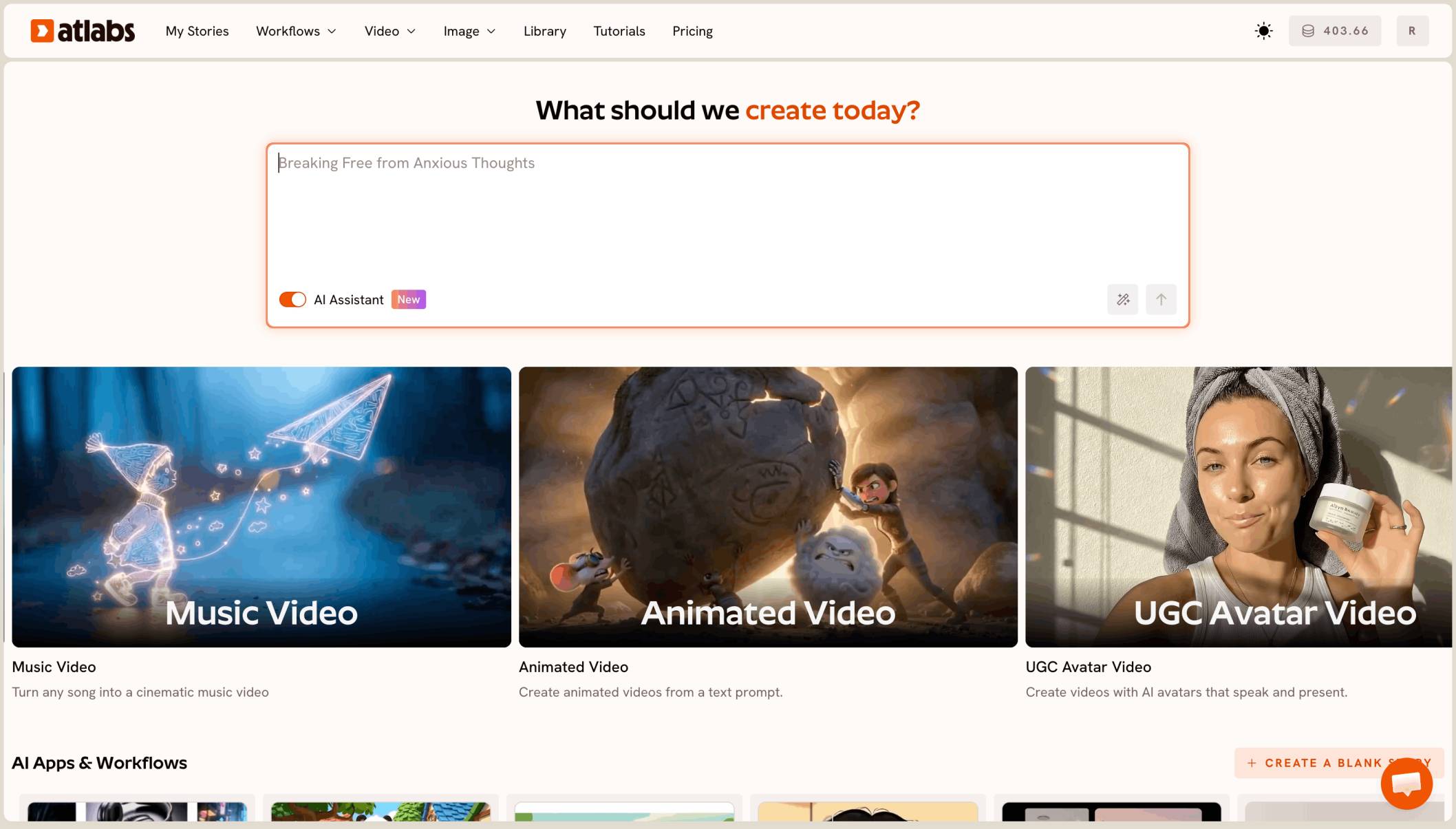
Flux 3 is available inside the Atlabs model lineup, so you can run it next to Kling, Veo, and Seedance without managing separate accounts for each one.
Try Flux 3 on Atlabs →
The "Perfect Prompt" Formula
Flux 3 rewards naming the format more than stacking adjectives. This is the opposite of how most video models were prompted in 2024 and 2025, and it is the single hardest habit to unlearn. The strongest prompt is often the shortest one.
The short formula:
[Format or era] + [Subject or event]
The expanded formula, for when you need tighter control:
[Subject] + [Action] + [Environment] + [Camera movement] + [Audio] + [Style]
The reliable one-liner shape:
[Camera] shot of [subject] [action] in [environment]
Example breakdown:
Take the shortest possible prompt: a 1969 documentary about Woodstock. Six words. What comes back includes handheld camera, faded film texture, crowded framing, candid crowd behavior, period clothing, and the emotional register of the event. None of those words appear in the prompt. The model already knew what that format looks like, and asking for it by name pulled all of it at once.
Now the directed version, for when you have a specific shot in mind:
A low tracking shot of a fox sprinting through wet pine undergrowth at dawn. Soft natural light, shallow depth of field, ambient forest sounds and distant bird calls. Cinematic wildlife documentary style.
Both are correct prompts. The first uses the model's knowledge, the second overrides it. Reach for the second only when you actually need a specific frame, because piling on adjectives can talk over what the model already does better on its own.
Build your first clip →
5 High-Performance Prompt Templates
Copy these into the AI video generator on Atlabs and swap in your own subject.
1. The Historical Documentary
Best for: period atmosphere and media reconstruction. One sentence is the whole prompt.
a 1987 local news report about teenagers hanging out at the mall
a 1989 television documentary about the fall of the Berlin Wall
a 1969 television broadcast of the moon landing
archival footage of the Wright brothers' first flight in 1903. No sound
2. The Process Explainer
Best for: how it was built and how it works sequences, in the correct order.
How the Golden Gate Bridge was built
How the Great Wall of China was made
How pyramids are made? Visualize it.
3. The Public Domain Trailer
Best for: cinematic narrative pulled from a known work.
Visualize Frankenstein by Mary Shelley as a movie.
4. The Directed Cinematic Shot
Best for: precise camera and motion control.
A drone shot glides over a bioluminescent forest at night, fireflies drifting between glowing trees, gentle mist rolling across the forest floor. Slow forward push with gentle altitude drop. Ambient forest sounds and distant owl calls. Cinematic color grading, volumetric mist.
5. The Multilingual Dialogue Scene
Best for: natural speech and lip sync across languages.
An airline transfer desk at Charles de Gaulle after a cancellation. One agent, a long queue, a screen full of red. AGENT (French): "Monsieur, je vous mets sur le vol de dix-huit heures." Continue with Arabic, English, Portuguese, and Russian lines as the queue moves.
Try these templates →
Community Showcase
Four builds worth studying, with the original posts so you can watch the output next to the prompt.
Birthday candles and unprompted physics by steve johnson: the model worked out the real cause and effect of blowing out candles and brought the room lights back up without being asked to. View the post
20 second anime sequence with accurate subtitles by Koh Terai: on screen typography that stays legible and correct across a full length generation. View the post
Five language airport queue scene by Koh Terai: the multilingual dialogue template running at full length, with lip sync holding across language switches. View the post
20 second space horror one shot by Dominik Filkus: a single continuous horror scene built straight from the official prompt guide. View the post
Make a clip like these →
Advanced Features
How do I get the best results with short prompts?
Name the recording format, the era, and the subject. Flux 3 already knows how a 1980s local news package, a 1969 documentary, or a 1930s construction film looks and moves, including the shot lengths and the grain. Extra adjectives compete with that internal knowledge rather than adding to it, so start short, look at what comes back, and only add specifics where the output missed.
Image to video and continuation
Give the model a starting image, or a first and last frame, then describe only the motion or the change you want. It connects the frames while keeping the visual language of the source. For longer pieces, continuation lets you hand back a few seconds of existing footage and describe what should happen next, which is how you get past the 20 second ceiling without an obvious seam.
Native audio
Describe the sound whenever it matters. Put dialogue in quotes with a language tag, name the ambience and effects, and write "No sound" when you want silence. Because audio is generated in the same pass, leaving it out is not a request for a quiet clip, it is a request for whatever mix the model decides on.
Start generating on Atlabs →
Common Mistakes to Avoid
Over describing a subject the model already knows. A six word format prompt regularly beats a 100 word paragraph. Write the long version only after the short one has failed you.
Forgetting the format. "Teenagers at a mall" gives you a shot. "A 1987 local news report about teenagers hanging out at the mall" gives you a whole broadcast package, chyron included.
Ignoring audio. Name it or the model invents a full mix, and you will spend the next generation trying to undo a soundtrack you never asked for.
Expecting a 30 second continuous take. The cap is 20 seconds. Plan longer pieces as continuations or chained clips rather than one impossible request.
Writing negative prompts. Flux family models do not use traditional negative prompting. Describe only what you want in frame.
Comparison: Flux 3 vs Typical Video Models
Feature | Flux 3 | Typical competitors |
|---|---|---|
Max native length | Up to 20 seconds | 10 to 30 seconds depending on model |
Native audio | Yes, same pass | Varies by model |
World and format knowledge | Very strong | Strong but less format aware |
Prompt style | Short format names often win | Longer structured briefs |
Iteration | Draft mode for fast, low cost tests | Usually full quality only |
Best for | Documentaries, explainers, trailers | Cinematic one takes, character consistency |
Short version: reach for Flux 3 when the format itself is doing the storytelling, which covers documentary, archival, explainer, and adaptation work. Reach for a consistency focused model when a specific face has to survive a long take. Both sit inside the Atlabs model lineup, so switching is a dropdown rather than a new account.
Compare models on Atlabs →
Recommended Resources
fal.ai Flux 3 examples and prompts: fal.ai/learn/tools/flux-3-video-examples-prompts
Black Forest Labs official blog: bfl.ai/blog/flux-3-video
Official FLUX prompting guide: docs.bfl.ml/guides/prompting_summary
Morphic Flux 3 guide: morphic.com/resources/how-to/flux-3-guide
FAQ
Q: How long can a Flux 3 clip be? A: Up to 20 seconds in a single generation. For longer pieces, use continuation and hand the model a few seconds of existing footage to build from.
Q: Does Flux 3 generate audio? A: Yes, native synchronized audio in the same pass as the picture. Specify what you want, including dialogue with language tags, or write "No sound" for silence.
Q: What kind of prompt works best? A: Name the format and the subject in one clear sentence. Add camera, motion, and audio detail only when you need tighter control than the model's own knowledge gives you.
Q: Can I continue an existing clip? A: Yes. Provide up to a few seconds of existing video and describe what should happen next. The model preserves the visual language across the join.
Q: Do negative prompts work? A: No. Flux family models do not use traditional negative prompting, so describe only what you want to see rather than listing what to avoid.
We Think This Might Interest You
[Atlabs YouTube tutorial embed placeholder]
Make your first AI video on Atlabs →
Two things to confirm before this ships. First, I linked Flux 3 to the general models page rather than a dedicated model page, since I do not know the slug. If there is a /models/flux-3 page live, swap both mentions. Second, if you want Flux 3 named inside a specific Atlabs workflow, tell me which one it routes through and I will work it into the intro and the comparison verdict.