What is Nano Banana 2 Lite?
Nano Banana 2 Lite is the friendly name for Gemini 3.1 Flash Lite Image, Google DeepMind's fastest and most cost efficient image model, released on June 30, 2026. Google's own tagline sums it up in four words: create more for less.
Think of the Nano Banana family as three siblings. Nano Banana Pro is the perfectionist who takes its time. Nano Banana 2 is the reliable generalist. Nano Banana 2 Lite is the sprinter: it turns a text prompt into a finished 1K image in about 4 seconds. Google also recommends it as the direct replacement for the original Nano Banana, which is now a legacy model.
Four things make it worth your attention:
4 second generations: Ideas stop waiting in a queue. You prompt, you look, you adjust, you rerun. Iteration finally feels like a conversation instead of a coffee break.
Consistent characters: The same face, mascot, or product can hold steady across an entire series of images, which is exactly what thumbnails, storyboards, and ad sets need.
Precise edits: Upload an image and type the change in plain language. Swap a background, restyle a room, or remove an object without touching an editor.
Real world knowledge: The model leans on Gemini's understanding of how things actually look and work, so everyday objects, places, and scenes come out believable.
One more detail worth knowing: every image carries Google's invisible SynthID watermark by default, so AI generated visuals stay verifiable.
The "Perfect Prompt" Formula
Nano Banana 2 Lite understands natural language, so retire the 2023 era keyword spam. Describe your image the way you would brief a photographer, in clear components.
The Formula:
[Subject + adjectives] doing [action] in [location or context]. [Composition and camera angle]. [Lighting and atmosphere]. [Style and medium]. [Text or specific constraint].
Example breakdown:
Subject: A tiny copper robot fruit vendor...
Action: ...juggling three glowing mangoes...
Location: ...at a rain washed night market...
Composition: ...low angle shot, 35mm lens, shallow depth of field...
Lighting: ...warm string lights above, neon reflections in the puddles below...
Style: ...vibrant editorial photography...
Text constraint: ...the stall sign reads "FRESH" in bold hand painted letters.
Notice the sign says one short word, not a sentence. Lite handles short, punchy text well. Save the long paragraphs of in-image text for Nano Banana Pro.
5 High-Performance Prompt Templates
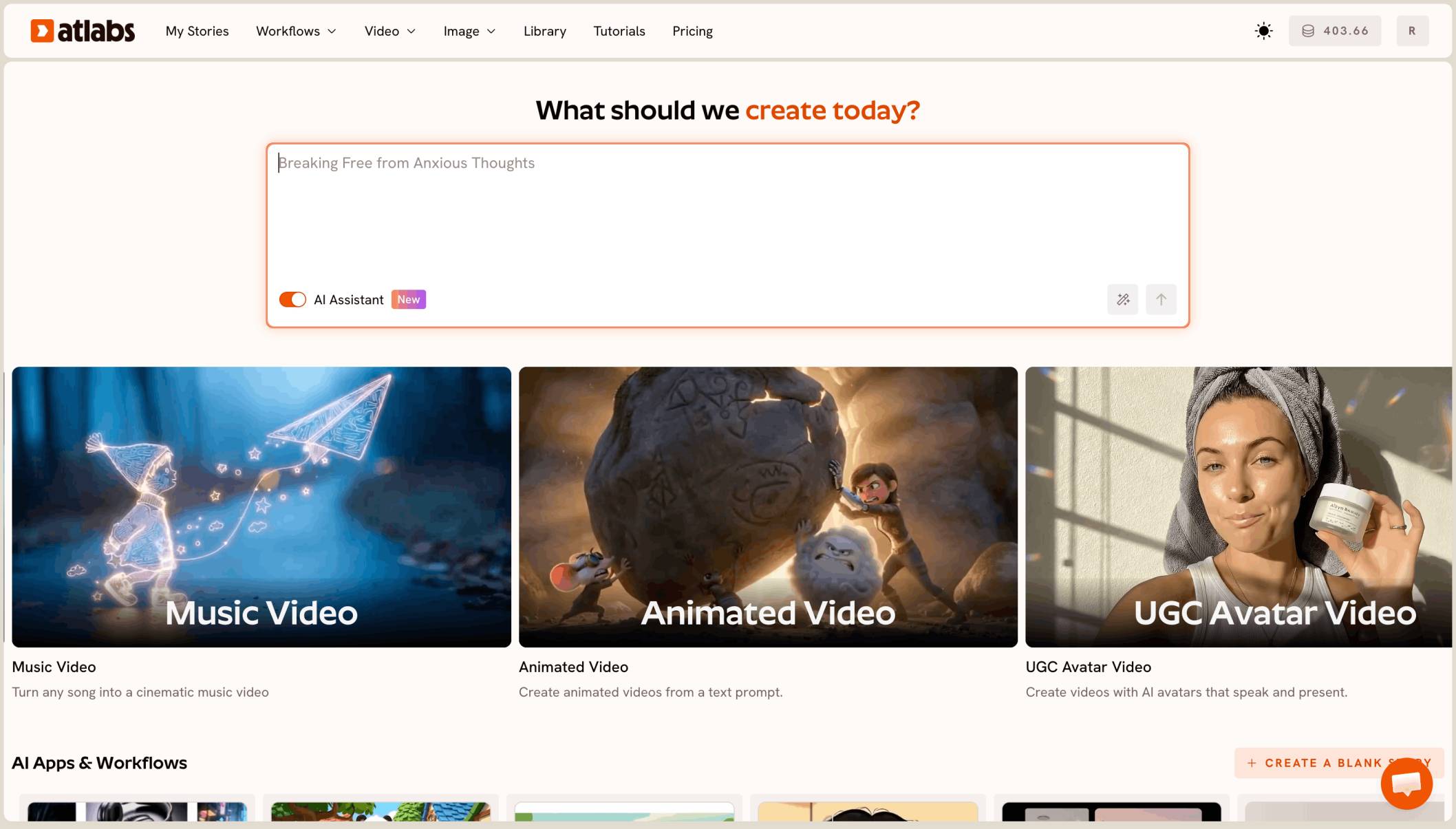
Copy these into the Create Image tool on Atlabs and swap in your own details. Each one plays to what Lite does best: speed, consistency, and clean edits.
1. The "Ad Variant Machine"
Best for: product ads, A/B testing, marketplace listings.
A clean studio product shot of a matte water bottle on a smooth peach studio background. Soft diffused lighting, gentle drop shadow, perfectly centered composition. Leave the top third of the frame empty for ad copy. Square format.
Then rerun it swapping only the background color: mint, lavender, lemon, charcoal. Four seconds each. A full test set before your coffee cools.
2. The "Consistent Character" Series
Best for: thumbnails, storyboards, brand mascots. (Upload your character image first)
Keep the character from the reference image exactly the same. Place her in a sunny rooftop cafe, laughing, holding a coffee cup. Same outfit, same hairstyle, same art style as the reference.
3. The "Instant Edit" Pass
Best for: fixing an image you already have. (Upload it, then type the change)
Remove the background and replace it with a soft warm gradient. Keep the subject's edges crisp and the lighting on the subject unchanged.
4. The "Storyboard Sprint"
Best for: previsualizing a video before you generate it.
Wide establishing shot of a lighthouse on a cliff at golden hour, waves crashing below. Cinematic 16:9, soft coastal haze, the lighthouse beam just switching on.
Draft every beat of your scene as a still, pick the keepers, then animate them. More on that below.
5. The "Style Explorer"
Best for: finding an art direction fast.
A cozy reading nook with a sleeping cat by a rainy window, rendered as layered paper cutout art. Warm afternoon lamp light, visible paper texture and depth.
Rerun the same scene swapping only the style phrase: claymation, flat 2D modern, soft pastel 2D, high end anime. At 4 seconds a pass, you can audition an entire visual identity in a minute.
Advanced Features
How do I edit images with Nano Banana 2 Lite?
Upload any image and describe the change: "Change the sunny day to a rainy evening" or "Remove the person in the background and replace them with a potted plant." The model applies the edit while keeping the rest of the frame intact. Two habits make edits land cleanly: change one thing per pass, and be concrete about what stays the same. "Keep the subject identical, only relight the scene" beats "make it moodier" every time.
Can I turn Nano Banana 2 Lite images into video?
Yes, and this is the workflow worth stealing. Because Lite is so fast, you can draft ten versions of a shot as stills, pick the winner, and only then spend time animating it. On Atlabs, generate your stills with Create Image, then send the keeper straight to Image to Video to bring it to life. The expensive step only runs on ideas that already earned it.
Common Mistakes to Avoid
Treating Lite like Pro. Tiny faces in crowds, long sentences of in-image text, and dense data infographics are still hard for Lite. It is built for speed and volume. Reach for Nano Banana 2 or Nano Banana Pro when the final asset demands maximum fidelity.
Writing one giant prompt. Speed is the feature. Draft a clean base image, look at it, then refine with a short edit pass. Ten quick iterations beat one overloaded mega prompt.
Keyword spam. "4k, trending, masterpiece, ultra detailed" adds nothing. The model reads natural language. Be descriptive, not repetitive.
Vague edit instructions. "Make it better" gives the model nothing to work with. Say "warm up the color grade and brighten the subject's face" instead.
Comparison: Nano Banana 2 Lite vs Nano Banana 2 vs Nano Banana Pro
Three models, three jobs. Here is how the family splits the work.
Feature | Nano Banana 2 Lite | Nano Banana 2 | Nano Banana Pro |
|---|---|---|---|
Speed | About 4 seconds | Around 20 seconds | Slowest, thinking enabled |
Best for | Drafts, ad variants, thumbnails, storyboards | Everyday production images | Flagship assets, complex text, infographics |
Text in images | Short words and labels | Good for most copy | Flawless sentences and logos |
Editing | Fast plain language edits | Precise multi step edits | Deepest control and reasoning |
Cost profile | Lowest in the family | Mid tier | Premium tier |
Short version: start in Lite, finish in Pro. Draft wide and cheap, then hand your best concept to a heavier model only when the asset truly needs it. All three live inside the Atlabs model lineup, so switching is one dropdown, not a new subscription.
Recommended Resources
Official launch post: blog.google/innovation-and-ai/models-and-research/gemini-models/gemini-omni-flash-nano-banana-2-lite/
Model page: deepmind.google/models/gemini-image/flash-lite/
Developer docs: ai.google.dev/gemini-api/docs
FAQ
Q: What is Nano Banana 2 Lite called on the API?
A: The model ID is gemini-3.1-flash-lite-image. Google positions it as the drop in replacement for the original Nano Banana (gemini-2.5-flash-image), which is now labeled a legacy model.
Q: What is the difference between Nano Banana 2 Lite and Nano Banana 2?
A: Same family, different jobs. Lite is tuned for speed and high volume work, generating images in about 4 seconds. Nano Banana 2 is the higher fidelity generalist that takes roughly five times longer per image. The quality gap is smaller than the speed gap, which is why Lite is the better starting point for drafts and iteration.
Q: Can Nano Banana 2 Lite edit existing images?
A: Yes. Upload an image and describe the change in plain language: restyle it, swap the background, remove objects, or relight the scene. Keep each edit specific and change one thing at a time for the cleanest results.
Q: Are Nano Banana 2 Lite images watermarked?
A: Yes. Every image carries Google's invisible SynthID watermark by default, and you can verify AI generated content through the Gemini app, Gemini in Chrome, or Google Search.