The Independent Artist's Playbook for AI-Powered Visual Content
For independent musicians today, music videos aren’t just a bonus anymore; they’re a big part of how artists connect with new audiences on platforms like YouTube, TikTok, and Instagram. The challenge is that traditional video production can be expensive and time-consuming, especially for indie artists working without a major-label budget or a full creative team.
That’s where AI video tools are starting to change things. These platforms make it possible to turn songs, lyrics, or even simple ideas into visual content much faster than before. In many cases, artists can generate music videos, lyric videos, or visualizers within a single platform.
In this guide, we’ll look at six of the most useful AI video tools for indie musicians in 2026 and explore what each one does best when it comes to creating music videos.
What to Look for in an AI Music Video Tool
Not all AI video platforms are built with musicians in mind. Before choosing a tool, consider these key criteria:
Audio Reactivity: Audio reactivity: Does the tool actually sync visuals to your music, or is it just a generic video generator?
Consistency: Character & scene consistency: Can it maintain a coherent visual identity across scenes without characters changing appearance?
Workflow: Workflow integration: Does it handle the full pipeline
(concept → storyboard → export)
Export Formats: Platform-optimized exports: Can you export for YouTube, TikTok/Reels, and Spotify Canvas without extra tools?
Value: Pricing vs. output volume, how much video content can you generate per month at each price tier?
Quick Comparison
Here is a snapshot of how the main tools compare for music video creation in 2026.
Tool | Free Plan | Paid From | Best For | Rating |
|---|---|---|---|---|
Atlabs.ai | Free tier | $15/mo | Full-pipeline music video workflow | ★★★★★ |
Neural Frames | Free tier | $19/mo | Audio-reactive & music-synced visuals | ★★★★☆ |
Katalist AI | Free tier | $29/mo | Storyboard videos | ★★★★☆ |
Nova A.I. | Free tier | $10/mo | Lyric video editing & captions | ★★★☆☆ |
HeyGen | Limited trial | $29/mo | Avatar-driven lyric performances | ★★★☆☆ |
OpenArt | Free tier | $12/mo | AI images & basic clips | ★★★☆☆ |
1. Atlabs.ai
Best For Artists who want an end-to-end video pipeline, from script to finished export, in one place. |

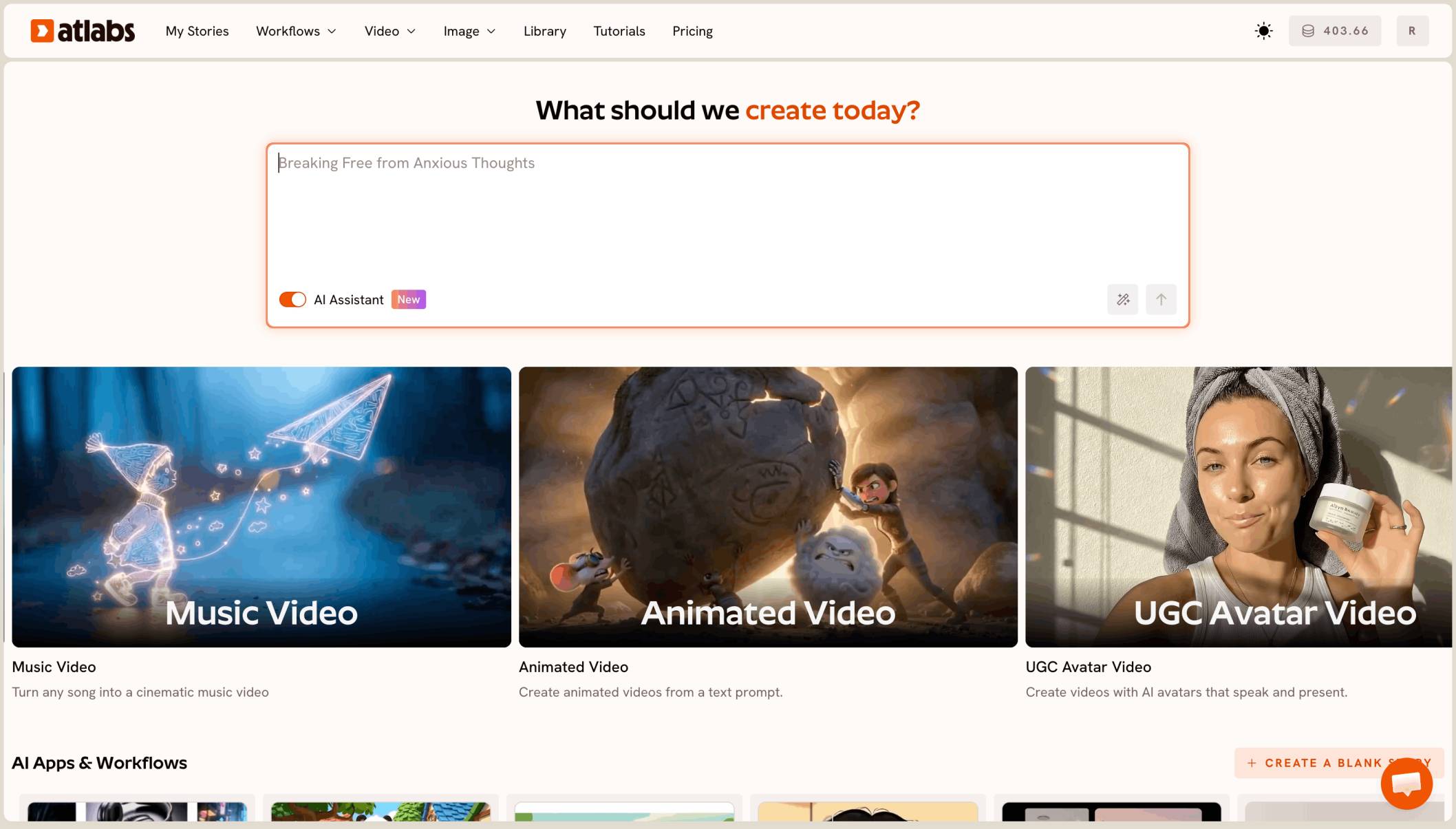
Atlabs.ai is one of the few AI platforms that handles the entire creative pipeline in one place from concept and visuals to animation, captions, and final video export. Instead of relying on multiple tools for different steps, creators can plan, generate, and produce a video within the same workspace. For indie artists, this streamlined workflow can save a lot of time compared to traditional production or using several AI tools at once.
What stands out
Lyric-driven video creation: Atlabs works particularly well for lyric-based music videos. Artists can input lyrics or a song concept and generate storyboard-style scenes that visually follow the song.
Much easier music video workflow: Compared to many AI tools that only generate visuals or clips, Atlabs lets you move from idea → scenes → motion → final video without switching platforms.
Better fit for lyrical videos: Lyric videos generally work better with AI visuals than instrumental tracks, and Atlabs is designed to structure visuals around the narrative or pacing of a song.
Consistent characters and scenes: The platform maintains character consistency across frames, which is useful for narrative-style music videos.
Watch Out For
The platform uses a credit-based system, which can limit heavy usage on lower plans.
Because it offers many features beyond simple video generation, it may feel more complex than basic AI visual tools at first.
2. Neural Frames
Best For Musicians who want true audio-reactive visuals, where the animation actually moves, morphs, and responds to the music's beat, tempo, and structure. |
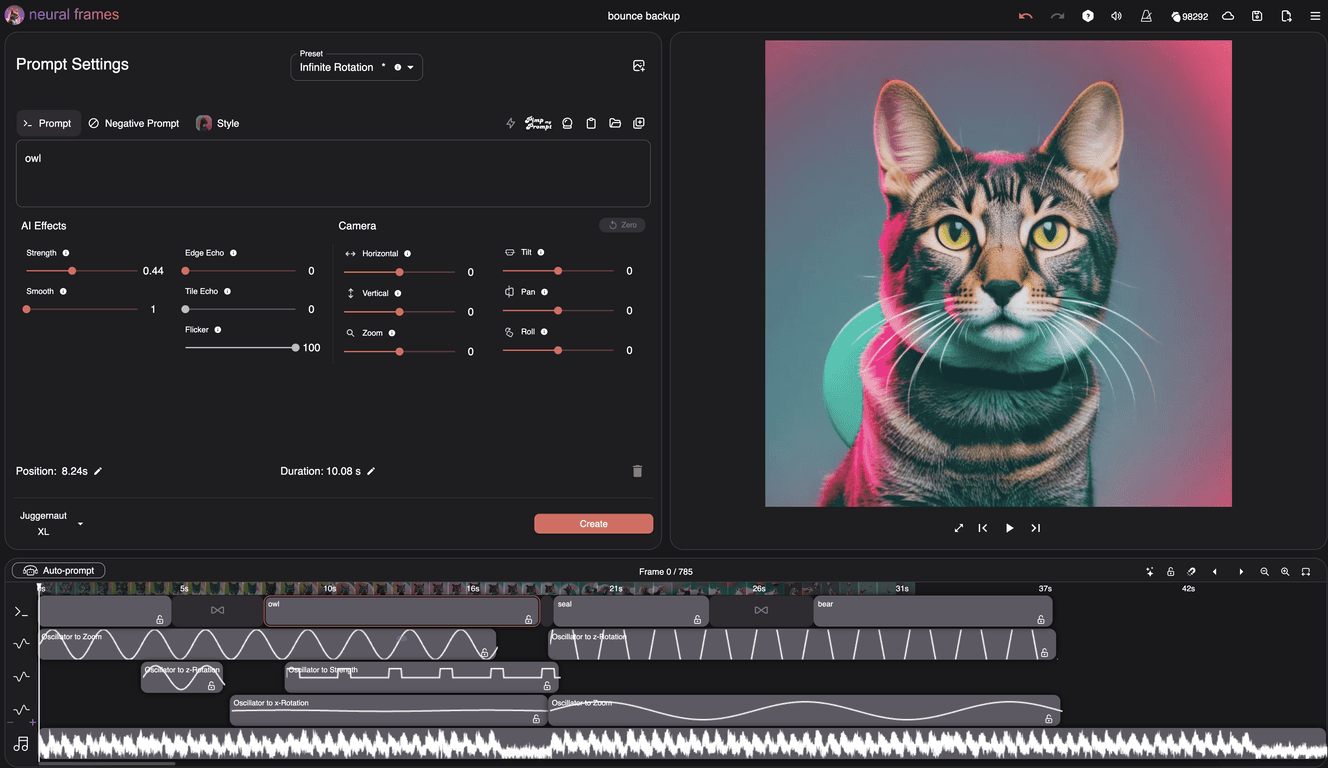
Neural Frames is one of the most music-focused AI video tools available today. Unlike many general AI video generators, it was built specifically for musicians and producers. The creators often describe it as a “visual synthesizer” similar to how a DAW works for music, but designed for creating visuals.
One of its most interesting features is its audio analysis system, which separates a track into different elements like drums, bass, vocals, and synths. These elements can then control different visual effects, making the animation react to the music in a way that feels more intentional and synced rather than random.
Three Creation Modes
Autopilot Mode
Timeline Mode
Audio-Reactive Mode
What Stands Out
Built specifically for musicians, unlike most AI video tools that are made for general content.
Advanced audio analysis that separates elements like drums, bass, vocals, and synths to drive different visual effects.
Highly synchronized visuals, so animations react naturally to the music rather than just following a basic beat.
Watch Out For
Works best for instrumental or electronic visuals, not as strong for lyric-driven storytelling.
Requires some experimentation to get the visuals and audio mapping right.
3. Katalist AI
Best For Narrative and storyboards where you're on the first step of your creative journey. Lightweight functionality. |
Overview
Katalist AI is a storytelling-focused AI video platform that helps creators turn scripts or ideas into visual scenes and videos. You can upload a script, and the platform automatically breaks it down into characters, scenes, and shots, then generates a storyboard that can be converted into a video. For music creators, this works well when the song has a story or narrative concept, since the AI can structure scenes and characters around the lyrics or theme of the track.
What Stands Out
Strong script analysis: the AI automatically identifies characters, scenes, and actions from your script or idea.
Character consistency: the platform tries to keep characters and visual style consistent across scenes.
Full storytelling workflow: from script → storyboard → video inside the same platform.
Watch Out For
Works best for conceptualisation, so lot of manual effort and video editing is required.
Output quality depends heavily on how detailed the script or lyrics are.
4. Nova A.I.
Best For Producing lyric videos quickly, adding polished captions to footage, or assembling a final cut from multiple visual assets. |
Overview
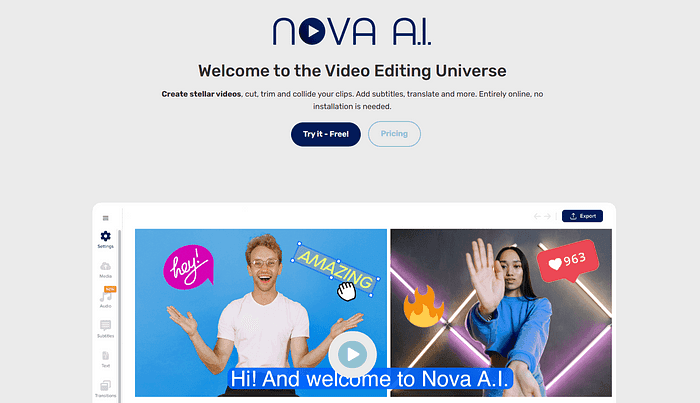
Nova A.I. is a browser-based AI video editing platform designed to simplify the process of creating and editing videos. It focuses more on editing and polishing existing content rather than generating entire videos from scratch. Creators can upload clips, trim or merge them, add captions, and prepare videos for platforms like YouTube or Instagram.
For musicians, Nova A.I. is especially useful for lyric videos and social media music content, since the platform can automatically generate subtitles, translate them into multiple languages, and add text overlays quickly.
What Stands Out
Automatic subtitle generation, which is perfect for lyric videos.
Video translation and dubbing tools allow creators to localize content for global audiences.
Simple editing workflow with tools for cutting, merging, and adding captions
Watch Out For
Primarily an AI editing tool rather than a full video generator, so you still need source footage or visuals.
Less suited for fully AI-generated music videos compared to some newer generation-focused platforms.
5. HeyGen
Best For Artists who want a virtual presenter or avatar to perform or narrate parts of a lyric video, particularly for social media content. |
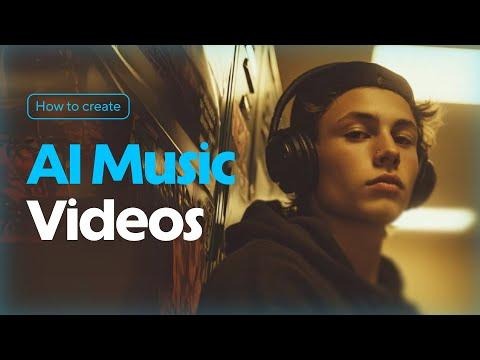
HeyGen is primarily known for AI avatar video creation. Users can build a photorealistic digital presenter, either a pre-made avatar or a custom digital twin of themselves, and have that avatar perform scripted text or lyrics with synchronized lip movement and natural expression.
For musicians, this translates well to lyric videos where a visual performer is needed without actual filming. It's also useful for creating multilingual versions of promotional content. HeyGen can translate and re-dub avatar performances into different languages automatically.\
What Stands Out
Realistic AI avatars that can speak or perform scripted lines.
Strong lip-sync and voice generation, making dialogue and narration feel natural.
Multi-language support allows creators to generate videos in different languages easily.
Watch Out For
Focused on avatar videos rather than cinematic visuals, so it may not suit traditional music video styles.
Works better for promotional or lyric-style videos than full narrative music videos.
6. OpenArt
Best For Artists who want to experiment with AI-generated imagery and develop a unique visual style for use in music videos or promotional assets. |
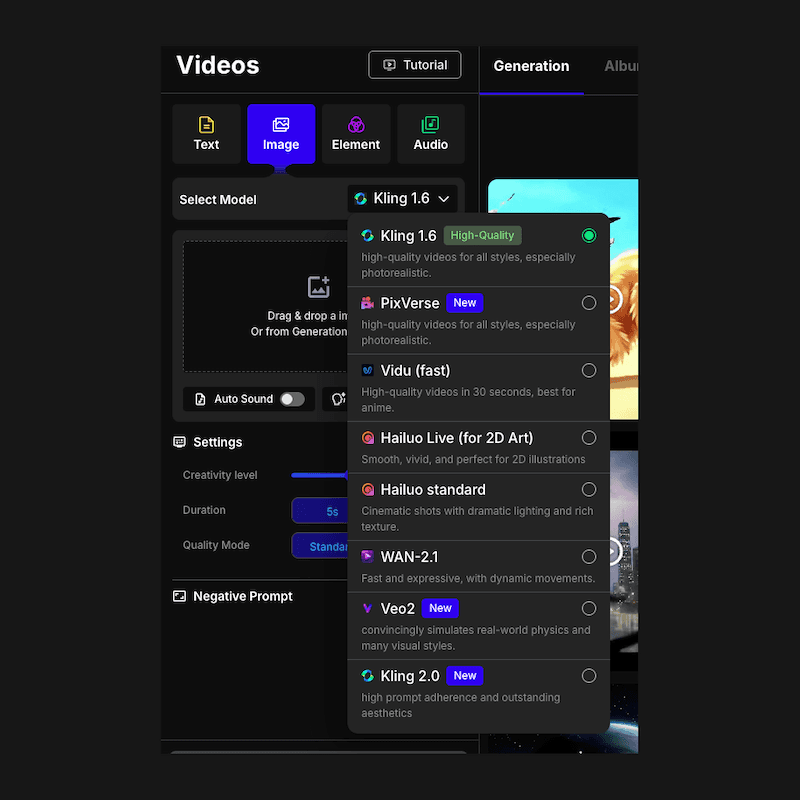
OpenArt provides is an AI image and video clip generation tool. It is less a structured music video tool and more a creative sandbox for developing visual identity.
For musicians, OpenArt can be a useful starting point for generating cover art, scene concepts, or stylized visual assets that are then assembled into a final video using an editing tool like Nova A.I. or a platform like Atlabs.
What Stands Out
A large range of AI models and art styles for generating unique visuals.
Strong creative control, allowing artists to experiment with different visual aesthetics.
Useful for creating distinctive visual concepts for music content.
Watch Out For
Not designed specifically for music video production workflows. Very expensive credits system.
Requires additional editing tools to turn generated visuals into a finished video.
How to Choose the Right Tool for Your Project
The right platform depends on your specific video concept and working style. Here is a quick decision guide:
If your goal is... | Use this tool |
|---|---|
A full music video from scratch, fast | Neural Frames (Autopilot) or Atlabs.ai |
Lyric-Driven Video with Captions | Nova A.I. or Atlabs.ai |
A performed/avatar-style lyric video | HeyGen |
Multilingual versions of your video | Atlabs.ai or HeyGen |
Maximum output volume on a tight budget | Nova A.I. ($10/mo) |
Conclusion
Each of the tools in this guide has its own strengths. Some are great for audio-reactive visuals, others focus on storytelling or editing, but Atlabs.ai stands out because it connects the entire workflow in one place, allowing creators to move from idea and scenes to motion and final video without switching between multiple tools.
It’s also particularly strong for lyric-driven music videos, which tend to work better with AI visuals than purely instrumental tracks. Artists can input lyrics or a song concept, generate scenes, add motion, and export a finished video within the same platform, making Atlabs one of the most practical options for indie musicians looking to create music videos quickly.