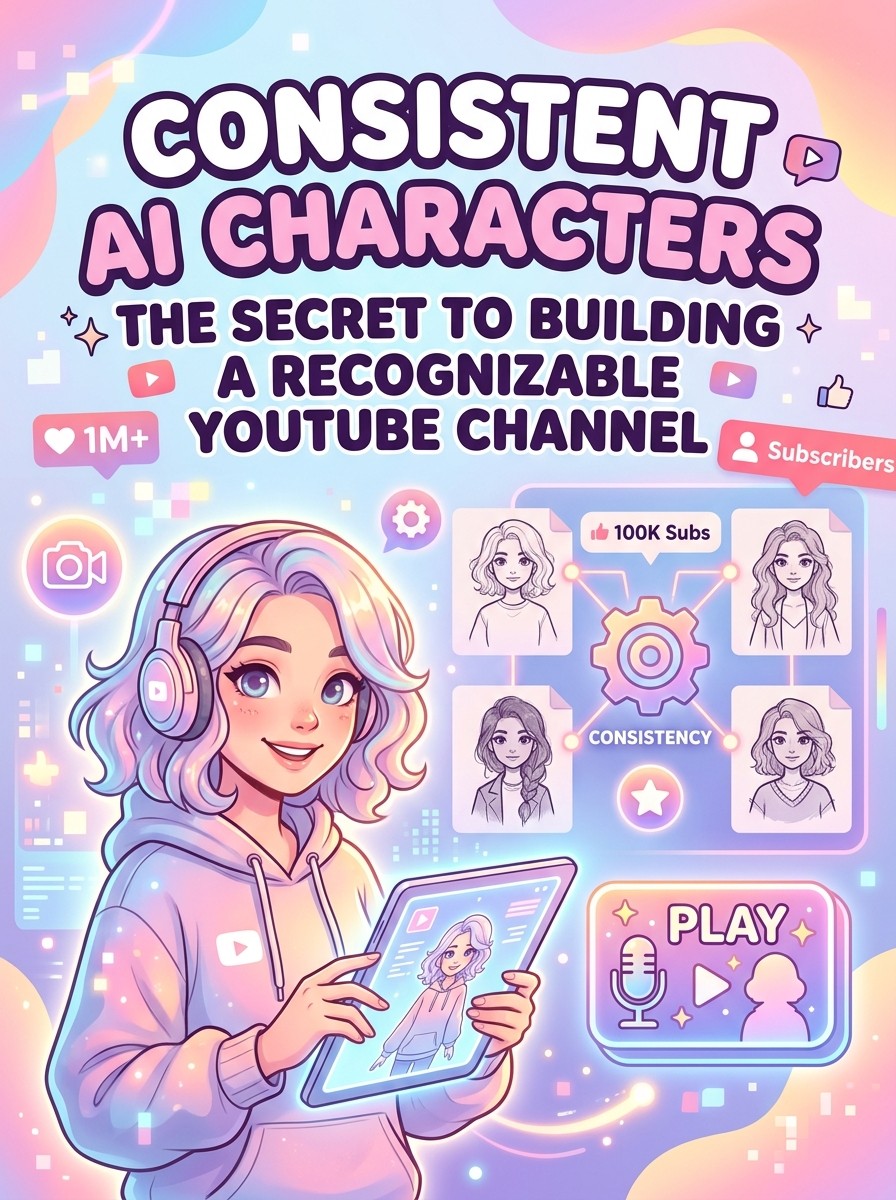
Most creators obsess over thumbnails, posting schedules, and SEO. Meanwhile, the thing quietly killing their channel growth is something they barely think about: their character looks different in every video.
You put real work into your YouTube channel. The scripts are solid. The thumbnails are clean. You are posting consistently. But something is off. Subscribers trickle in and trickle back out. Views plateau. Comments stay sparse. You post more. Same result.
Here is what is actually happening. A viewer watches one of your videos, enjoys it, and clicks subscribe. Then the next video drops. The character hosting it looks vaguely familiar but something is different. The hair. The skin tone. The jacket. Maybe the voice sounds slightly off. The viewer has to do a small mental double-take. Their brain spends energy re-identifying who is speaking instead of listening to what is being said.
That fraction of cognitive friction is enough. The trust that was building gets interrupted. They keep scrolling.
This is the consistency problem. And it is the thing separating channels that build loyal audiences from channels that generate views without building anything durable.
Viewers do not consciously notice when a character is inconsistent. But they feel it. And they leave. |
The good news is that this problem is completely solvable. In 2026, you do not need a production team, a custom animation studio, or years of editing experience to fix it. You need a system and the right tool.

Why Character Consistency Is the Foundation of Channel Identity
Think about the YouTube channels you actually return to. There is almost always a recognizable face, mascot, or visual presence that anchors the whole thing. That anchor is doing more work than it looks like.
When a character looks and sounds the same across every video, a few things happen automatically:
Viewers recognize the channel instantly in their feed without reading the title
Trust accumulates because consistency signals reliability and genuine care
The brain processes familiar visuals faster, which means more attention actually lands on the content
Subscribers develop a real connection to the character, not just the topic
This is why children's educational channels hold retention so well. Characters like Dora or Bluey do not change appearance between episodes. Kids and parents develop a relationship with a specific face, voice, and personality. That relationship is what pulls them back week after week, not the individual episode.
The same principle applies to adult educational content, motivation channels, science explainers, entertainment series, and every other format on YouTube. The character is the thread that pulls an audience through a body of work.
Without that thread, you are making individual videos. With it, you are building a channel.
Most AI video tools create a new interpretation of your character every time you generate. That is great for experiments. It is a disaster for a channel you are trying to build. |
Why AI Characters Keep Changing (And Why It Is Not Your Fault)
If you have tried building a recurring AI character before, you already know the frustration. You generate a great-looking host in episode one. By episode three, her hair is shorter. By episode five, the jacket is a completely different color. By episode eight, she looks like a different person entirely.
This is not user error. It is a fundamental limitation of how most AI image and video generators work. They interpret your prompt fresh every single time. Even if you use identical wording, subtle variations in the generation process produce different outputs. The model has no memory of what you built before.
The result is character drift. Once it starts, it compounds. Each video drifts slightly from the last until your channel has no coherent visual identity at all.
Fixing this with standard tools requires locking every prompt parameter manually, saving reference images, running comparisons across episodes, and still dealing with drift that slips through. It is a part-time job sitting on top of your actual content creation work.
The better solution is a platform that was designed to solve this problem from the ground up.
How to Build an AI Character That Stays Consistent Across Every Video
Here is the full workflow, from first creation to a library of videos that all feel like they belong together.
Step 1: Write a Character Blueprint Before You Open Any Tool
Before generating anything, write a reference document that locks down exactly who your character is. This is your production bible. Every video you make should pull from it without modification.
Your blueprint needs to cover:
Physical description: age range, skin tone, hair length, color and texture, eye shape and color, key facial features
Wardrobe: specific clothing items with colors as precise as possible, accessories like glasses or jewelry
Animation or visual style: 3D cinematic, 2D flat, anime-inspired, photorealistic, cartoon
Personality and tone: calm and nurturing, energetic and playful, academic and authoritative
Voice characteristics: accent, pitch, pace, warmth
Vague descriptions produce variable results. The more specific your blueprint, the less your output drifts.
Do not write "friendly science teacher." Write something like: "Female science teacher in her early 30s, warm medium brown skin, shoulder-length naturally curly dark hair, thin silver-framed glasses, soft hazel eyes, light blue lab coat over a white blouse, small silver stud earrings, gentle confident expression, 3D stylized animation, warm indoor classroom lighting."
That specificity is what keeps your character recognizable across fifty episodes.
Step 2: Generate and Lock the Character in Atlabs
This is where the workflow differs significantly depending on which tool you use.
Most AI tools treat every generation as a fresh start. You paste your blueprint and get a result that looks great. Try again tomorrow and you get something subtly different. The model has no continuity between sessions.
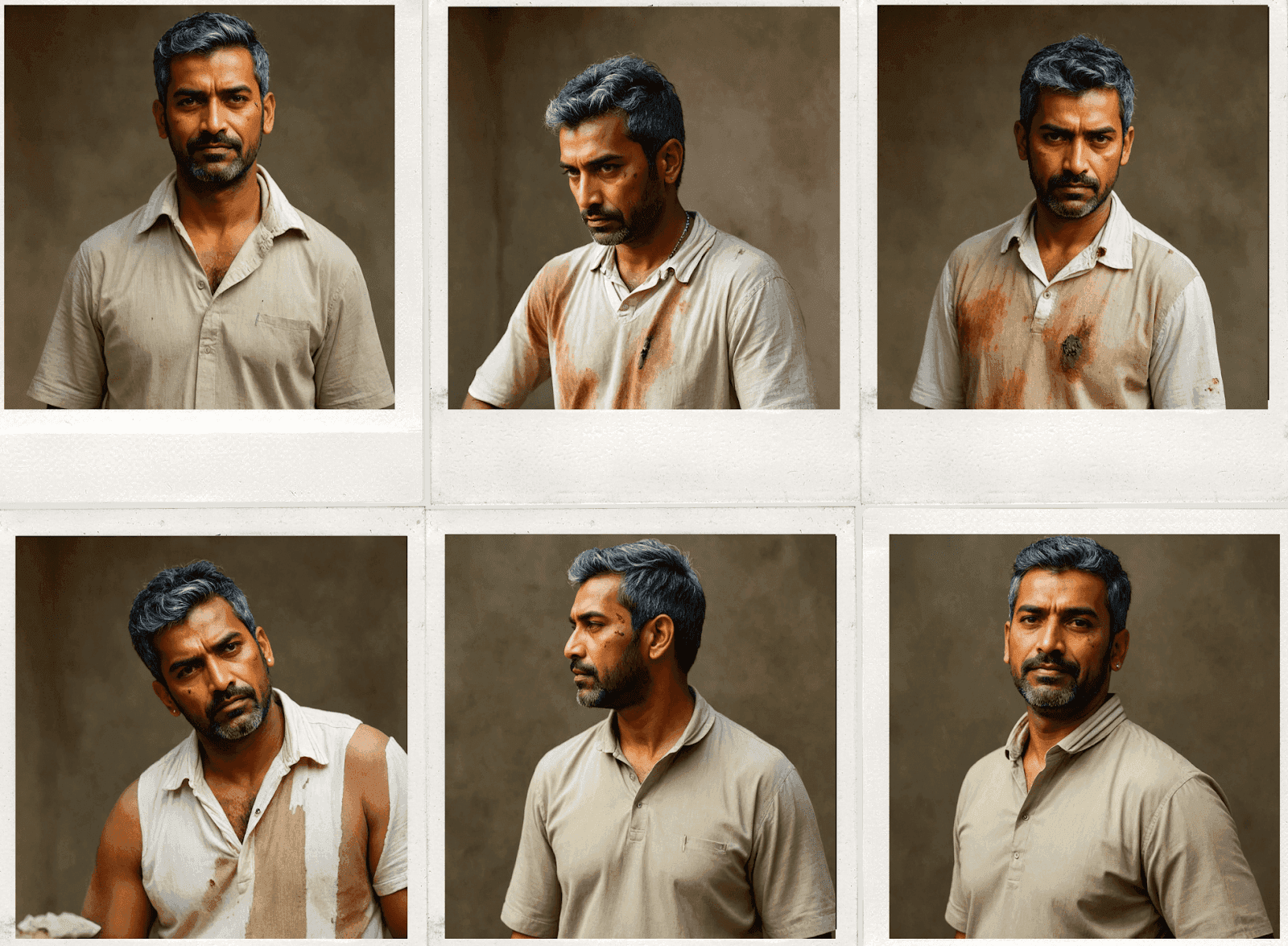
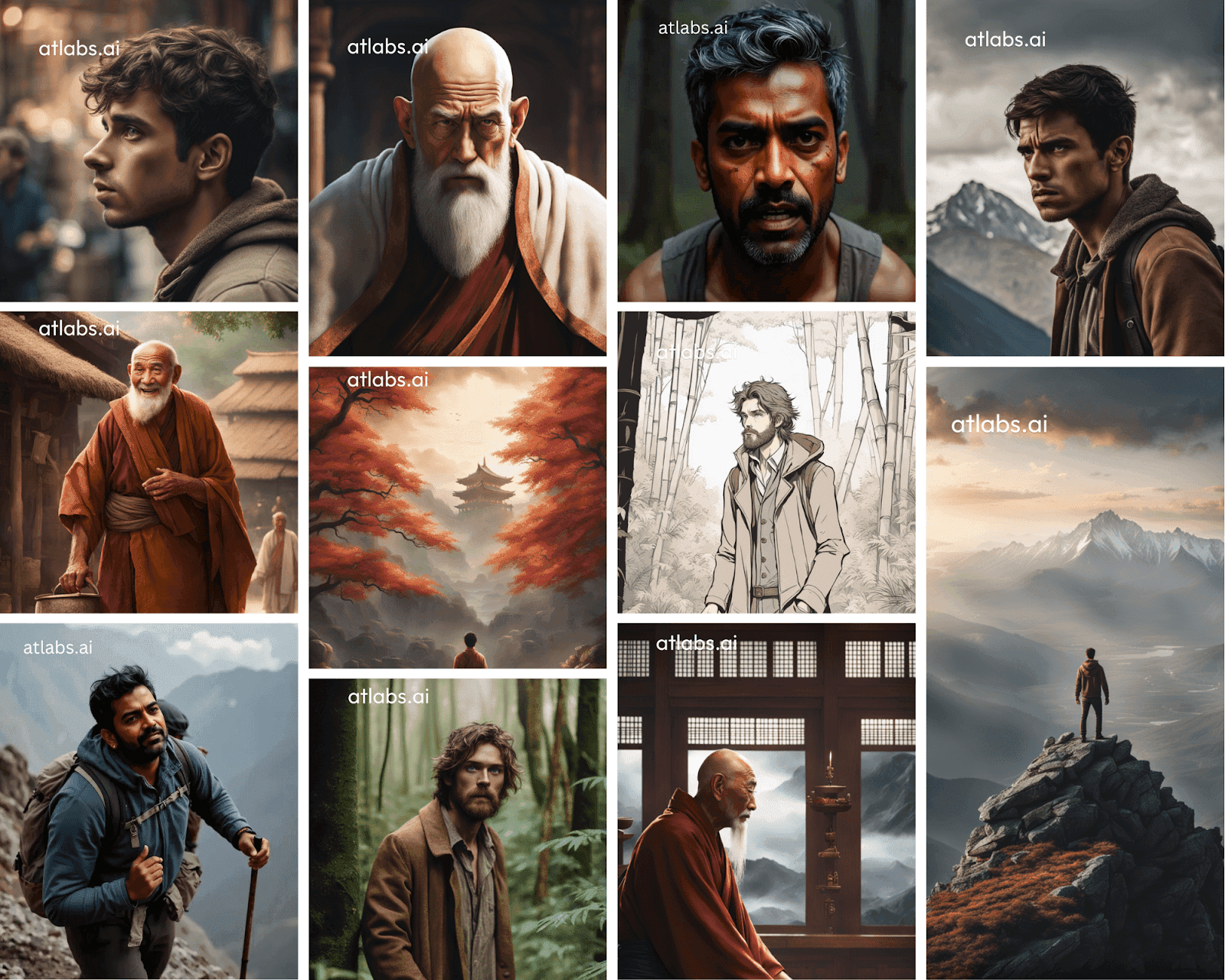
With Atlabs, you generate your character once and the platform keeps them consistent across every scene, episode, and video you create afterward. Facial structure, clothing, proportions, and visual personality stay stable even as backgrounds change, camera angles shift, and lighting adapts to different scenes.
Your Professor Nova in episode one is the same Professor Nova in episode sixty. No drift. No double-takes. No broken trust.
Step 3: Choose One Visual Style and Commit to It
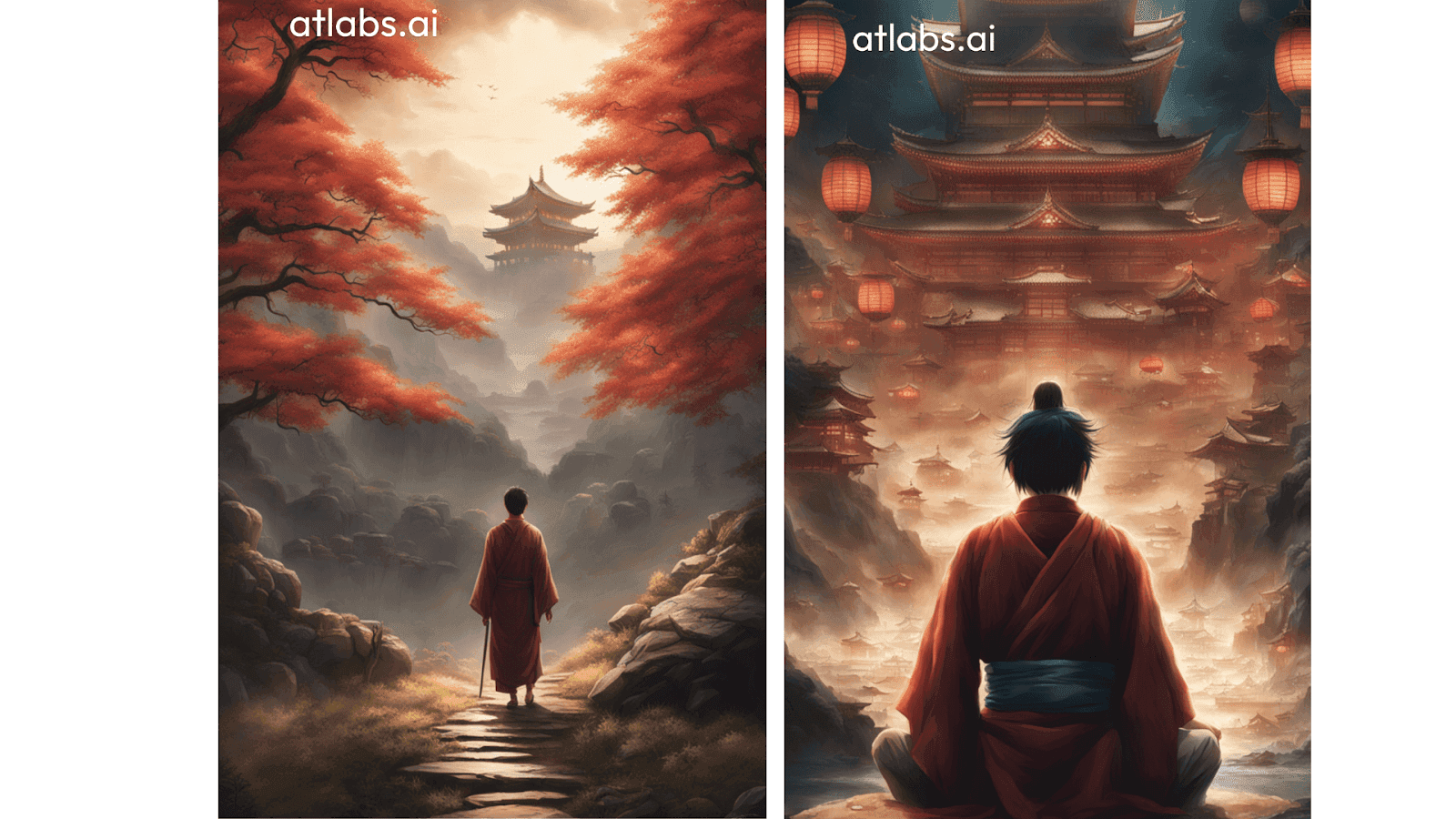
Style-switching between episodes is as damaging to channel identity as character drift. If episode one is 3D cinematic and episode four is 2D flat and episode seven is anime-inspired, your channel feels like a collection of experiments rather than a coherent series.
Pick one style and commit to it for the entire run. Atlabs gives you more than 50 visual styles to choose from, including the ability to train your own on custom references. The power is in choosing once and locking it in. Consistency beats novelty in almost every content format.
Step 4: Lock the Voice and Never Change It
The voice is half the character. If you are using AI voiceovers, choose one voice profile and use it across every single episode without exception.
Accent, pitch, speed, and warmth all contribute to a listener's sense of who the host is. Changing voice models mid-series is the audio equivalent of changing your character's face. Viewers notice, even when they cannot say why something feels off.
Atlabs includes ultra-realistic AI voiceovers with automatic lip sync. Once you select a voice, it travels with your character whether you are producing a two-minute short or a thirty-minute deep dive.
Step 5: Build a Template and Scale It
Once your character, style, and voice are locked, build a repeatable episode template. Standardize your intro format, caption style, background music tone, and camera framing. These elements compound the sense of a coherent channel identity across every upload.
With those pieces in place, scaling becomes simple. You change the script. The character stays the same. The style stays the same. The voice stays the same. Every video you publish reinforces the ones that came before it.
Build your first consistent AI character today. |
What This Looks Like in Practice
Educational Science or Math Channel
Your character is a recurring AI host who teaches concepts. She appears in every episode wearing the same lab coat, speaking with the same calm confident voice, framed against the same classroom background. New episode, same host. Viewers do not have to reorient. They settle in and learn.
You generate your character once in Atlabs, lock her in, and produce episode twenty with the exact same visual identity as episode one. She never calls in sick. She never shows up looking different. She is always her.
Motivation or Self-Development Channel
These channels live and die on parasocial connection. The viewer needs to feel like they are hearing from the same person every week. Someone they have come to trust and look forward to. A character that shifts visually or tonally between uploads breaks that connection faster than any content mistake.
With a locked character and voice in Atlabs, your motivation channel can publish daily without the visual inconsistency that comes from regenerating assets each time. The relationship between your audience and your host stays intact because the host genuinely looks and sounds the same.
Kids Animated Series
For children's content, character consistency is not optional. It is the entire product. Young viewers develop genuine attachment to specific visual characters. Parents notice immediately when something looks different and leave comments about it.
Atlabs's Cartoon Video Maker and consistent character system let you build a kids series where every episode features the same character with the same face, the same voice, and the same personality. That is the standard the genre requires. It is now achievable without a full animation studio.
Consistency Compounds Over Time
There is something that happens when you build a YouTube channel with genuine visual consistency across dozens of videos. The whole becomes greater than the sum of its parts.
A viewer who finds episode fifteen and enjoys it will click back to episode one and watch the whole series. They can do that because the channel feels like a unified body of work, not a collection of disconnected uploads. The character they met in episode fifteen is the same one hosting every earlier episode.
This is how channels build real subscriber counts. Not through individual viral moments, but through a library that rewards binge-watching. Consistency is what makes that library feel worth exploring.
A viewer who trusts your character will watch everything you have made. A viewer who does not trust your character will bounce after one video. |
Atlabs also supports one-click localization into 40+ languages. Your consistent character can explain algebra in English today and Spanish tomorrow without any change to their appearance or identity. That is not just channel growth. That is global reach built on the same foundation of trust you established in episode one.
Common Mistakes That Break Character Consistency
Rewriting the character prompt every episode
Small wording changes create large visual differences. "Curly dark hair" and "wavy black hair" will produce noticeably different outputs even though they describe the same intent. Write the prompt once, exactly, and reuse it without modification.
Switching animation styles mid-series
It is tempting to experiment with new styles as they become available. Resist it during an active series. Save experiments for one-off videos or a new series where you can commit to the style from episode one.
Using different voice models across episodes
Voice is deeply tied to identity. Once your audience has attached to a specific voice, changing it feels like a different person hosting the show. Pick a voice and treat it as a locked production asset.
Editing the character manually outside the platform
Post-processing changes to your AI character in another tool can create visual variations that make future matching impossible. Keep all character-level editing inside the platform where the consistency system lives.
Build a Channel People Actually Come Back To
Most YouTube channels plateau not because the content is bad but because the channel does not feel like a place. There is no recognizable face, no consistent voice, no visual thread that ties one video to the next.
Consistent AI characters fix that. They give your channel an identity that compounds over time. A host your viewers recognize, trust, and want to return to.
You do not need a production team or an animation studio to build this. You need Atlabs.
Create your first consistent AI character for free. |