Here is the short answer for musicians choosing between these four in 2026. Atlabs is the strongest overall pick for full cinematic music videos, with consistent characters, the widest model lineup, and the highest user trust of the group at a 4.2 Trustpilot rating. Freebeat is the cheapest route to fast, beat synced social clips. Neural Frames is the specialist for audio reactive visuals built on stem analysis. Runway makes the most polished single shots but was never designed around music. The full breakdown, real prices included, is below.
Quick Comparison: Freebeat vs Atlabs vs Runway vs Neural Frames
Every number and rating below was verified against the official pricing pages and Trustpilot in July 2026. Prices change, so treat these as the snapshot at publish time.
Feature | Atlabs | Freebeat | Runway | Neural Frames |
|---|---|---|---|---|
Best for | Full cinematic music videos with a recurring cast | Fast beat synced social clips | Premium single shots and pro editing | Audio reactive visuals driven by stems |
Approach | Agent led multi model studio with scene level editing | Fully automatic music video agent | Prompt driven clip generation plus an editor | Music first, stem driven generation |
Music sync | Beat synced stem separation across vocals, drums, bass, and melody | Automatic BPM, beat, and drop syncing | None built in, cuts are timed by hand | 8 stem extraction mapped to visual triggers |
Consistent characters | Reusable cast saved in a Creative Library | Limited between scenes | Reference based, per clip | Reference image reused across scenes |
AI model lineup | Veo 3.1, Sora 2, Kling 3.0, Seedance 2.0, Runway, Nano Banana Pro and more | 70+ models including Veo 3.1, Sora 2, and Kling | Gen 4.5, Gen 4, Aleph, Act Two, plus Veo and Kling access | Kling, Seedance, Runway, Veo 3, Stable Diffusion |
Max export | Up to 4K on top tiers | 1080p on Pro | 4K upscaling | 4K on Ninja tier and above |
Free plan | Yes, no credit card needed | Yes, 50 credits with a 15 second cap | 125 one time credits, no refresh | Free planning plus a 20 second trial render |
Paid plans start | $15/month billed annually | $4.99/week | $12/month billed annually | $26/month |
Trustpilot (July 2026) | 4.2 / 5 | 1.7 / 5 | 1.2 / 5 | 3.1 / 5 |
Atlabs: Best Overall for Cinematic Music Videos
Key Points
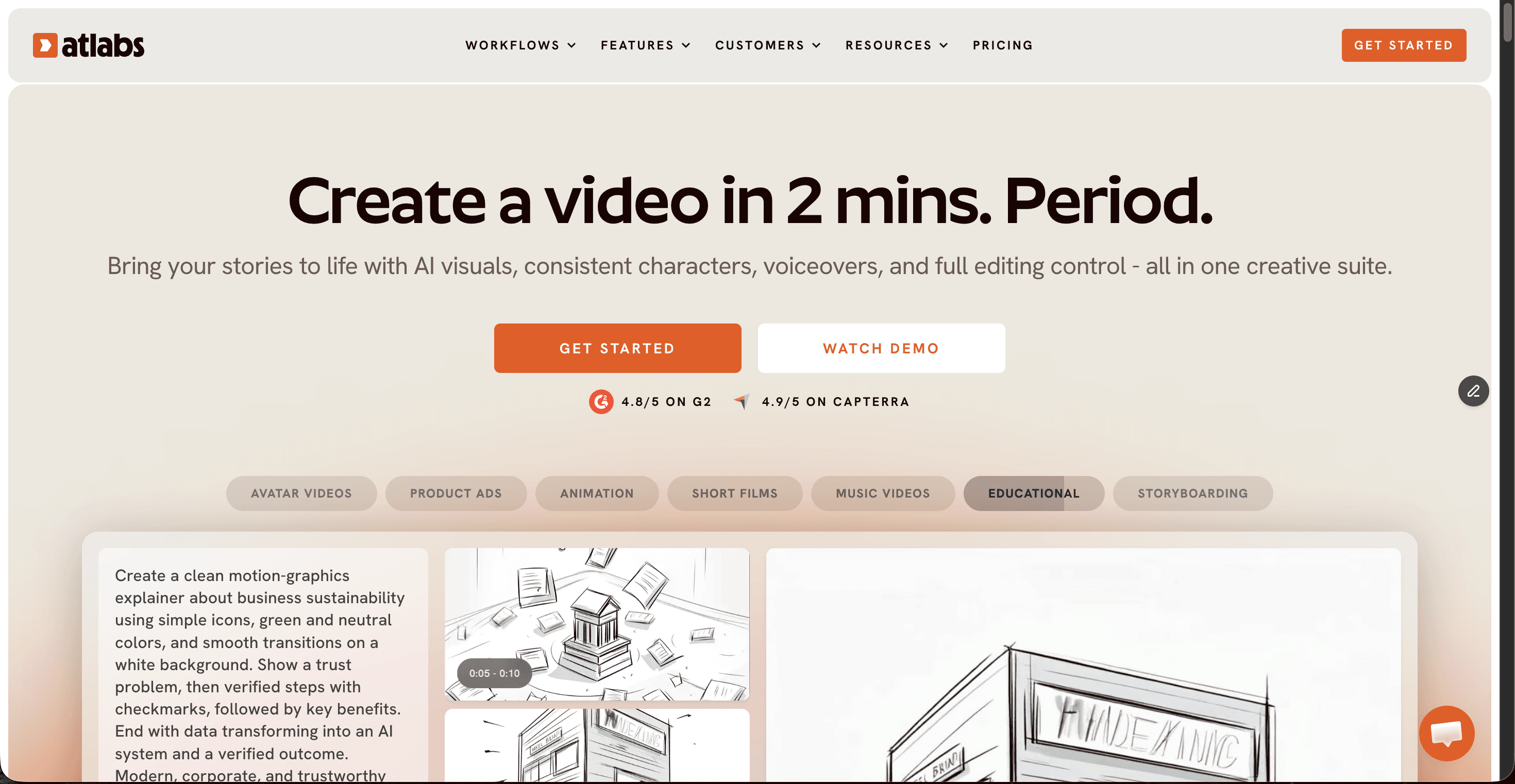
Atlabs is an agent led studio rather than a clip generator. Its Music Video workflow starts from an mp3 upload or a Suno link, reads the track's tempo, mood, and genre, and generates six scene concepts to pick from before anything renders. Beat synced stem separation means the visuals follow the vocals, drums, bass, and melody individually rather than a flat waveform, and you choose between a Narrative video, where a story unfolds across cinematic scenes, or a Performance video with a lip synced artist. The Cast step builds character reference sheets that live in a reusable Creative Library, so the same face appears in scene one and scene twelve. One subscription routes each shot to the best fit among Veo 3.1, Sora 2, Kling 3.0, Seedance 2.0, and more, with 40+ language translation and Premiere Pro export on the way out.
Pros
✓ Beat synced stem separation, so visuals follow vocals, drums, and bass rather than a flat waveform
✓ Characters stay consistent across every scene through the reusable Creative Library
✓ One subscription covers Veo 3.1, Sora 2, Kling 3.0, Seedance 2.0, and more
✓ Scene level editor regenerates a single shot without touching the rest of the video
✓ Highest Trustpilot rating in this comparison at 4.2 out of 5
Cons
✗ Credit costs need watching when you lean on the premium video models
✗ The feature depth takes a session or two to fully explore
Pricing: the Free plan needs no credit card. Lite is $15 per month billed annually ($180 per year). Pro is $29 per month billed annually ($468 per year) and adds 100+ AI models, character casting, lip sync, 1080p export, and videos up to 5 minutes. Trustpilot rating: 4.2 out of 5.
Verdict: Pick Atlabs if you want a finished, story driven music video with a cast that stays consistent from first frame to last, for under $30 a month.
Freebeat: Best Budget Pick for Fast Social Clips
Key Points
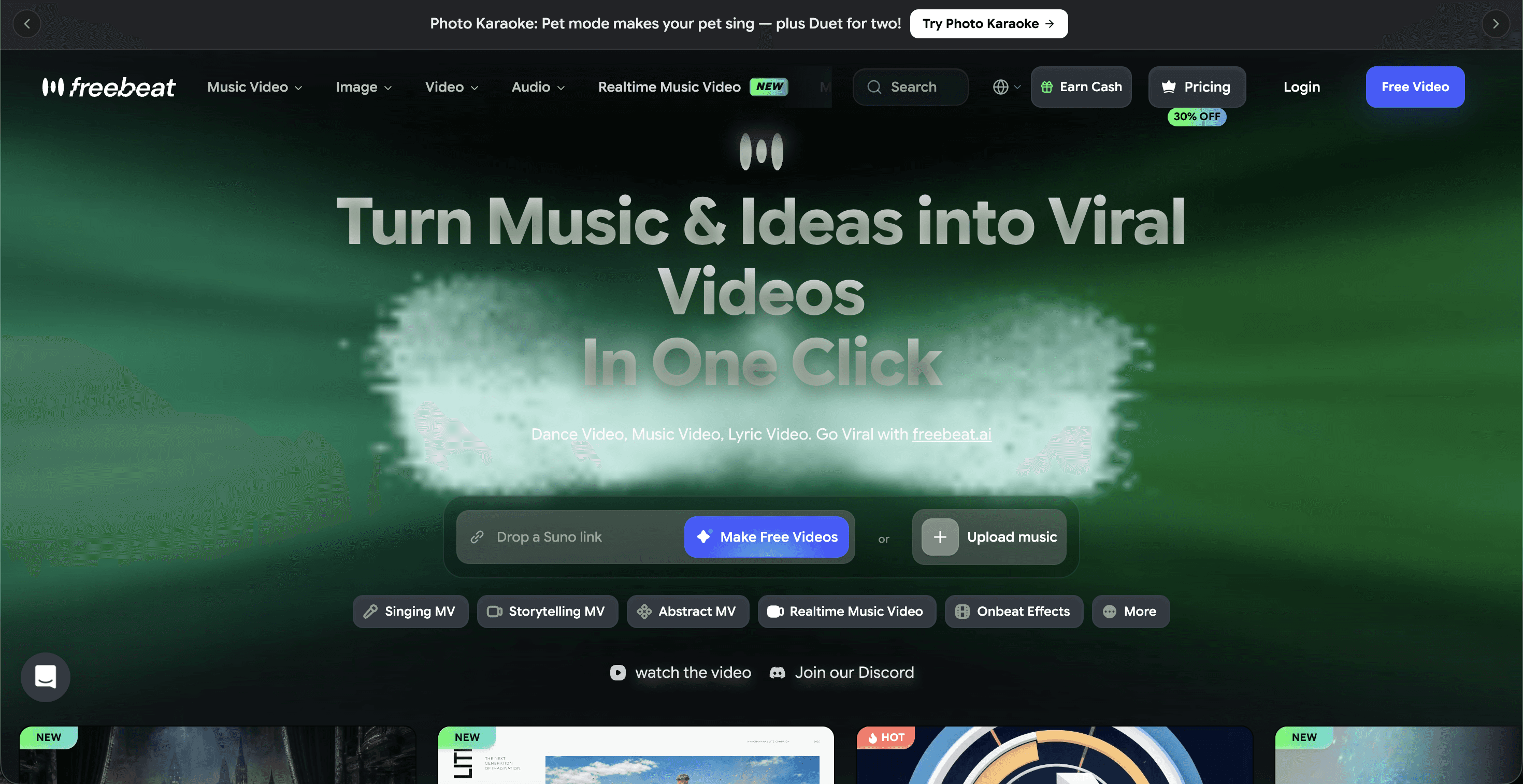
Freebeat brands itself as a fully autonomous AI music video agent, and the pitch holds for short content. Paste a link from Spotify, YouTube, TikTok, Suno, or Udio, or upload an mp3, and the platform analyzes tempo, structure, mood, and lyrics, then generates a complete beat synced video with no prompt at all. The Onbeat effects library carries 70+ one click styles, and the platform bundles access to models like Veo 3.1, Sora 2, and Kling for different looks. It runs entirely in the browser and specializes in lyric videos, dance clips, and short vertical content built for feeds.
Pros
✓ Cheapest entry point in this comparison at $4.99 per week
✓ Truly hands off, the song is the only prompt needed
✓ Strong beat detection for shorts, reels, and lyric videos
✓ Accepts direct links from Spotify, YouTube, TikTok, Suno, and Udio
Cons
✗ Every generation charges a 15 second minimum, even on shorter clips
✗ Quality holds up best under two minutes, longer videos get rough
✗ Weakest user trust here, with a 1.7 Trustpilot rating and recurring complaints about credits and support
Pricing: the Free plan costs $0 with 50 credits and a 15 second video cap. Basic is $4.99 per week, Standard is $9.99 per month, and Pro is $24.99 per month with 1080p output and faster generation.
Verdict: Pick Freebeat for cheap, fast clips to feed TikTok and Reels. For the flagship video of an album launch, its two minute quality ceiling and 1.7 Trustpilot score argue for looking elsewhere.
Runway: Best for Premium Shots and Pro Editing
Key Points
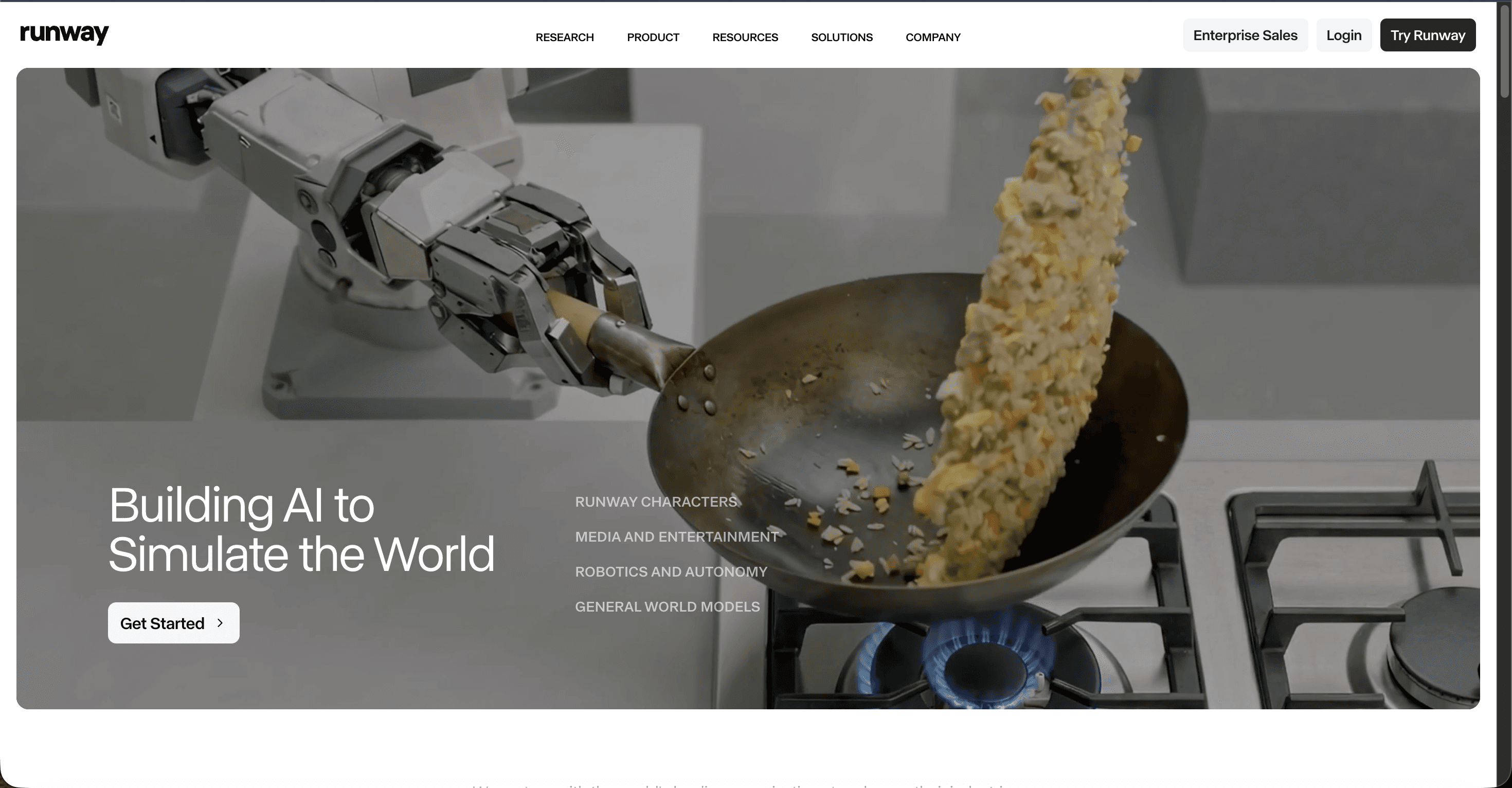
Runway is the premium generalist of the group. Its Gen 4.5 model produces the most cinematic individual shots in this comparison, and the surrounding suite is deep: Aleph handles generative video editing, Act Two captures a real performance and maps it onto a generated character, and every paid plan includes third party models like Veo 3.1, Kling 3.0 Pro, and Seedance 2.0. What Runway does not have is any concept of music. There is no beat detection, no stem analysis, and no audio driven editing, so a music video means generating clips shot by shot and cutting them to the track manually. The credit math also matters: Gen 4.5 costs 25 credits per second, so the Standard plan's 625 monthly credits cover roughly 25 seconds of flagship footage. In June 2026 Runway replaced its Unlimited plan with the credit based Max plan.
Pros
✓ Gen 4.5 tops this group for raw shot quality and motion coherence
✓ Aleph editing and Act Two performance capture make it a genuine production suite
✓ Third party model access included on every paid plan
Cons
✗ No music syncing at all, every cut is timed by hand
✗ Credits burn fast, Standard covers about 25 seconds of Gen 4.5 per month
✗ Lowest Trustpilot rating in this comparison at 1.2 out of 5, with frequent complaints about credit deductions on failed renders
Pricing: the Free plan includes 125 one time credits. Standard is $12 per month billed annually ($15 monthly) with 625 credits. Pro is $28 per month billed annually ($35 monthly) with 2,250 credits. Max is $76 per month billed annually ($95 monthly) with 9,500 credits. Enterprise pricing is custom.
Verdict: Pick Runway when you need a handful of hero shots at the highest possible fidelity and you already have an editor. As a start to finish music video maker, it is the wrong tool.
Neural Frames: Best for Audio Reactive Visuals

Key Points
Neural Frames, built in Berlin and used by more than 40,000 musicians, is the only tool here designed exclusively around the music video workflow. It splits every track into 8 stems, vocals, drums, bass, synths and more, so the visuals respond to what is actually happening in the mix: a hi hat pattern, a vocal phrase, a bass drop. Autopilot goes from song upload to a complete video in roughly 10 to 15 minutes with two clicks, while a frame by frame editor offers granular control for artists who want to direct every second. Exports come pre formatted for YouTube, Reels, TikTok, and Spotify Canvas, with 4K upscaling included on the higher tiers, and generation runs on Kling, Seedance, Runway, and Veo 3 under the hood.
Pros
✓ Visuals react to individual stems, from hi hats to vocal phrases to bass drops
✓ Autopilot turns an upload into a full video in about 10 to 15 minutes
✓ Exports sized for YouTube, Reels, TikTok, and Spotify Canvas
✓ Support team is fast and personal, a consistent bright spot in reviews
Cons
✗ The $26 entry tier is flagged as not recommended for Autopilot on their own pricing page
✗ Premium model renders consume credits quickly on longer songs
✗ The abstract, dreamlike aesthetic fits electronic and experimental genres better than narrative storytelling
Pricing: you can plan a video free and render a 20 second trial before paying. Neural Knight is $26 per month with 2,400 credits and 1080p output. Neural Ninja is $66 per month with 7,200 credits and 4K upscaling. Neural Nirvana is $199 per month with 24,000 credits. Annual billing saves 33 percent. Trustpilot rating: 3.1 out of 5.
Verdict: Pick Neural Frames if you make electronic, ambient, or experimental music and want visuals locked to the mix itself. For character led, narrative videos, Atlabs is the stronger fit.
Points Table: How the Four Tools Score
Each tool was scored out of 10 across seven criteria, for a maximum of 70 points. The scoring stays honest: Runway takes the single highest mark for raw output quality, and Neural Frames matches Atlabs on music sync. Atlabs finishes first because it holds high marks in every column instead of spiking in one.
Rank | Tool | Music Sync | Output Quality | Character Consistency | Ease of Use | Model Lineup | Value for Money | User Trust | Total (70) |
|---|---|---|---|---|---|---|---|---|---|
1 | Atlabs | 9 | 9 | 10 | 9 | 9 | 9 | 9 | 64 |
2 | Neural Frames | 9 | 8 | 8 | 7 | 8 | 7 | 6 | 53 |
3 | Freebeat | 8 | 7 | 6 | 9 | 8 | 8 | 3 | 49 |
4 | Runway | 4 | 10 | 7 | 6 | 9 | 5 | 2 | 43 |
When to Pick Each Tool
Pick Atlabs if you want one platform to carry a track from upload to a finished cinematic video with a consistent cast, and you want the best models routed per shot without juggling subscriptions. Pick Freebeat if your budget is under $5 a week and your goal is a steady stream of short beat synced clips for social feeds. Pick Neural Frames if the stem reactive look is the point, your visuals should pulse with the actual mix, and you release electronic or experimental music. Pick Runway if you are a filmmaker first, need a few shots at maximum fidelity, and plan to edit the video yourself in a timeline.
How We Compared Them
All four pricing pages were checked directly in July 2026, and every Trustpilot rating was pulled the same week. Scores weigh seven criteria: music sync depth, output quality, character consistency, ease of use, model lineup, value for money, and user trust. Music sync and consistency carry the most practical weight because they are the two things a musician cannot fix in post.
Watch the Atlabs Music Video Tutorial
The fastest way to judge Atlabs is to watch a track become a video. The tutorial walks through the full Music Video workflow, from uploading a song and picking the best 25 second segment, through choosing a visual style and concept, to casting characters and rendering the final cut.
Frequently Asked Questions
Is Atlabs better than Freebeat for music videos?
For anything longer than a quick social clip, yes. Atlabs holds character consistency across a full narrative video and carries a 4.2 Trustpilot rating against Freebeat's 1.7. Freebeat still wins on entry price at $4.99 per week for short beat synced clips.
Which of the four tools is the cheapest?
Freebeat has the lowest entry at $4.99 per week. On monthly billing, Runway Standard starts at $12 per month billed annually, Atlabs Lite at $15 per month billed annually, and Neural Frames at $26 per month. For a complete music video pipeline under $30, Atlabs Pro at $29 per month covers the most ground.
Can Runway make a full music video?
Piece by piece, yes, but it has no beat detection or audio syncing, so every cut is timed manually in an editor. At 25 credits per second on Gen 4.5, a three minute video also gets expensive fast. Runway works best for a few hero shots inside a video assembled elsewhere.
Do these tools work with Suno or Udio tracks?
Freebeat accepts direct Suno and Udio links. Atlabs takes a Suno URL or an mp3 upload of up to 200MB in its Music Video workflow. Neural Frames works from any uploaded audio file. Runway only treats audio as an editing asset, not as a generation input.
The four tools solve different problems, but only one carries a track from upload to a finished cinematic video with a cast that never changes faces. Upload your song, pick a style, and watch the first cut render.