The Ultimate Wan 3.0 Prompting Guide [2026]
The Prompt That Wastes Twenty of Your Thirty Seconds
You ask for a violinist playing. What comes back is a violinist playing, held for the full duration, with nothing at second twenty-eight that was not already true at second two. The generation succeeded. The clip is unusable, because a static description of a person produced a static recording of a person.
Now ask for something else: she finishes the phrase, lowers the bow, and holds still as the last note decays while the camera drifts left. Same subject, same instrument, same room. The difference is that the second version contains an arc, and Wan 3.0 generates roughly 30 seconds in a single pass with native audio, which means it will render whatever arc you gave it, including none.
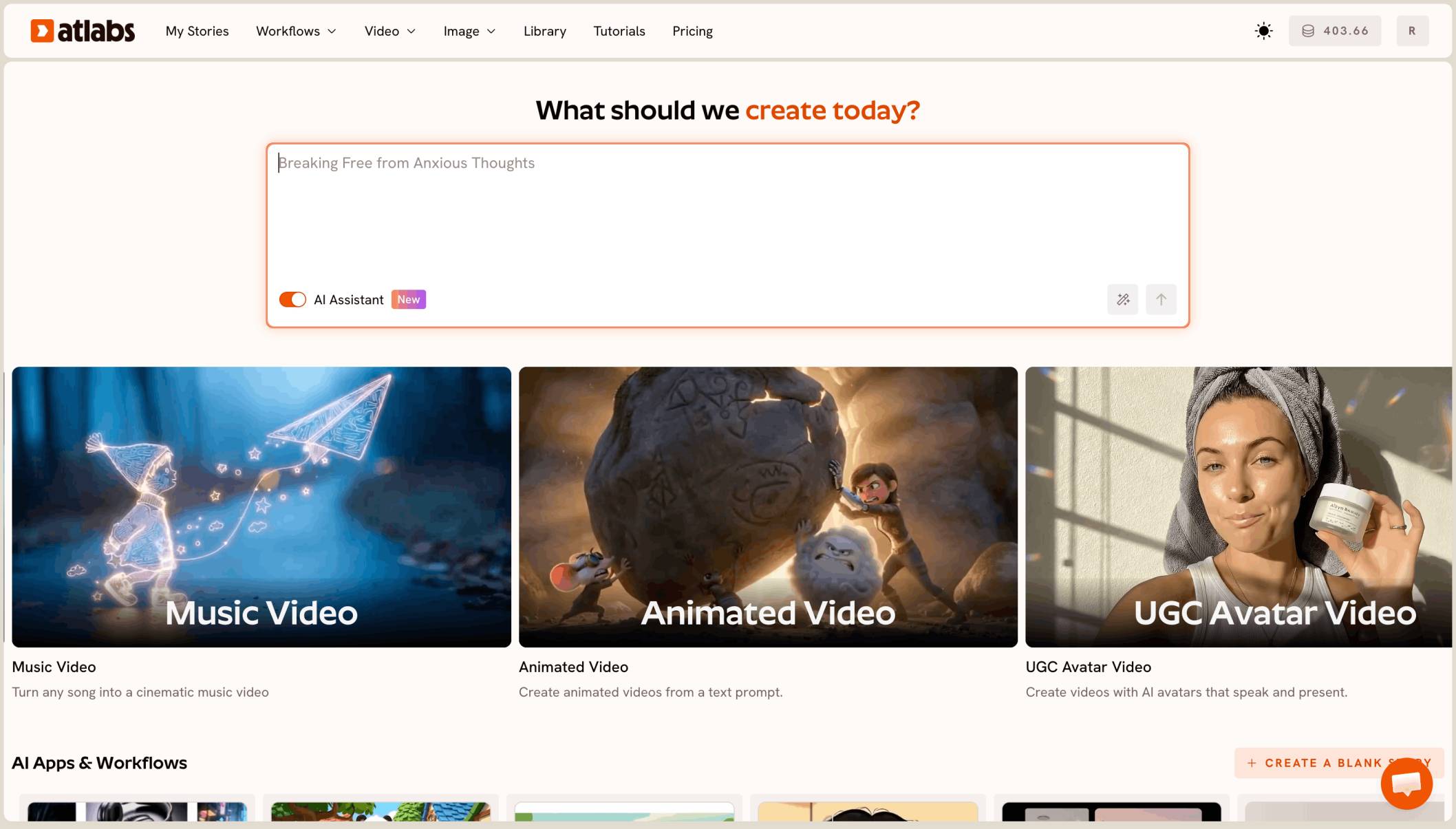
Wan 3.0 is live on Atlabs, so everything in this guide is something you can run today without a separate API account.
Why Long Takes Change How You Write
Short clip prompting rewarded description because there was only one moment to describe. At five seconds, the difference between a great prompt and an adequate one is mostly adjectives. Everything you were taught in 2024 assumes this, which is why so much prompting advice reads like a shopping list of visual qualities.
At thirty seconds you are not describing a frame, you are scheduling change. The model has to know what is different at the end from the beginning, and every second you leave unaccounted for is a second it fills with its own judgment. That is why long generations so often feel padded. They are not padded, they are unbriefed.
Three things follow from that. Camera behavior has to be named, because an unspecified camera either locks off like a security feed or drifts however the model prefers, and neither is a decision you made. Audio has to be directed, because sound is generated in the same pass, so leaving it out is not a request for silence, it is a request for somebody else's mix. And references need explicit jobs, because Wan 3.0 accepts around ten images alongside clips, audio, and even documents, and an asset with no stated role still influences the output in ways you did not choose.
The fourth thing is subtler. Wan 3.0 reasons about composition and motion before it renders, which means the order of your prompt matters. Lead with subject, motion, and camera so the planning step locks composition first, then layer light, action, and audio behind it. A prompt that buries the shot type in the fourth sentence gets planned around the wrong thing.
The SPACE Formula
The structure that holds up best across early testing is SPACE, which is a short shot brief rather than a caption.
Subject is who or what is in frame, concretely. A courier in a soaked yellow jacket, not a person. Performance is the motion and how it evolves. He shoulders the door open and steps through, not he stands there. Ambience is setting, time, and light. A narrow alley at night, neon spill on wet brick. Camera is one shot size and one deliberate move. Mid shot, slow push in. Not two moves, not three, because competing camera instructions inside one take produce a clip that cannot decide what it is doing. Extra cues carry the audio bed, the pacing, the continuity rules, and the reference labels.
Written out, the template runs: subject and primary action in scene, light, and time, then visual style and atmosphere, then shot size and one camera move, then a specific audio line, then reference labels and whether this is one unbroken take or a staged sequence with end states.
The gap between weak and strong prompting shows up cleanly in pairs. "A rainy street at night" versus "mid shot on a courier, one slow push in down a neon lit alley, rain falling through the key light." "Use these references" versus "the courier from the character reference crosses the plaza shown in the location reference." "Add some sound" versus "low rain bed, no music, the shutter slams as the camera reaches the doorway." "Product video with logo" versus "studio lit slow rotation of a brushed steel kettle, logo legible throughout the turn." In each pair the strong version is not longer by much. It is specific in the places where the model was otherwise guessing.
The Atlabs Workflow for This
Wan 3.0 sits in the Atlabs model lineup alongside Kling, Veo, Seedance, and Hailuo, which means you write the brief once and pick the engine that suits the shot rather than rebuilding the same brief in a different tool.
The workflow that matches this discipline most closely is Script to Video, because it turns a shot brief into fields rather than a paragraph you have to structure correctly from memory.
Script to Video runs in three steps. Step 1 offers two input modes, "Add your script" for narration led work with a language selector, AI Script Writer button, and a Suggested Scripts panel of three generated starting points, and "Add your screenplay" for structured work. Paste anything with screenplay formatting and Atlabs surfaces Screenplay Detected, opening a view where the left panel shows the AI analysed Narrator Voice, Locations, and Actors, and the right panel breaks the piece into scenes carrying Location Type, Location, and Time of Day, with individual SHOT descriptions and DIALOGUE blocks inside each one.
Those SHOT blocks are the interface version of staged end states. The cast panel is the interface version of a character reference lock.
Step by Step Walkthrough
1. Write the arc before you open anything. Decide what is observably different at the end from the beginning, then break it into stages with end states. A staged brief reads: stage one ends with the wheel upright in the stand and the bench empty, stage two ends with the wheel true and the wrench still in hand, stage three ends with the stand empty and the wheel on the hook. Those end states are checkpoints the model can plan against. One primary change per stage, and put the reveal late so the final beat has somewhere to land.
2. Choose your input mode in Step 1. Use "Add your script" when the piece is narration led. Use "Add your screenplay" when you already know your shots, since the structured view stops a shot list quietly collapsing into one run on paragraph, which is the most common failure in long form prompting.
3. Build the scene breakdown. Set Location Type as Exterior or Interior, then Location and Time of Day. Write each SHOT description as movement rather than composition. "Slow push in from mid shot, holding the subject centre frame" gives the model something to execute. "Beautiful cinematic shot" gives it nothing to plan around. Add DIALOGUE blocks where characters speak, filling in the character name, the spoken line, and the delivery tone. Shots and dialogue can be added or removed per scene, so pacing gets tightened here rather than by rewriting the whole brief and regenerating blind.
4. Set your style in Step 2. Aspect Ratio offers 9:16 for TikTok and Instagram, 16:9 for YouTube, and 1:1 for LinkedIn, Twitter, Facebook, and Pinterest. Video Style offers AI Video (Recommended), AI Storyboard, and Upload if you are bringing your own media. Lock the ratio before you finalise framing, because a slow push in that reads well at 16:9 crops into a different shot at 9:16.
5. Finalize the cast in Step 3. Characters extracted from the script appear with Click to Edit, alongside an Add Character option and dropdowns for Country Accent and Narrator Voice. Defining a character here does the same work as naming a character reference in a Wan 3.0 prompt. The model gets one fixed answer to who this person is instead of improvising a new one in every scene.
6. Generate on Wan 3.0, then repair rather than restart. When one stretch fails, take the clip into Modify Video, upload it, reference it as @Video1 in the prompt, describe the final video you want, and attach up to four reference images for style guidance. Keep Original Audio has an on and off toggle, so fixing a picture problem does not cost you a soundtrack you were happy with.
Why Atlabs Works Well for This
The first reason is model routing. Prompt discipline carries between models, aesthetic does not, and the engine that renders a stylized character closeup well is rarely the one that renders a wide storm lit exterior well. Atlabs runs Wan 3.0 for long single takes with native audio and reference continuity, Kling 3.0 and Kling 2.6 for cinematic motion and smooth movement, Google Veo 3.1 for photorealism, wide shots, and establishing shots, Seedance 2.0 for stylized content, anime, and character closeups, Hailuo 2.3 for high motion and anime adjacent visuals, and Wan 2.6 for open source cinematic output. You write the brief once and choose the engine rather than rebuilding it across five accounts.
The second is that identity and motion stay separable. Motion Control accepts a reference video between 3 and 30 seconds, applies its motion to a character image you upload, and keeps motion entirely under the reference clip's control rather than the prompt's, with an optional prompt field of up to 2500 characters for background and scene detail. That is exactly the instruction you would write as "motion from the motion reference only," except the tool enforces it instead of trusting the phrasing to hold.
The third is that the repair path exists. Long takes fail in specific places rather than uniformly, and the difference between a workable pipeline and a frustrating one is whether a bad four second stretch costs you a fix or a full regeneration. Modify Video takes a clip between 3 and 10 seconds with up to four style reference images, and Upscale handles the final delivery pass with target resolutions of 720p, 1080p, or 4K and frame rates of 15, 30, 45, or 60.
Example Prompts
1. The cinematic long take. A windswept mountain fortress under storm light at golden hour, black banners snapping against the sky. Open wide, then push in slowly as a map unfurls across a candle lit war table. A silver haired queen in black velvet stands before her advisors in a torch lit hall while an army moves through mist below. Slow deliberate camera moves only, no whip pans. Audio is low drums, wind, and an orchestral swell arriving late. One continuous narrative arc. (Best routed through Wan 3.0) Try this prompt in Atlabs Script to Video
2. The staged instructional clip. A mechanic trues a bicycle wheel in a small sunlit workshop. Stage one: the bent wheel lies flat on the bench beside an empty truing stand, and he lifts it into place, ending with the wheel upright and the bench clear. Stage two: the wheel spins as he tightens spokes, ending with the wheel true and the wrench still in his right hand. Stage three: he lifts it out and hangs it on the wall hook, ending with the stand empty. Keep his clothing, the shop layout, and the afternoon window light consistent throughout. Audio is spoke wrench clicks, wheel spin, and quiet workshop ambience. One continuous take. (Best routed through Wan 3.0) Try this prompt in Atlabs Script to Video
3. The hero product turn. A brushed steel kettle on a clean reflective surface under soft key light from screen left. Slow 360 degree rotation with the logo legible through the entire turn, ending on a front facing hero composition. Subtle ambient room tone only, no music, no text overlays, no additional props. Product shape, finish, and logo position preserved exactly. (Best routed through Wan 3.0) Try this prompt in Atlabs UGC Product Ads
4. The reference locked walk. A woman in a long grey coat crosses a plaza at dusk, wet stone reflecting the last light. Slow tracking shot from the side at eye level, warm rim light catching her shoulder, she glances toward camera once then continues without breaking stride. Motion comes entirely from the reference clip, background and lighting from the prompt. Identity, face, and clothing locked. Low city hum and soft footsteps, no music. Try this prompt in Atlabs Motion Control
5. The stylized promo. Pure 2D cel animation in a cold palette of deep ocean blue, cobalt, cyan, and pure white with hard edged shading. A protagonist with shoulder length black hair and an oversized blade walks in side profile as a city of pipes and grids slides past behind her. Geometric masks and inversions carry the transitions, resolving on a wide graphic composition. Sharp effects and a tension score, no dialogue. One unbroken stylized take. (Best routed through Seedance 2.0) Try this prompt in Atlabs Script to Video
6. The reference led repair. Take the uploaded clip as @Video1 and hold the existing framing and camera move exactly. Regrade to a colder palette with cooler shadows and a warmer key on the face, matching the four attached style references. Preserve the character's face, hair, and wardrobe without alteration. No added text, no additional figures, no change to the motion. Try this prompt in Atlabs Modify Video
Pro Tips
Order the prompt the way the model plans. Shot, then subject, then light, then action, then audio. Because Wan 3.0 reasons about composition before rendering, whatever you lead with is what gets locked first. A brief that opens with mood and reaches the shot type four sentences later gets planned around the mood.
Give every reference a job and say what it is not for. The courier from the character reference, the alley from the location reference, motion from the motion reference only. Clean, single subject, well lit references outperform busy collages by a wide margin, and the exclusion does as much work as the instruction, since an unqualified location reference will lend you its wardrobe as well as its walls.
Drop the legacy tags. Strings like 8k, masterpiece, and trending were prompt hacks for a previous generation of models and now compete with clear direction rather than adding to it. One sentence of specific camera and light instruction outperforms a paragraph of quality tags.
FAQ
Is Wan 3.0 available on Atlabs? Yes. It runs inside the same workflows as the rest of the lineup, so you can build a brief in Script to Video and route the generation to Wan 3.0 without setting up a separate account.
How long can a Wan 3.0 clip be? Roughly 30 seconds in a single pass with native audio, at delivery ready 1080p. Some interfaces let you request a duration or leave it adaptive so the model chooses based on the prompt and references.
How many references can I use? Around ten images alongside clips, audio, and in some cases documents. Label each one in the prompt by the job it does, since unlabeled assets still influence the output in ways you did not specify.
What is the fastest way to improve a long prompt? Add stages with observable end states. Naming what is true at the end of each segment gives the model checkpoints to plan against, which fixes pacing problems that no amount of extra description will touch.
Should I use Wan 3.0 or Wan 2.6? Choose Wan 3.0 when the take is long, when references have to stay locked across the full duration, or when you want sound generated with the picture. Wan 2.6 remains a solid open source option for shorter cinematic clips where those constraints do not apply.
Which model should I choose for other looks? Kling 3.0 for cinematic motion and smooth movement, Google Veo 3.1 for photorealism and establishing shots, Seedance 2.0 for stylized character work and anime, and Hailuo 2.3 for high motion. The workflow stays the same, only the engine behind it changes.
Final Verdict
Long take prompting rewards planning over description. Lead with subject, motion, and camera so the composition locks first. Break the take into stages with end states the model can aim at. Name one camera move rather than three. Direct the audio in the same breath as the picture. Tell every reference exactly what it controls.
Those habits will outlive whichever model ships next, which is why they are worth building now. What does not carry as easily is everything surrounding the prompt: the shot list, the cast, the aspect ratio, the model choice, and the repair pass when one stretch comes back wrong. Script to Video supplies the structure, UGC Product Ads handles hero object work, Motion Control keeps motion under the reference's control, and Modify Video fixes what needs fixing without sending you back to the start, with Wan 3.0 available behind all of them.