The best Synthesia alternative for animated explainers in 2026 is Atlabs, because Synthesia is built around a presenter talking to camera and Atlabs is built around a script becoming an animated story with the same characters in every scene. If your explainer needs illustrated sequences rather than a person on screen, that is the difference that decides the project.
Synthesia is a strong product and this is not an argument against it. It does presenter led video very well, which is why it sits in so many enterprise training stacks. The problem shows up the moment your explainer needs to show a process rather than describe it, follow a character through a scenario, or carry a visual style that is not a person standing in front of a background. That is a different job, and it needs a different tool.
Here are the five worth looking at, what each one actually does, what it costs, and which one fits your project.
Why Teams Look for a Synthesia Alternative
Three reasons come up repeatedly, and they are all structural rather than complaints about quality.
The first is format. Synthesia's centre of gravity is an avatar delivering a script. Animated explainers work differently. They show a problem happening, walk through a mechanism, follow a character through a decision. A presenter reading that content out loud is a narration of an explainer rather than the explainer itself, and viewers can tell.
The second is visual range. Animated explainers live or die on style. Whiteboard doodle for a mechanism, corporate vector for a product walkthrough, paper cutout or claymation for something warmer. A tool built around realistic avatars will not give you that range, because it was never trying to.
The third is minutes based pricing. Synthesia allocates video minutes, often as an annual allowance on the lower tiers. That is fine for a set number of finished videos. It gets uncomfortable when you are iterating on an explainer, generating three versions of the same 90 seconds to see which one lands, because every iteration spends the allowance.
So the shortlist below is judged on one question. Can it take a written script and give you back a finished animated explainer, without an editor in the middle?
What to Look For in an Animated Explainer Tool
Script first input. Your explainer already exists as words. A tool that starts from a script rather than a creative prompt removes a translation step.
Character and style consistency. If you are making a series, the same characters and the same look have to hold from video one to video ten.
Scene level editing. Explainers get feedback. You need to change scene three without regenerating scenes one through nine.
Narration and captions included. If you are paying for a separate voice tool and a separate captioning step, the workflow has not actually replaced the old one.
Multilingual output. One explainer, several markets, without re-recording.
No assembly required. The output should be a finished video, not a folder of clips.
1. Atlabs: Best Overall Synthesia Alternative for Animated Explainers
Best for: Teams who need a full animated explainer, or a series of them, produced from a script without an editor.
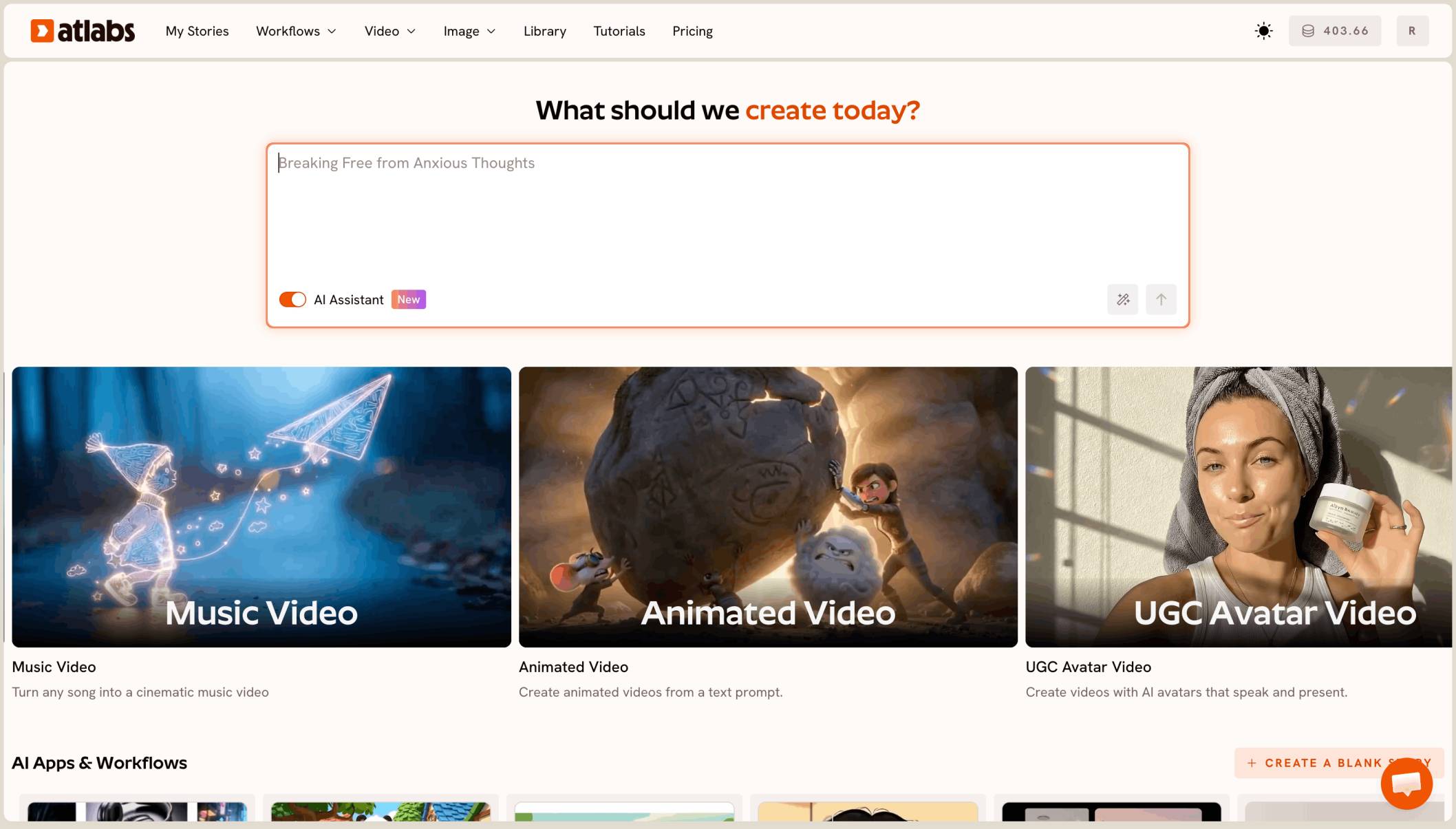
Atlabs is the closest thing on this list to a direct replacement for what most people are trying to do when they open Synthesia and find the format does not fit. You paste your script, choose an animation style, cast a narrator and characters, and it generates the complete narrated video with cuts, captions and motion graphics already applied. There is no timeline afterwards.
Where it separates from Synthesia specifically is the animation. Instead of one presenter delivering the content, you get a scene by scene visual story with characters that stay consistent across every scene and across every video in the series. The Consistent Cast system locks your narrator, your characters and your recurring objects once, so an eight part product explainer series looks like a series rather than eight separate commissions.
Key features
The workflow is five steps. You add your script, either pasting your own or drafting one with the built in AI Script Writer, with a language selector on the output. The working length is 150 to 220 words for a 60 to 90 second explainer, structured as problem, explanation, then takeaway.
You set your style from a library of more than 30 animation styles, with aspect ratios for 16:9, 9:16 and 1:1, plus a custom style option if the explainer has to sit inside an existing brand system. This is the part that Synthesia structurally cannot match, because the styles are illustrated rather than photoreal.
You finalise your cast, choosing a narrator with a country accent, adding characters, and locking recurring objects so the same product, device or prop appears identically throughout.
You generate in one pass, then edit at the scene level. When a stakeholder flags scene four, you rewrite and regenerate scene four. Nothing else moves, and your reviewer only re-approves what changed.
You publish with the Global Release Kit, which translates the finished explainer into more than 40 languages, reframes it for other platforms, and generates a thumbnail in one click.
Under the hood Atlabs routes between current video models including Seedance 2.0, Hailuo 2.3, Google Veo 3.1 and Kling 3.0, so the output is not limited by one model's weak spots.
Pricing
Pricing starts free, with paid plans from $15 per month. Trustpilot rating: 4.5/5. Because pricing is not metered as annual video minutes, iterating on an explainer does not feel like spending a budget.
Verdict
If the reason you are looking past Synthesia is that your explainer needs animation rather than a presenter, this is the switch. It is the only tool here that covers script, animation, consistency, narration, captions, editing and translation in one place.
2. HeyGen: Best If You Actually Want a Presenter, Just Not Synthesia's
Best for: Teams who like the avatar format and want a different product, pricing model or avatar library.
HeyGen is the closest like for like alternative to Synthesia. It is an avatar and talking head platform with a large stock library, custom avatars built from your own footage, strong lip sync and wide language support including translation of existing footage.
Being honest about what this is: it is a lateral move rather than a change of format. If your explainer works as a person speaking to camera and your issue with Synthesia is pricing, avatar selection or a particular feature, HeyGen is a sensible comparison. If your issue is that a talking head cannot show what you are trying to explain, HeyGen will not solve that either, because it is built for the same job.
Key features
Large avatar library, custom avatars from recorded footage, video translation with lip sync matching, an API, and template based production that suits repeatable formats like product updates and internal announcements.
Pricing
A free plan to start, with paid plans from around $29 per month and higher creator and team tiers above that, plus custom enterprise pricing. Allowances are credit and minute based, so check the current allocation against your output volume.
Verdict
The right pick if the presenter format is working and only the vendor is the problem. Not an answer if you need animation.
3. Runway: Best for Creative Teams Who Want Full Authorship
Best for: In house creative teams with an editor who want to author the look rather than pick it from a library.
Runway is the most flexible tool on this list. Broad model access, strong image and video generation, upscaling, custom voices for lip sync, and enough range that a skilled team can take an explainer somewhere genuinely distinctive. If your explainer is a brand piece as much as an educational one, Runway gives you the most room to make it look like nobody else's.
The trade off is structural. Runway generates material. Turning material into an explainer means writing, voicing, sequencing, captioning and, for a series, manually holding the look together across episodes. With an editor on staff that is a fair deal. Without one, the tool cost is the small half of the total cost.
Key features
Access to the current model family, high resolution upscaling, custom voices for lip sync on higher tiers, generous asset storage, and credit rollover at the top tier.
Pricing
Runway starts with free credits and a low cost entry tier around $15 per month, with higher tiers and custom enterprise pricing above that.
Verdict
Choose it for authorship and visual ambition. Skip it if the point of leaving Synthesia was to spend less time in production, not more.
4. Kling: Best for Realistic Scenario Shots Inside an Explainer
Best for: Teams who need convincing real world footage to illustrate a point, and already have a way to assemble it.
Kling produces realistic motion and human movement in short clips. For explainers that need a grounded moment, a customer at a counter, a technician on a site, a driver in a cab, it supplies footage that would otherwise mean a shoot.
It is not an explainer tool in the full sense. There is no script to finished video path, no narration layer, no captioning, and no consistency guarantee between separate generations. It is a very good ingredient in a workflow that has other parts.
Key features
Strong realism in short generations, a solid image to video path, and a free tier generous enough to test properly before paying.
Pricing
Kling offers free daily credits and a low cost entry tier, with mid and upper tiers above that. Credit allowances reset monthly and change often.
Verdict
Useful alongside an explainer tool. Not a replacement for one.
5. Higgsfield: Best for the Cinematic Opening Rather Than the Explainer
Best for: Brand and comms teams making short, visually striking pieces around an explainer.
Higgsfield is built for cinematic motion and camera control, and short clips out of it look genuinely filmic. For the ten second opening that sets up an explainer, or the brand moment that closes it, it produces work that punches above the effort involved.
For the explainer itself, the same limitation as the two above applies. It generates clips, not narrated multi scene sequences, so the script, the voice, the structure and the assembly all live somewhere else. Credits also expire monthly without rollover, which suits steady use more than bursty production.
Key features
Preset camera and motion controls, a strong image to video pipeline, and high visual polish at short lengths.
Pricing
Pricing starts around $15 per month on annual billing and rises through mid and top tiers, though plans and credit allocations change frequently.
Verdict
Excellent for the bookends. Not the tool for the middle.
Watch the Full Atlabs Explainer Video Tutorial
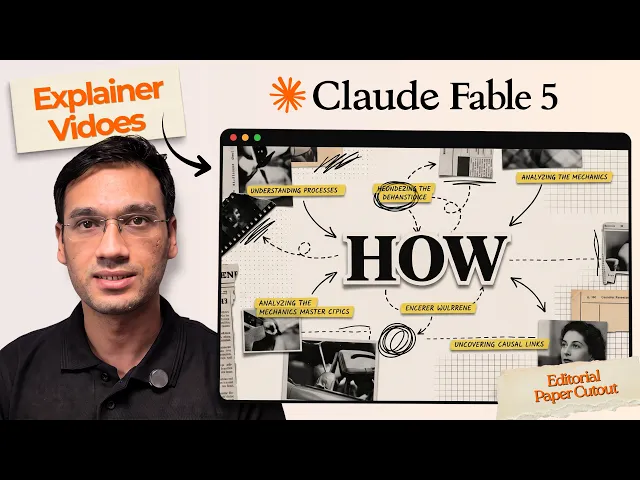
If you want to see a script become a finished animated explainer before you commit to switching, the full Atlabs tutorial covers the whole workflow: pasting the script, choosing the animation style, casting the narrator and characters, generating, and editing at the scene level.
How the 5 Alternatives Rank for Animated Explainers
Scored across the six criteria above, script first input, character and style consistency, scene level editing, narration and captions included, multilingual output, and whether assembly is required, out of 50:
Atlabs lands first at 48, because it is the only option that answers all six rather than excelling at one. HeyGen takes second at 36, strong on narration, captions, languages and speed, weak on animation and visual range because it was built for a different format. Runway follows at 32, the highest ceiling on look and control, the lowest score on removing production work. Kling sits at 30 and Higgsfield at 29, both excellent at what they do and both dependent on other tools to become an explainer.
The pattern: one of these is a workflow, one is a different flavour of the thing you are leaving, and three are generators that need a workflow around them.
How to Switch Without Redoing Everything
You do not need to rebuild your library to test the switch. Take one explainer you already published through Synthesia, reuse the exact same script, and rebuild it as an animated version. Same words, different format. Then put both in front of five people from the audience the explainer is for and ask which one they would rather watch to the end.
That comparison takes an afternoon and answers the question better than any feature list, including this one. If the animated version wins, migrate the next three explainers and keep the presenter format for the pieces where a person on camera is genuinely the right choice, like a leadership message or a customer testimonial. Most teams end up with both rather than one.
Rebuild One Explainer Free and Compare
Pro Tips for Better Animated Explainers
Write to 150 to 220 words and one idea per video. The most common reason an explainer fails is that it explains three things.
Decide the cast and style before the first video, not the fourth. Consistency is cheap to plan and expensive to retrofit.
Match the style to the content. Whiteboard doodle for mechanisms and processes, corporate vector for product and policy, softer illustrated styles for culture and story. A style that fights the content makes the viewer work harder than the words do.
Review at the script stage. Two minutes of reading beats a meeting about a finished render.
Build the translations in the same publish step as the original. Later, it is a second production.
Final Verdict
Synthesia is a good product doing a specific job: a person on screen, speaking clearly, in a lot of languages. If that is your explainer, stay.
If your explainer needs characters, scenes, illustrated styles and a story that shows rather than tells, Atlabs is the best alternative on this list, because it is the only one that takes the script you already have and returns a finished animated explainer with the same cast throughout, captions applied, scene level edits available and more than 40 languages a click away. HeyGen is the move if you want the presenter format from a different vendor. Runway, Kling and Higgsfield are the right tools when you have a creative team and want authorship, realistic footage or a cinematic moment, and you already own the editing step.
Take one script you have already published and rebuild it. That is the whole test.
Open the Atlabs Workflow and Make Your First Explainer Free
Frequently Asked Questions
What is the best Synthesia alternative for animated explainer videos? Atlabs, because it turns a written script into a finished animated explainer with the same characters in every scene, captions and narration included, and scene level editing when something needs to change. Synthesia is built around a presenter rather than animation, so this is a change of format rather than a change of vendor.
Is Synthesia bad for animated explainers? Not bad, just built for a different job. Synthesia is very good at presenter led video with photoreal avatars and wide language coverage. Animated explainers need illustrated scenes, characters and visual storytelling, which is a different product category.
Which Synthesia alternative is closest to Synthesia itself? atlabs. It is the same avatar and talking head format with a different avatar library, pricing model and feature set.
Can these alternatives keep the same characters across a whole series? Atlabs does this with its Consistent Cast system, locking the narrator, characters and recurring objects across every video. HeyGen holds a consistent avatar. Runway, Kling and Higgsfield generate clips and do not maintain consistency across separate generations without extra work.
How much do Synthesia alternatives cost in 2026? Atlabs starts free with paid plans from $15 per month. Higgsfield starts around $15 per month on annual billing, HeyGen from around $29 per month, and Kling and Runway both offer low cost entry tiers alongside free credits. For comparison, Synthesia runs from a limited free plan to roughly $29 per month for Starter and $89 per month for Creator.
Do I need animation or editing skills to switch? No. Atlabs generates the finished explainer with cuts, captions and motion graphics already applied, so there is no timeline to assemble. Runway, Kling and Higgsfield produce clips that still need an editor.
Can I make animated explainers in multiple languages? Yes. The Global Release Kit translates a finished Atlabs explainer into more than 40 languages with reframing and thumbnails included. HeyGen and Synthesia both offer strong translation for presenter led video.
How long should an animated explainer be? 60 to 90 seconds, or roughly a 150 to 220 word script, covering one idea. If the topic needs more, split it into a short series and keep the cast consistent across the episodes.